
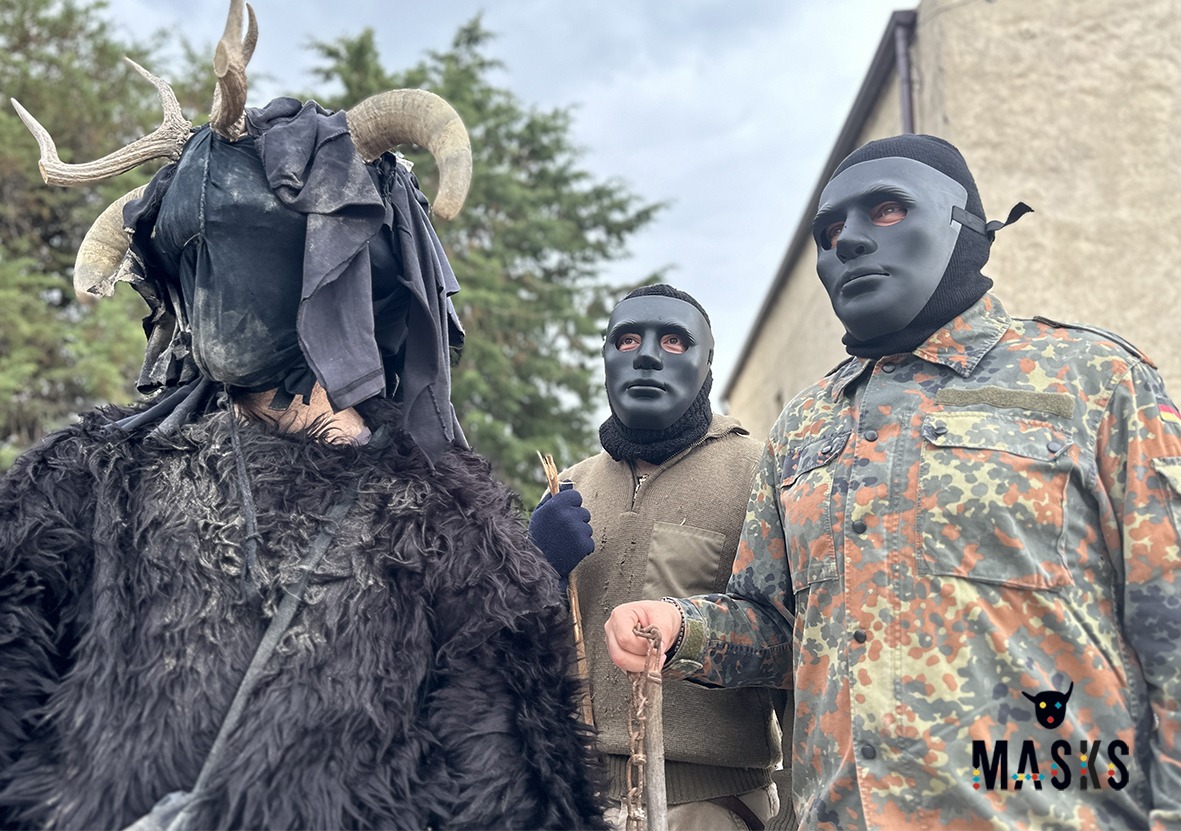
Between tradition and contemporaneity, Tricarico - a small village in Basilicata in the province of Matera in Italy - has been hosting the International Gathering of Anthropological Masks for 13 years.
They come from Southern and Central-Southern Italy, but also from some areas of Northern Italy, as well as from the rest of Europe, e.g. Bulgaria, Slovenia, Croatia: they are masked men and women, gathered to celebrate, share and promote their local traditions in a global context.
Masking practices are characteristic of the winter rituals of the Carnival period and are connected to the religious calendar of agro-pastoral culture and to man's relationship with the animal, so much so that man takes on the animal's clothes, disguising himself and reproducing its movements and behaviour.
The masks and their accessories are created by craftsmen in the place of origin of the masks, through the technique of bricolage using mostly natural materials and using traditional methods handed down from generation to generation.
The men dance to the rhythm of folk music played on traditional instruments. These are dances that bring with them ancient stories but re-proposed and re-actualised in contemporary times.
The gathering of the masks, which has taken place every year in Tricarico for the past 13 years, aims to keep this tradition alive while maintaining the identity of the place and its culture.
This year, the event took place between 31 May and 1 June and was attended by both parade participants and visitors, who could at the same time visit the town and taste typical food and wine products.
In Tricarico there is a sort of fusion of past and present, of different cultures, colours and evocative sounds, in an almost timeless atmosphere.
The importance of the Gathering in Tricarico is recognised both nationally and internationally, given the participation of groups from different parts of the world.
These masking traditions are not only brought to light and celebrated during such events, but also become the subject of study in workshops, exhibitions and conferences.
This is a fundamental opportunity to learn about, develop and disseminate our popular traditions.
Article by Vita Santoro - Senior Research Fellow at the University of Basilicata (Unibas)


