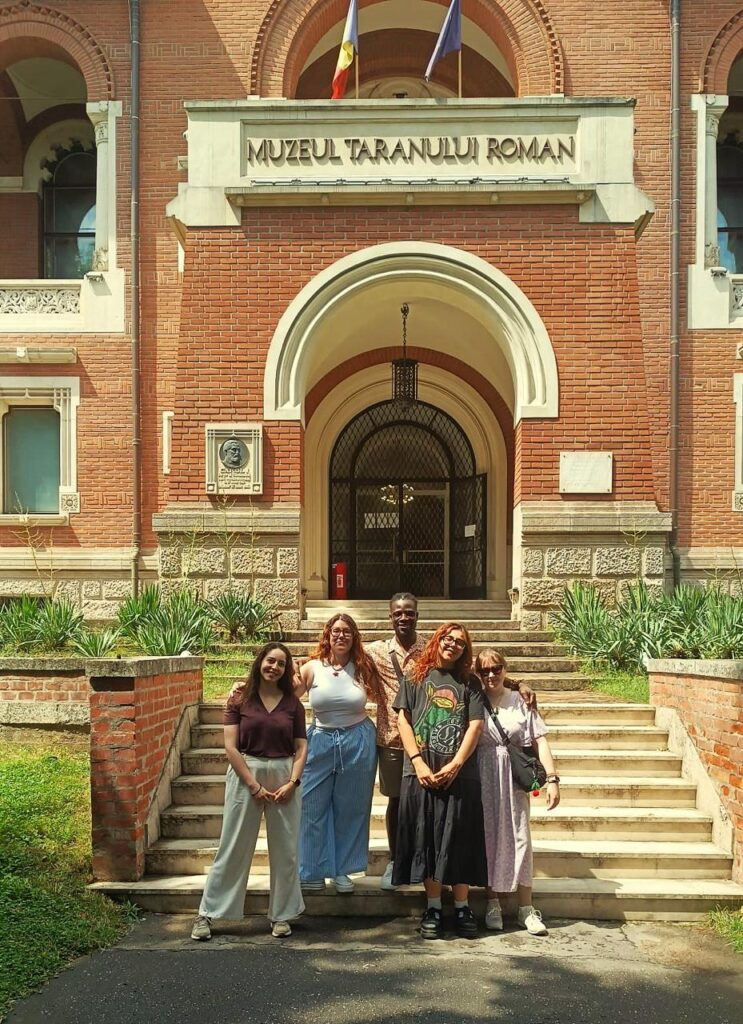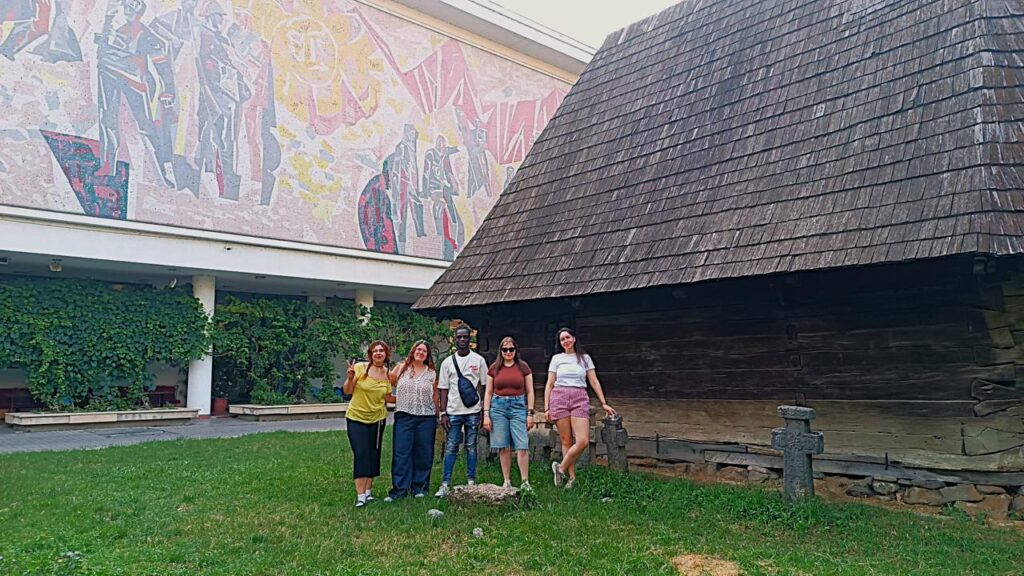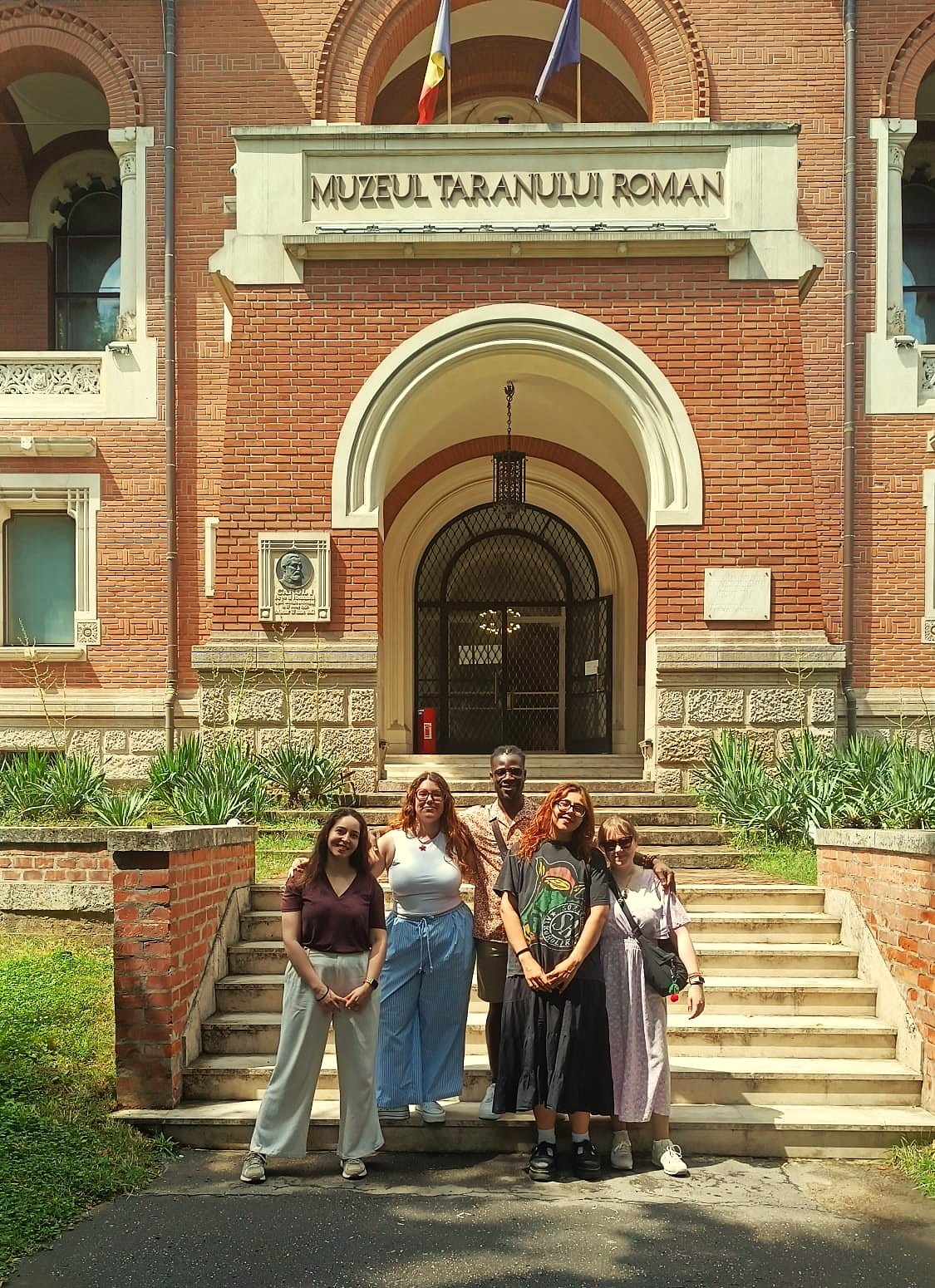
The residency, carried out within the framework of our European project MASKS, brought together 12 students and craftspeople from Romania, Italy, and Spain in an educational experience focused on museology, anthropology, and the living tradition of masks.
The Romanian Peasant Museum in Bucharest hosted an international mobility programme dedicated to masks and ritual heritage from 29 June to 4 July 2026, as part of the European project MASKS – Unveiling the Arts and Works Behind the Masks. The programme took place in an international learning environment involving students from the University of Valladolid, the University of Basilicata, and craftspeople from the Regional Centre for Crafts of Castile and León, all partner institutions of the project. The residency focused on the arts, living traditions, and the transmission of heritage knowledge.
The mobility was organised by Georgiana Vlahbei and Iuliana Dumitru, museologists and researchers at the Romanian Peasant Museum, in their capacity as coordinators of the MASKS project, together with Ana Iuga, also a researcher at the institution, who played an active role in the teaching activities. They were supported by staff from other museum departments, who contributed to the delivery of the sessions, the guidance of participants, and the organisation of the scheduled activities.
A Programme of Learning and Critical Reflection
The residency began with an introductory session designed to present the objectives of the mobility, encourage interaction among participants, and introduce the first reflective exercises. This was followed by a guided visit to the museum's permanent exhibition, with particular attention to curatorial approaches, exhibition design, and the representation of masks, concluding with a discussion on the museum's role in heritage preservation and its relationship with rural and peasant culture.
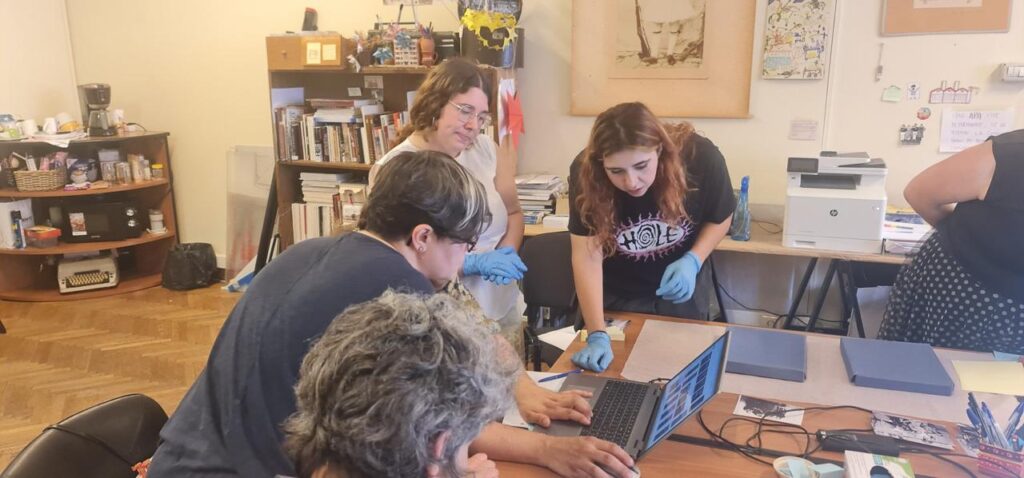
During the first day, participants also attended an initial workshop exploring masks within the context of exhibition design from both museological and curatorial perspectives, followed by a working session on the first assigned task. This opening stage of the programme positioned masks not only as objects of study but also as active elements within museum narratives and broader heritage discourses.
Collections Storage, Archives, and Material Culture
The second day was devoted to gaining an in-depth understanding of the museum's internal operations. Participants visited the museum's collections storage facilities under the guidance of the Head of Collections, learning about conservation procedures, collections management, preventive care, and heritage preservation, with particular emphasis on the museum's mask collection. They subsequently explored the museum's photographic archive with its curator, examining the presence of masks within documentary collections and the role of multimedia archives in heritage documentation.
The day concluded with a second workshop devoted to the heritage of masks from the perspectives of material culture and tangible heritage. This session broadened participants' understanding of masked objects as components of complex systems of knowledge, memory, and cultural practice, highlighting their anthropological and museological significance.
Fieldwork and Living Tradition
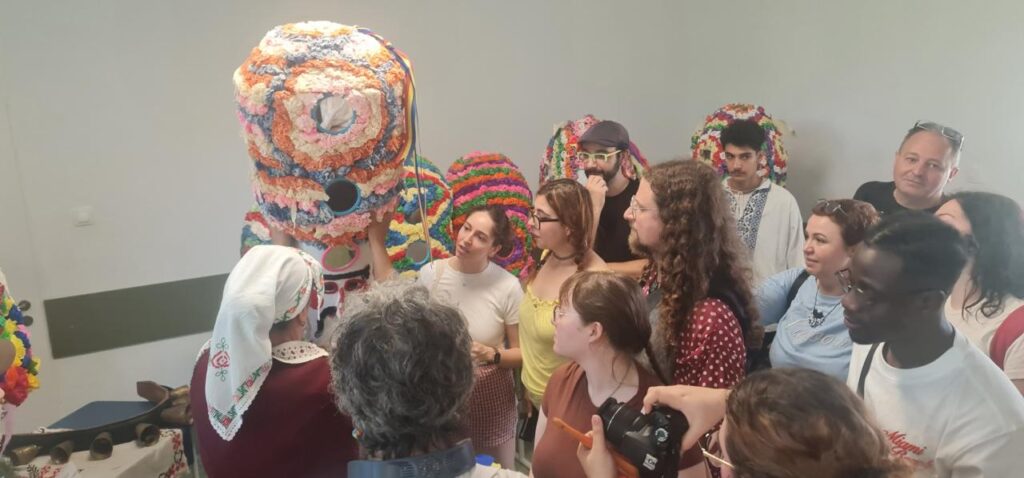
The third day included a field visit to Brănești, where participants met with Cucii din Brănești, a masked ritual group associated with the Lent and Spring Carnival traditions of the northeastern Bucharest region. The visit provided a valuable opportunity to observe a living manifestation of intangible cultural heritage within its community context, reinforcing the connection between academic research and the direct observation of ritual practices.
In the afternoon, participants continued developing their individual and collaborative projects, drawing upon the knowledge and insights acquired during the previous sessions. The combination of fieldwork and reflective academic practice constituted one of the defining methodological features of the mobility programme.
Final Workshop and Closing Session
The final day was dedicated to a concluding workshop focusing on ritual objects and masks as elements embedded in customs, festivals, living rituals, and the communities that sustain them. The programme also incorporated examples drawn from ethnographic fieldwork alongside an anthropological approach to mask communities, fostering a nuanced and multidisciplinary interpretation of these cultural expressions.
The mobility concluded with presentations of both individual and collaborative projects, followed by a discussion session and a final round of evaluation and reflections. The residency provided participants with a valuable opportunity for practical training, international exchange, and direct engagement with the heritage of masks from museological, anthropological, and community-based perspectives.
International Cooperation
The joint participation of students and craftspeople from Romania, Italy, and Spain reinforced the European dimension of the MASKS project by promoting the exchange of knowledge among institutions and regions with their own distinctive masking traditions. The Bucharest mobility highlighted the importance of cultural and academic cooperation as an effective means of safeguarding, disseminating, and fostering the contemporary reinterpretation of intangible cultural heritage.