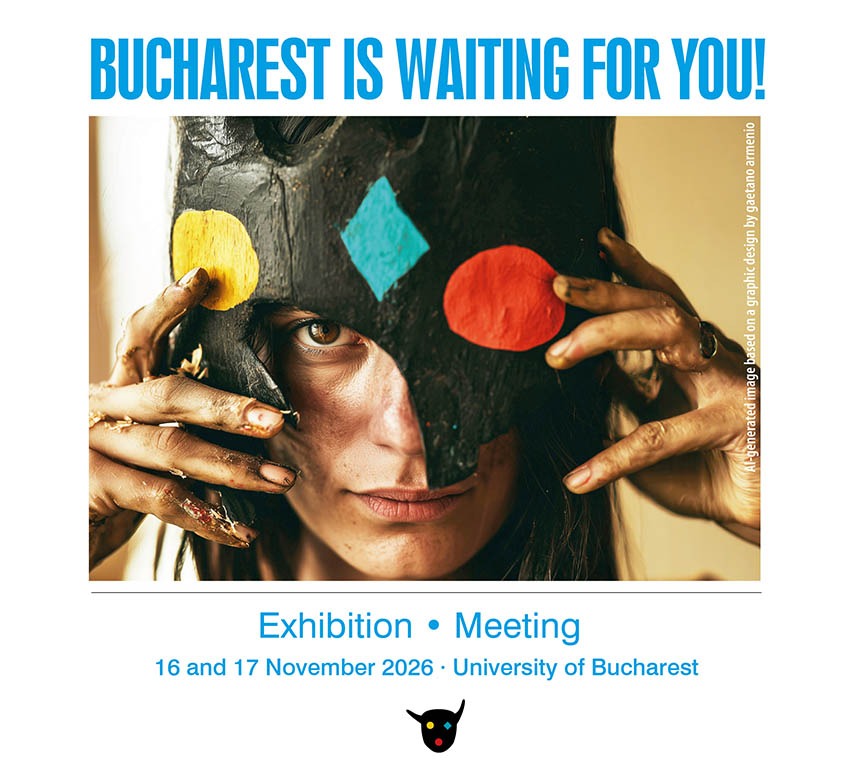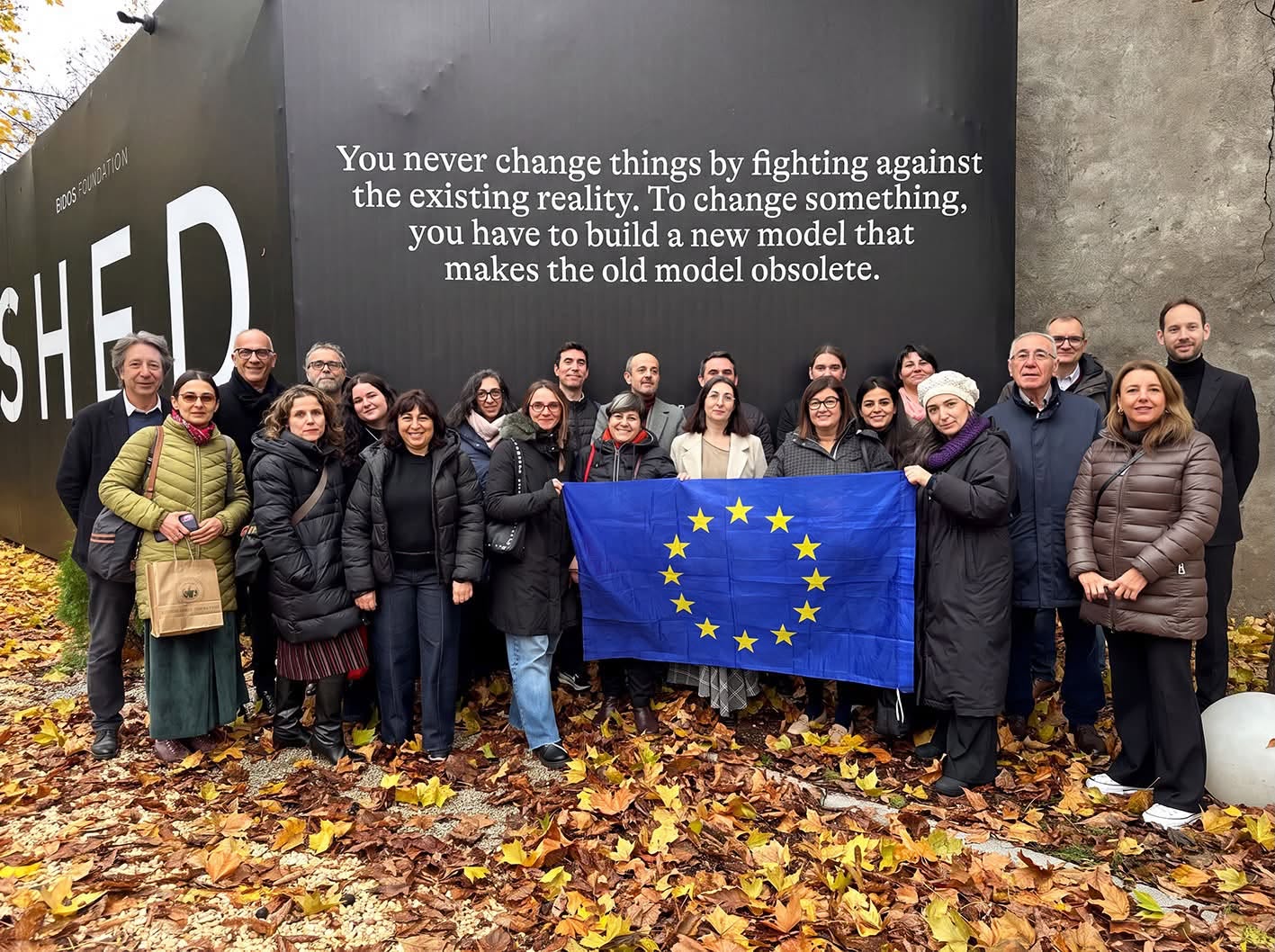
Bucharest, 16–17 November 2026 – The University of Bucharest has hosted the final meeting of MASKS – Unveiling the Arts and Works Behind the Masks, an EU co-funded project that has brought together 12 partner organisations from Italy, Spain, Portugal and Romania.
The meeting has marked the culmination of an ambitious international collaboration that has brought together expertise in cultural heritage, education, research and traditional craftsmanship. Throughout the project, the partners have developed an online course, organised international mobility activities and carried out a series of Living Labs, creating opportunities for hands-on learning, knowledge exchange and engagement with mask-making traditions.
The meeting of the twelve partners was officially opened on Monday, 16 November, at Casa Universitarilor (University House), with the participation of representatives from the University of Bucharest, the National Museum of the Romanian Peasant and the project’s international consortium.
A central part of the meeting has been the presentation of the project’s final report, which will be submitted to the European Commission’s Project Officer. This has provided an opportunity to review the project’s achievements and discuss the outcomes of the collaboration.
One of the highlights of the programme has been the opening of the final MASKS exhibition at the National Museum of the Romanian Peasant on Monday, 16 November, at 5:00 p.m. Bringing together the work and experiences of the European partners, the exhibition has offered a window into the rich world of masks and the traditions, skills and creative practices surrounding them. It has celebrated the connections between cultural heritage, craftsmanship, research and artistic expression, while showcasing the results of the project’s collaborative work. Following the opening, a presentation and discussion on the project’s outcomes took place.
The meeting continued on Tuesday, 17 November, with working sessions devoted to reviewing the project’s activities, achievements and remaining steps. On behalf of the project coordination, Professor Pilar Panero of the University of Valladolid outlined the lines of work to be followed over the next two years, during which the project will continue to be implemented without funding.
The MASKS project has promoted a range of publications and outreach activities that document and expand upon its results. These include a monographic issue of the journal Archivio di Etnografia, as well as two collective volumes: Masks Unveiled: Imaginaries, Identities, and the Construction of Knowledge and Desenmascarar el territorio. Interculturalidad e identidad en torno a las máscaras. A catalogue is also being prepared to gather the work produced by students during the three mobility activities, which may be hosted in a university repository. In addition, the partners have planned the publication of several chapters on traditional masks, rituals, traditions, heritage and performance.
The MASKS team continues to work on new publications and educational materials. These include articles on the didactics of the training programme, the translation of the 70-hour course materials into the four languages of the participating territories, and an atlas featuring profiles of the collaborating artisans, planned in both digital and book formats.