Organised by FOACAL, the fair featured four demonstration workshops inspired by traditional masks, costumes, and festive heritage.
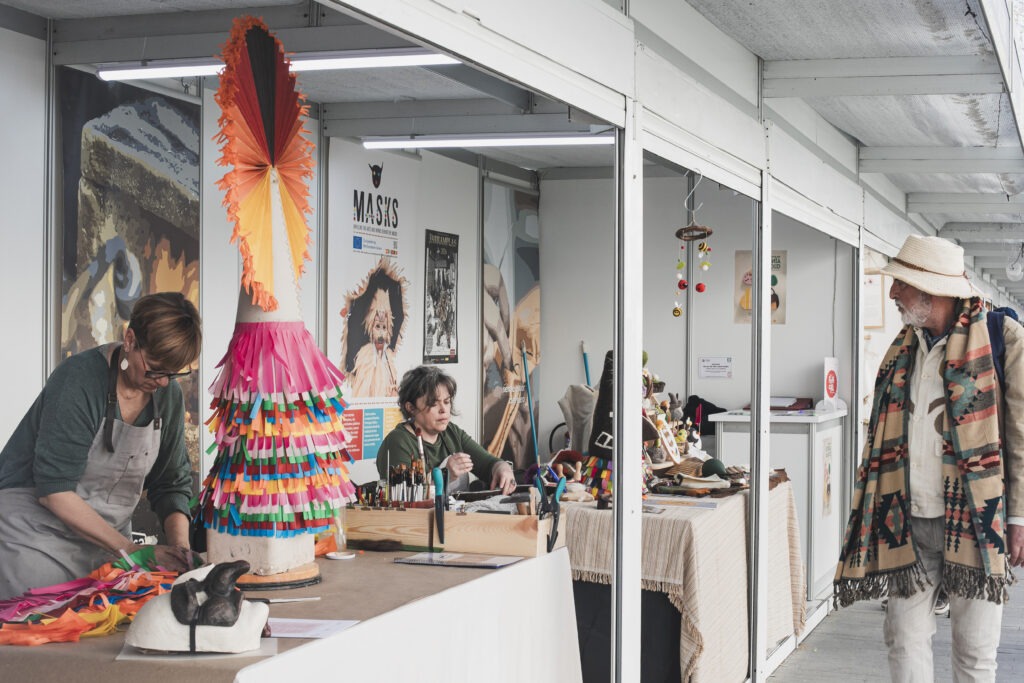
Organised by the Federation of Craft Organisations of Castile and León (FOACAL), with the support of Valladolid City Council and the Regional Government of Castile and León, the 33rd Valladolid Craft Fair was held from 27 March to 5 April. The fair brought together 34 craft workshops and offered visitors a wide-ranging display of handmade work, combining tradition, contemporary creativity, and direct contact with makers.
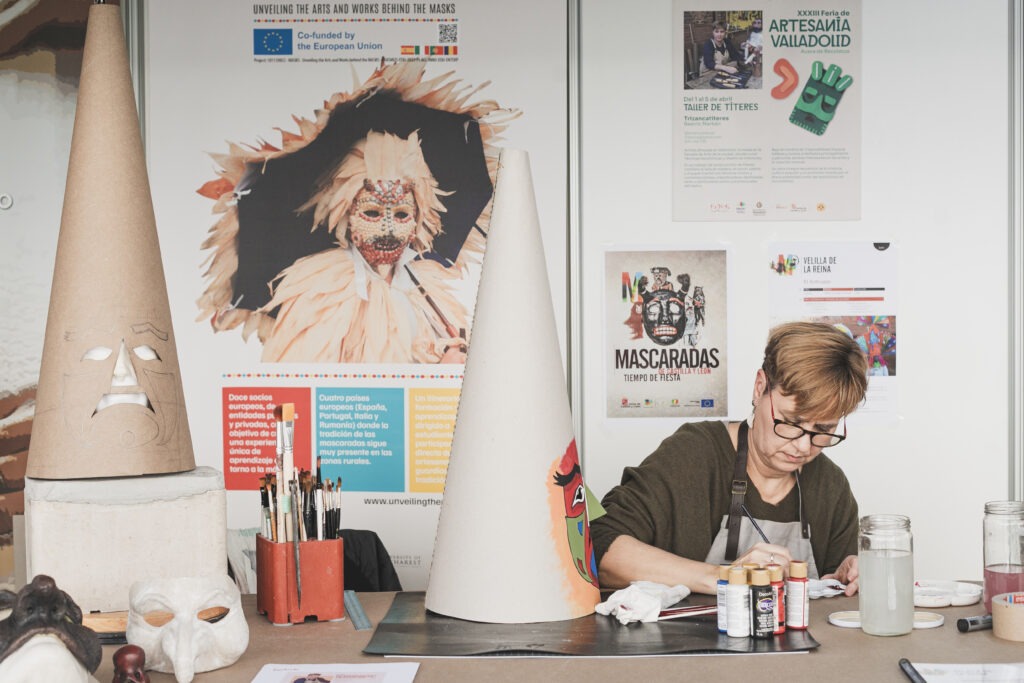
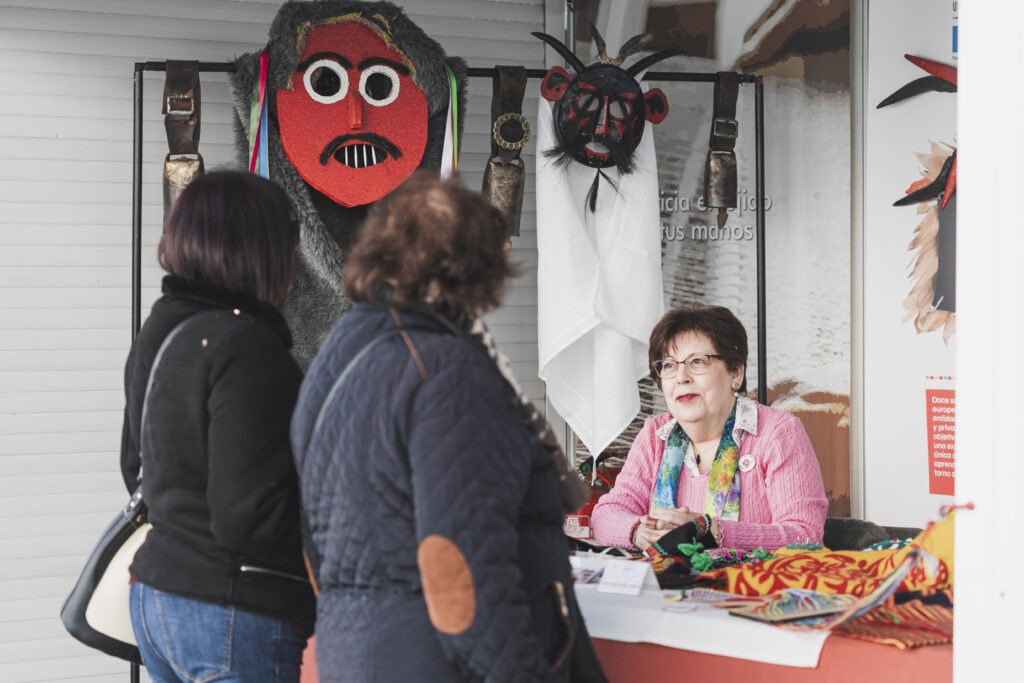
As part of this year’s programme, the fair also featured four demonstration workshops devoted to traditional masks and masquerades. Held next to the information stand, this special programme was linked to MASKS – Unveiling the Arts and Works behind the MASKS, a European Erasmus+ project in which FOACAL takes part. The project focuses on the documentation, training, and promotion of traditional masks, costumes, and other ritual elements from rural European communities.
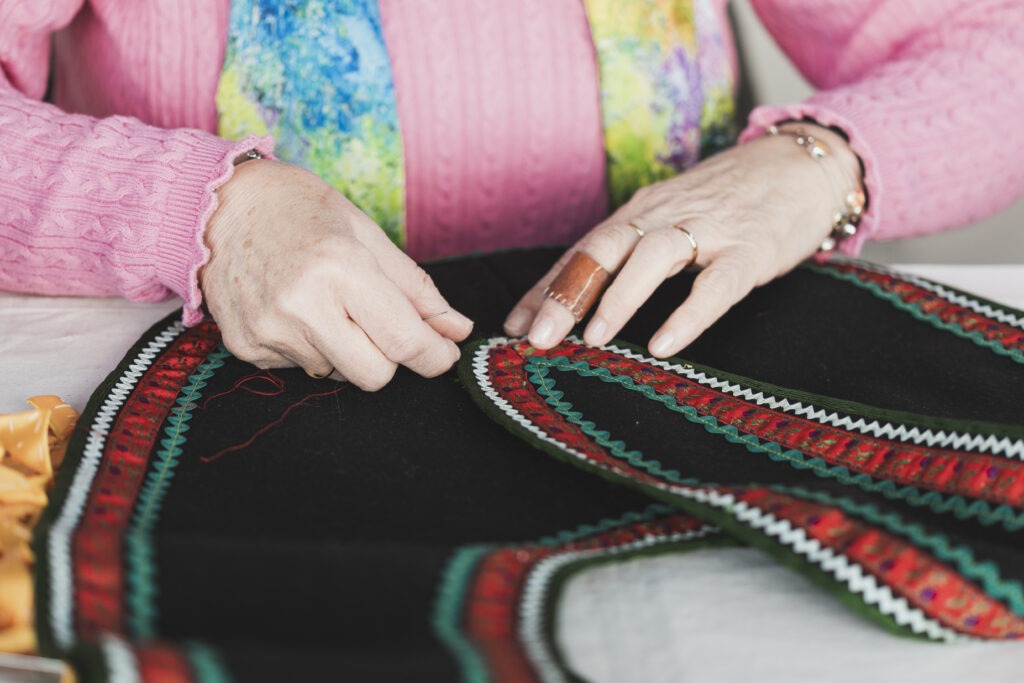
From 27 to 31 March, artisan Herminia Esteban demonstrated the making of a gabacha-esclavina, a traditional garment used in several masquerades from the province of Zamora. During the same period, Miguel Elisardo Bueno, from the Arte Feudo workshop, developed his piece Vaca Vetona, inspired by the masquerades of the regions of Sayago and Tierra del Pan y del Vino (province of Zamora).
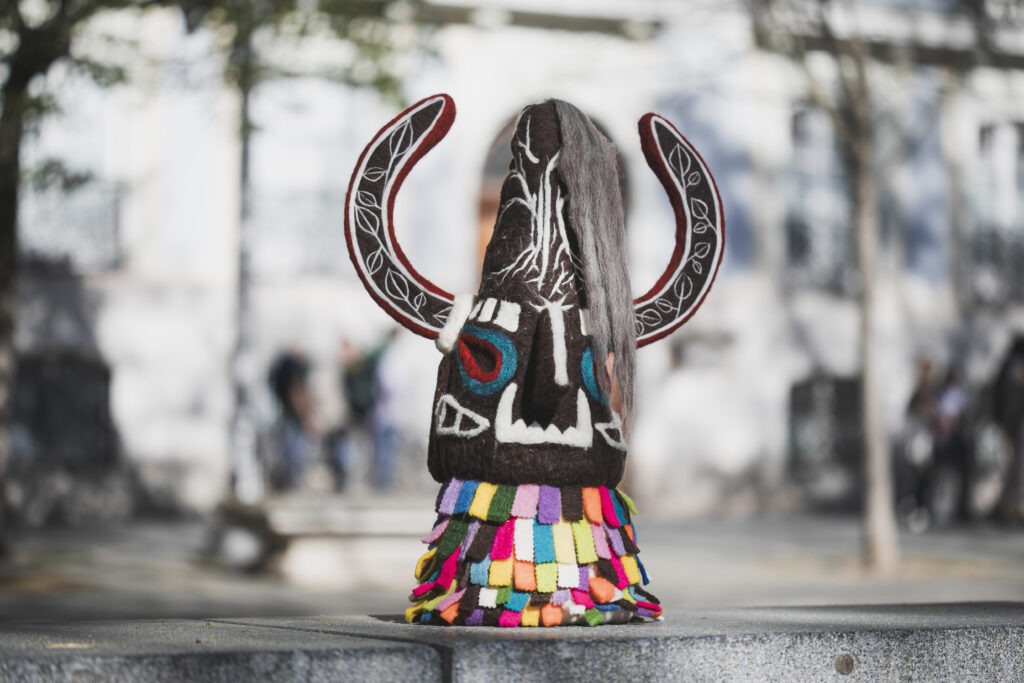
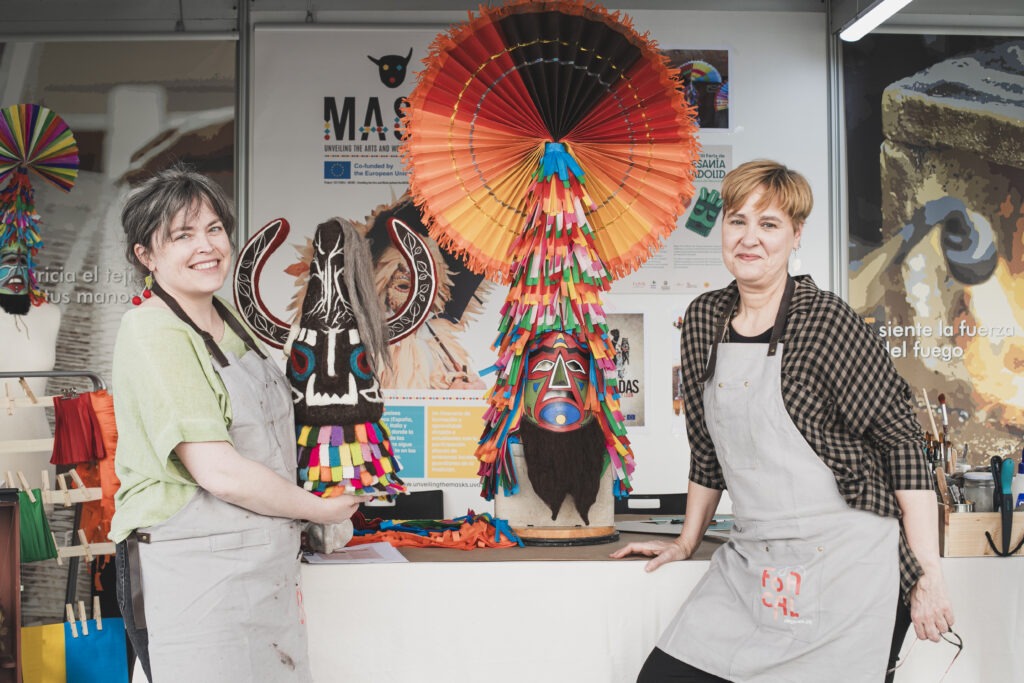
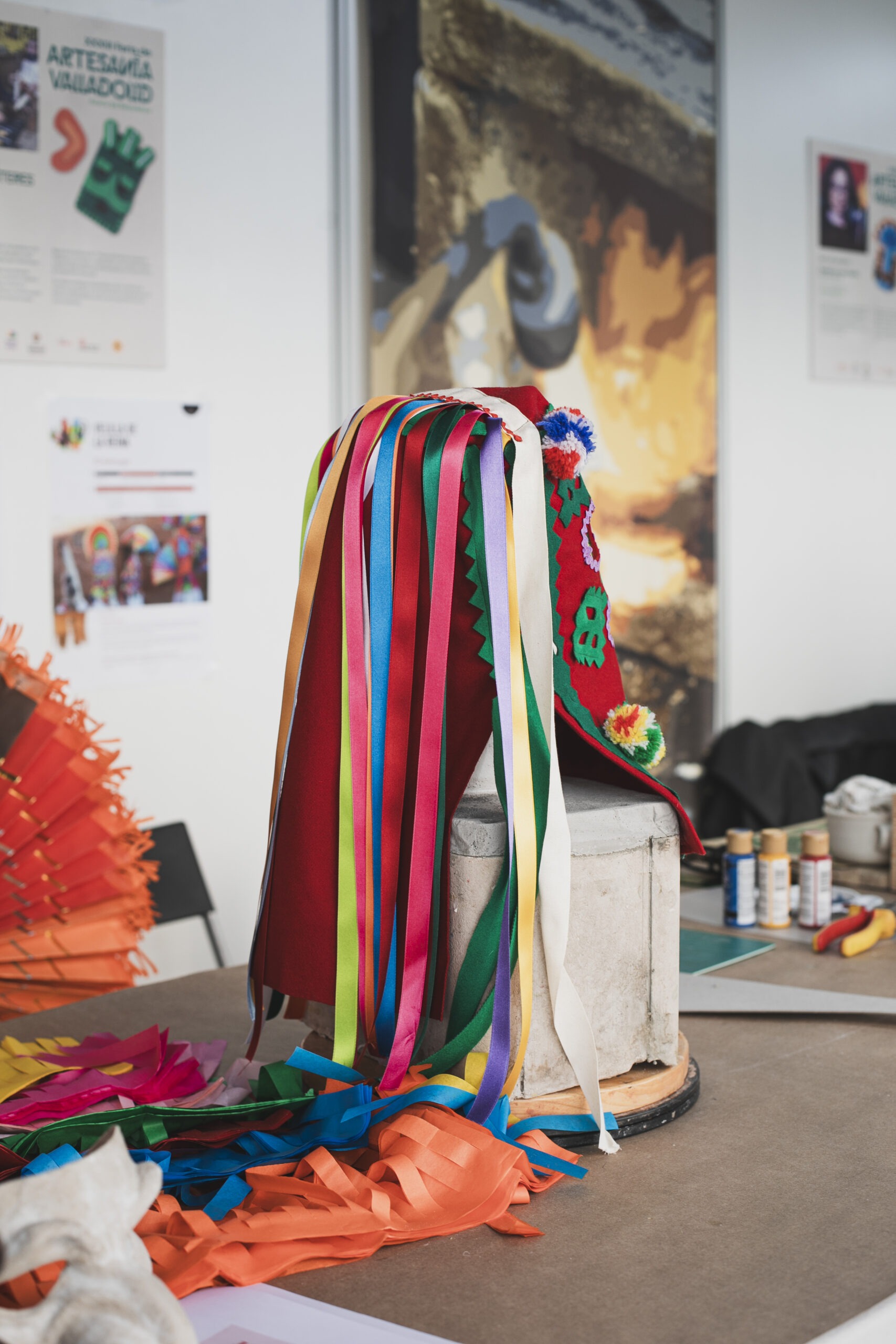
From 1 to 5 April, Beatriz Marbán, from the Trizancatiteres workshop, worked on a Guirrio mask linked to the Leonese Antruejo of Velilla de la Reina. Also during those days, Raquel Puertas, from the Donde La Lana Sueña workshop, created a Jarramplas mask, one of the most recognisable elements of the festive tradition of Piornal, in Cáceres.
The four demonstration workshops allowed visitors to discover not only the finished pieces, but also the techniques, materials, symbolic meanings, and cultural background behind them. In this way, the fair extended its role beyond exhibition and direct sales, creating a space where craftsmanship, popular heritage, and living tradition came together.