
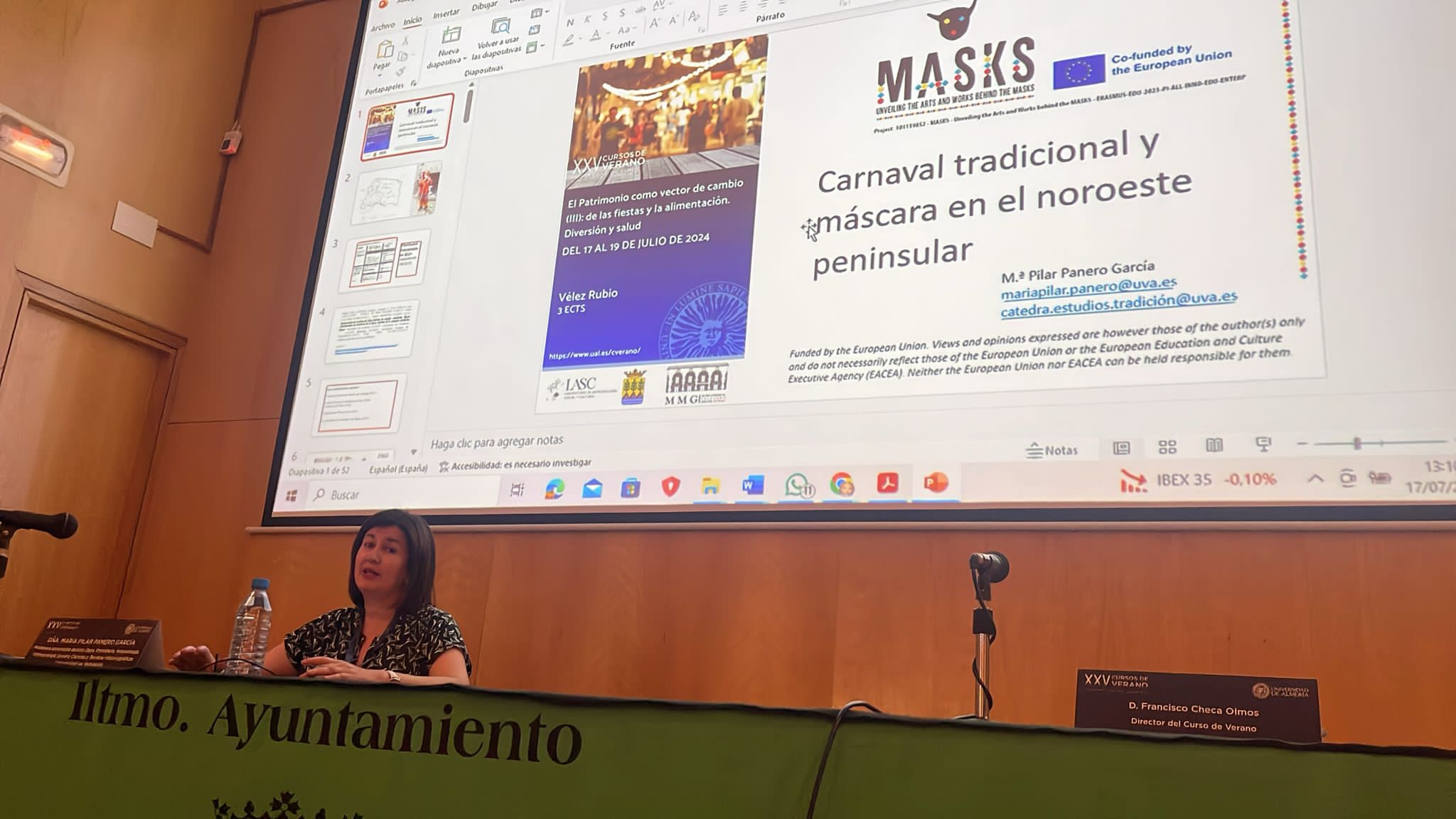
Nuestra investigadora principal, Pilar Panero, participa en uno de los cursos de verano de la Universidad de Almería con dos conferencias sobre mascaradas
El curso “El Patrimonio como vector de cambio (III): de las fiestas y la alimentación. Diversión y salud” se ha celebrado en la localidad almeriense de Vélez Rubio del 17 al 19 de julio bajo la premisa de que el patrimonio cultural es una construcción social, una invención.
Heritage, like any invention, in order to take root and perpetuate itself, needs to become a social construction, to reach a minimum of consensus, hence its symbolic character, its capacity to symbolically represent an identity. And where does symbolic effectiveness find its greatest collective reference? In the heritage common to the whole community: its festivals and rituals, folklore, popular architecture, history, language and food.
On the other hand, the preservation of traditions has increasingly been integrated into the tourist discourse, so that certain villages have become centres of pilgrimage on the occasion of festivals or in search of gastronomic tourism. And thanks to tourism, many villages and entire areas have been able both to maintain their traditions and to progress socially and economically. As a result, new heritage activities are no longer motivated by identity, but by tourism and the image given of the area.
Pilar Panero gave a monographic conference on masks entitled “The traditional carnival and masks in the northwest of the peninsula”; and another entitled “Eating in festive rituals. Tradition and modernity” on ritual meals, in which she mentioned some of those associated with masquerades.


