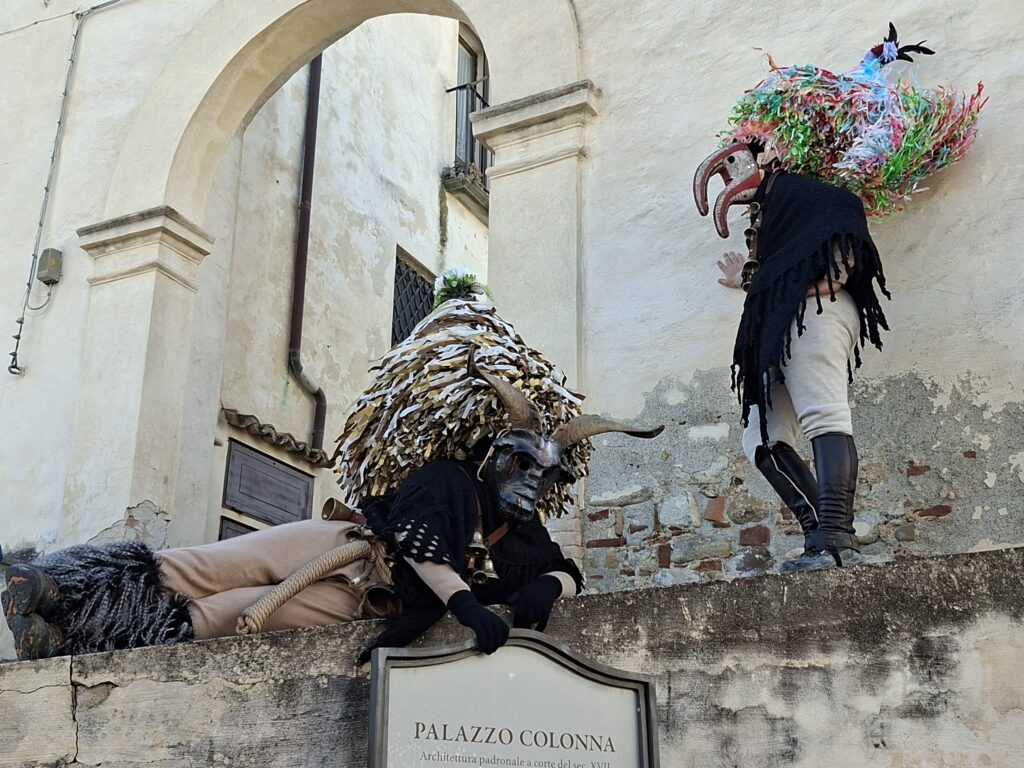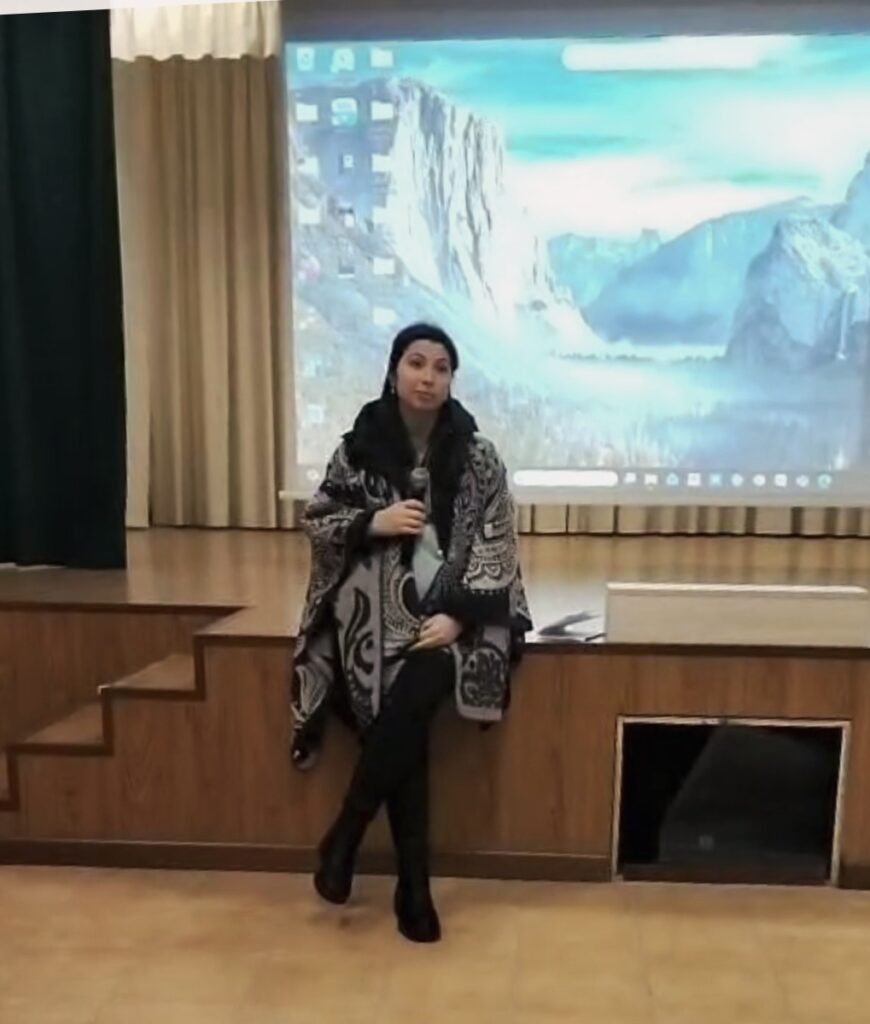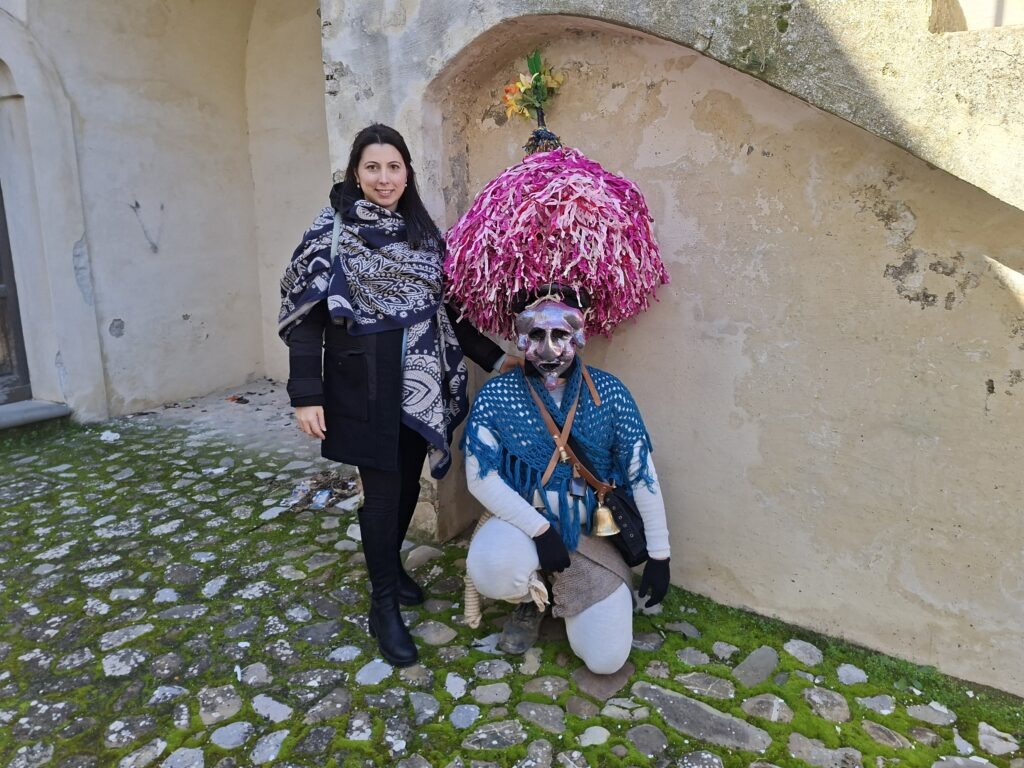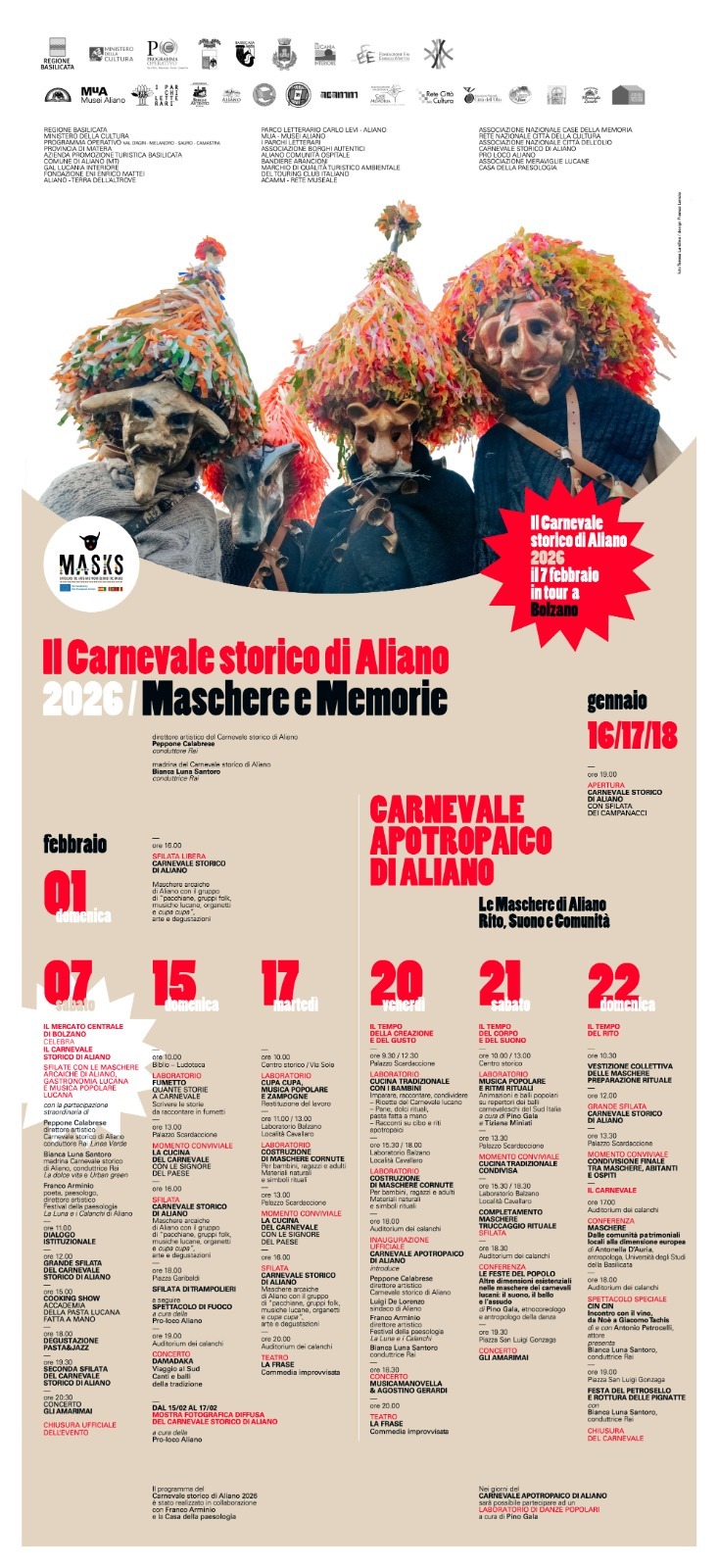
On Sunday, February 22, 2026, the Italian village of Aliano (MT) hosted the final event of the Aliano Historical Carnival, with the collective wearing of masks and the parade of “horned” masks through the town's main streets, with moments of shared and participatory traditional dances. During the afternoon, Antonella D'Auria from University of Basilicata held a conference at the Calanchi Municipal Auditorium, entitled Masks. From local heritage communities to the European dimension. The conference focused on the concepts of “cultural heritage” and “heritage communities”. She also took the opportunity to present the European project Unveiling the Arts and Work Behind the Masks. This project included research and documentation of the mask of Aliano, which has become a cultural symbol and identity for the community. Through their masks the Aliano community expresses a sense of belonging and recognizes itself in the Carnival celebrations.
Through the papier-mâché technique, passed down to new generations by those who create their own masks each year, the bonds between individuals in the community are strengthened, making their cultural creativity visible, even during the carnival event. In this sense, the mask becomes an artifact that combines craftsmanship, symbolism, and community identity. While in the past the mask had apotropaic and propitiatory value, today the masks of Aliano have become a connotative element of the Carnival due to their varied shapes, protuberances, and polychromes.
The conference Masks. From Local Heritage Communities to the European Dimension is one of the results of the encounter not only between those who use and create masks, but also between those who possess this knowledge and know-how and those from “other” contexts, sparking profound mobility, exchanges, and comparisons.
The conference provided an opportunity to recall that two masks of Aliano were also recognized internationally during the exhibition MASKS. The Alas y Viento Collection. Nacho Rovira II. This exhibition is on display at the Museo do Pobo Galego in Santiago de Compostela (Spain) curated by Pr. Pilar Panero, principal investigator of the MASKS project, and emphasizes how masks are a universal cultural expression that spans different eras and places. The two masks of Aliano were created by craftsman Giuseppe Lombardi with the mediation of anthropologist Vita Santoro, a member of the MASKS project for the University of Basilicata.