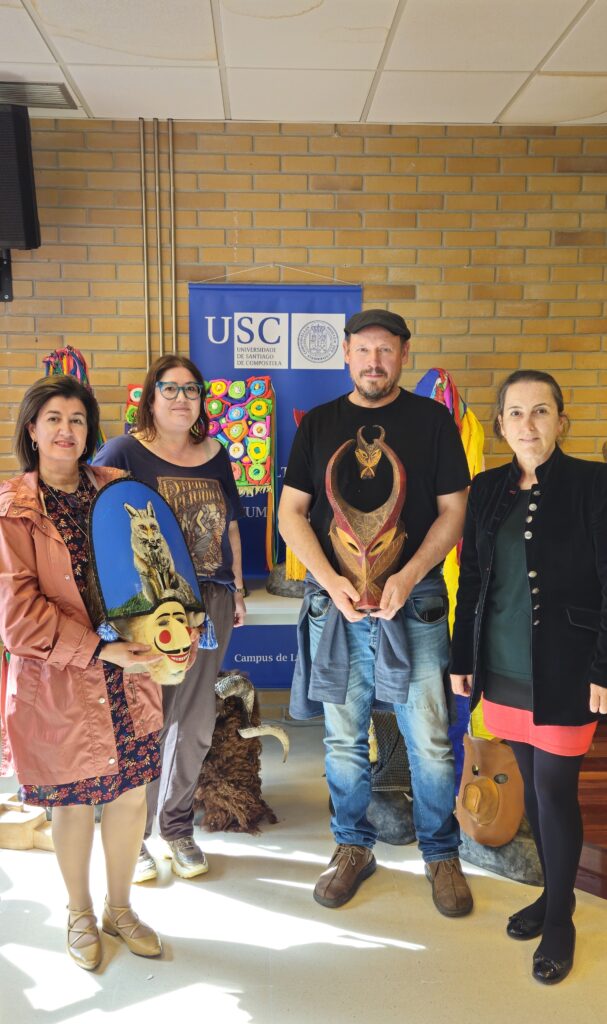
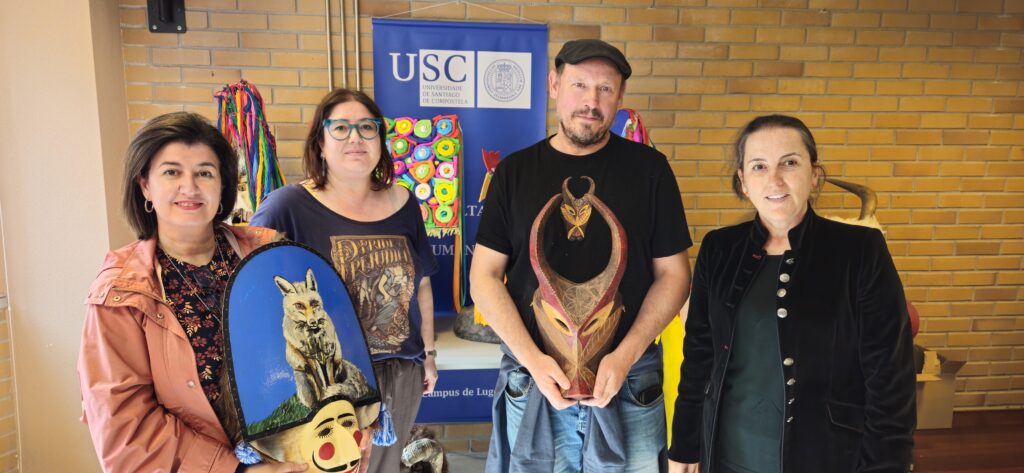
MASKS is presented at the seminar ‘A vida é un carnaval’ held at the Universidade de Santiago de Compostela (Campus de Lugo)
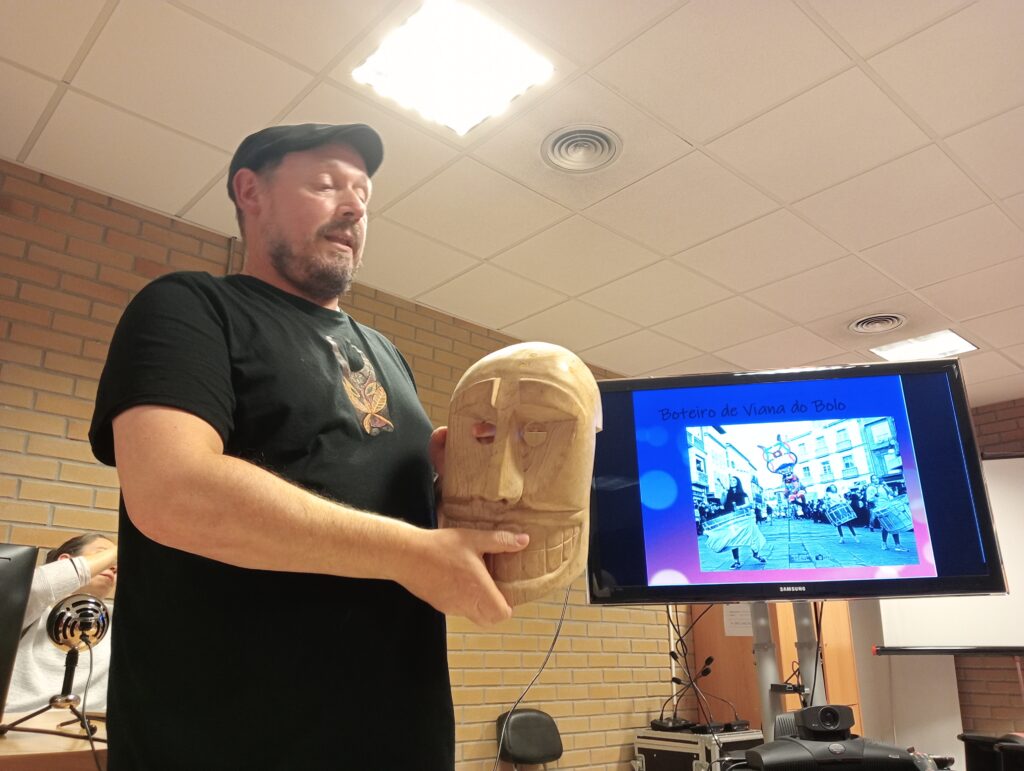
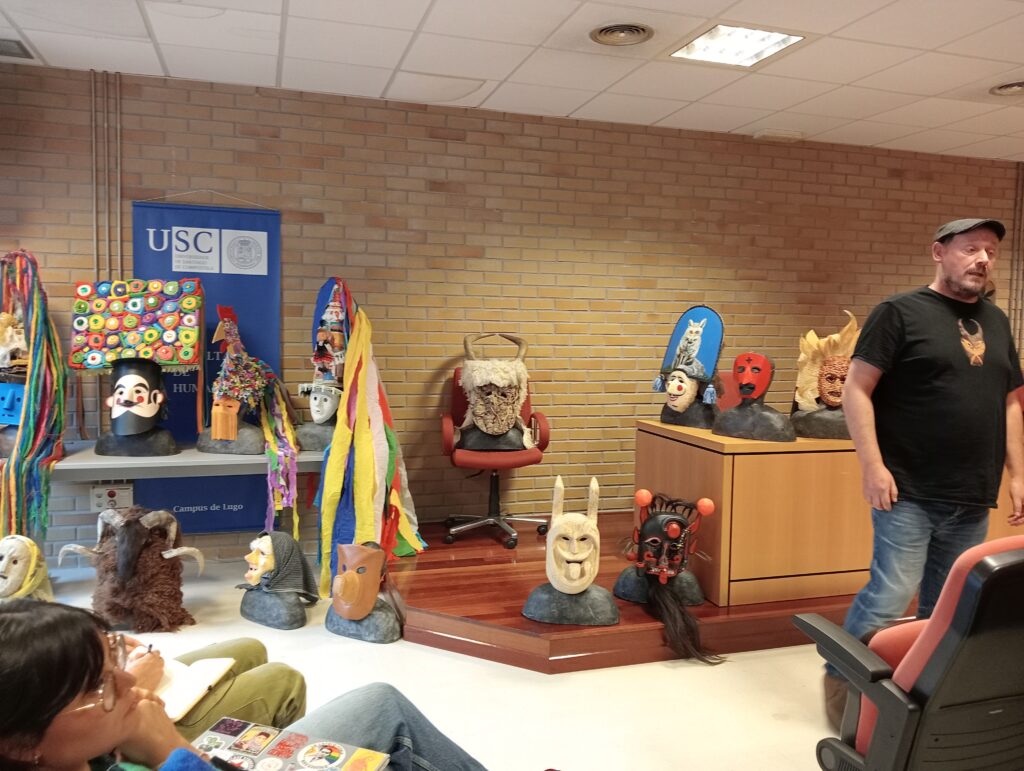
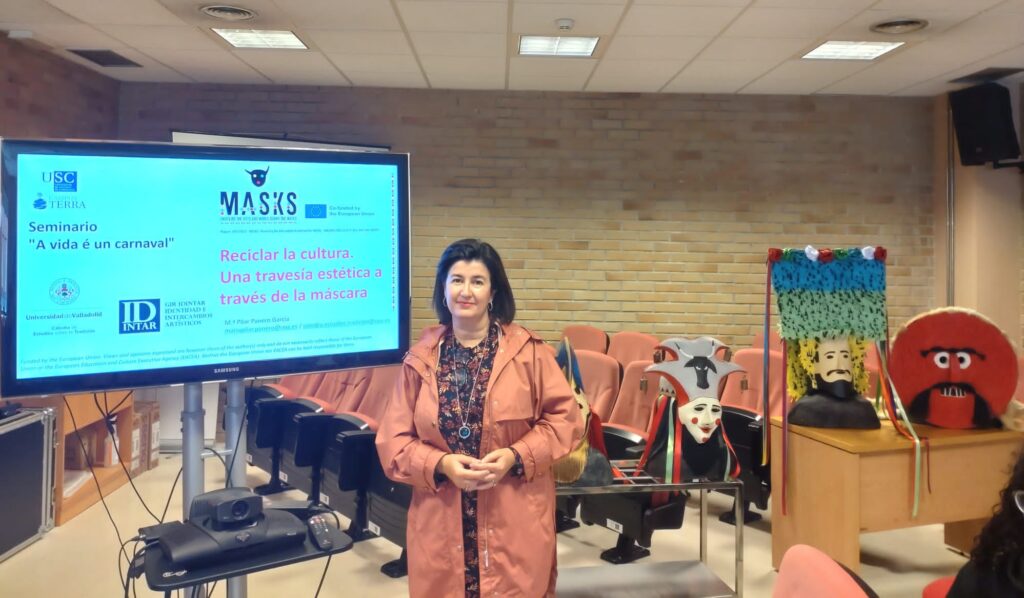
‘Recycling culture. An aesthetic journey through the mask’ is the title under which Professor Pilar Panero presented our project. Two Portuguese anthropologists from the Universidade Nova de Lisboa, Paula Godinho and Dulce Simões, and a mask maker in Souto de Torres-Castroverde (Lugo, Galicia), Xosé Manuel Seixas, participated in the seminar organised by the anthropology professor Elena Freire de Paz.
The aim of the seminar is to introduce the students of the Master's Degree in Cultural Services to the importance of rituals in the configuration and maintenance of identities and to highlight the Carnival tradition that connects Galicia with the national and European contexts.
The artisan Xosé Manuel Seixas has been working for years in the recovery and manufacture of traditional Carnival masks and presented a sample of the work done for more than twenty years. The students were able to realise the value of craftsmanship and traditional knowledge for tourism practices linked to a development model in which the social and cultural can and must function as a differentiated quality factor for local contexts. In this case, carnivals in urban contexts were left out of the day's objectives, limiting the object of study to the rituals and masks that shape tradition and celebration in the rural world. It is precisely here where the winter masks produced in Galicia represent a differentiating factor that can give rise to a respectful use of their use and cultural value that validates the heritage and richness of the rural environment as a source of knowledge and identity.
The main researcher of the MASKS project explained that the motivation for the project was the recognition and assumption of the prestige of the communities through rites, mainly but not only carnival rites, without losing the history of the culture that gave birth to the different traditions. Participation in the construction of one's own ethnological heritage, assumed as a right of the communities that consider themselves as subjects working inwards, regardless of the fact that they can do so outwards, mainly for tourism, overcomes the essentialism that has historically hovered over folklore. The self-referential is diluted in a polyphony of voices and cultural contexts, where groups appropriate and reinterpret the material products and symbols of others. This appropriation through crafts can be an opportunity to survive while respecting traditional culture.
MASKS would like to thank Professor Elena Freire Paz for her kind and enriching invitation.
https://www.usc.gal/gl/campusterra/eventos/seminario-vida-carnaval