Artesãos

Os artesãos do MASKS são empreendedores criativos que transformam máscaras e trajes em marcas, produtos e projetos culturais enraizados nas tradições locais.
Aqui descobres as suas histórias e percebes como o património das máscaras também pode tornar-se para ti uma oportunidade de trabalho e de empreendedorismo criativo.
Percorre os perfis, encontra inspiração e depois vai à secção «Inscreve-te nos Cursos» para começar o teu percurso com o MASKS.

Ángel Vicente Pérez
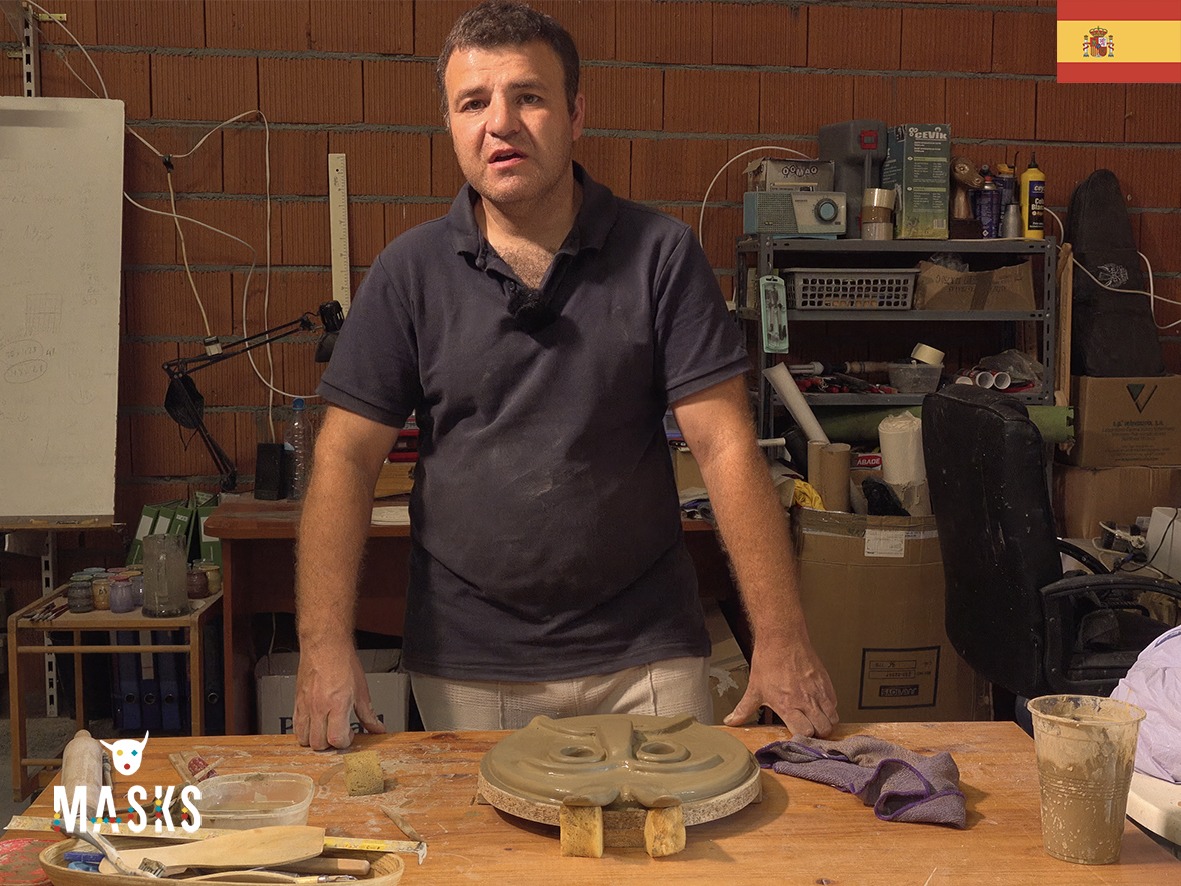
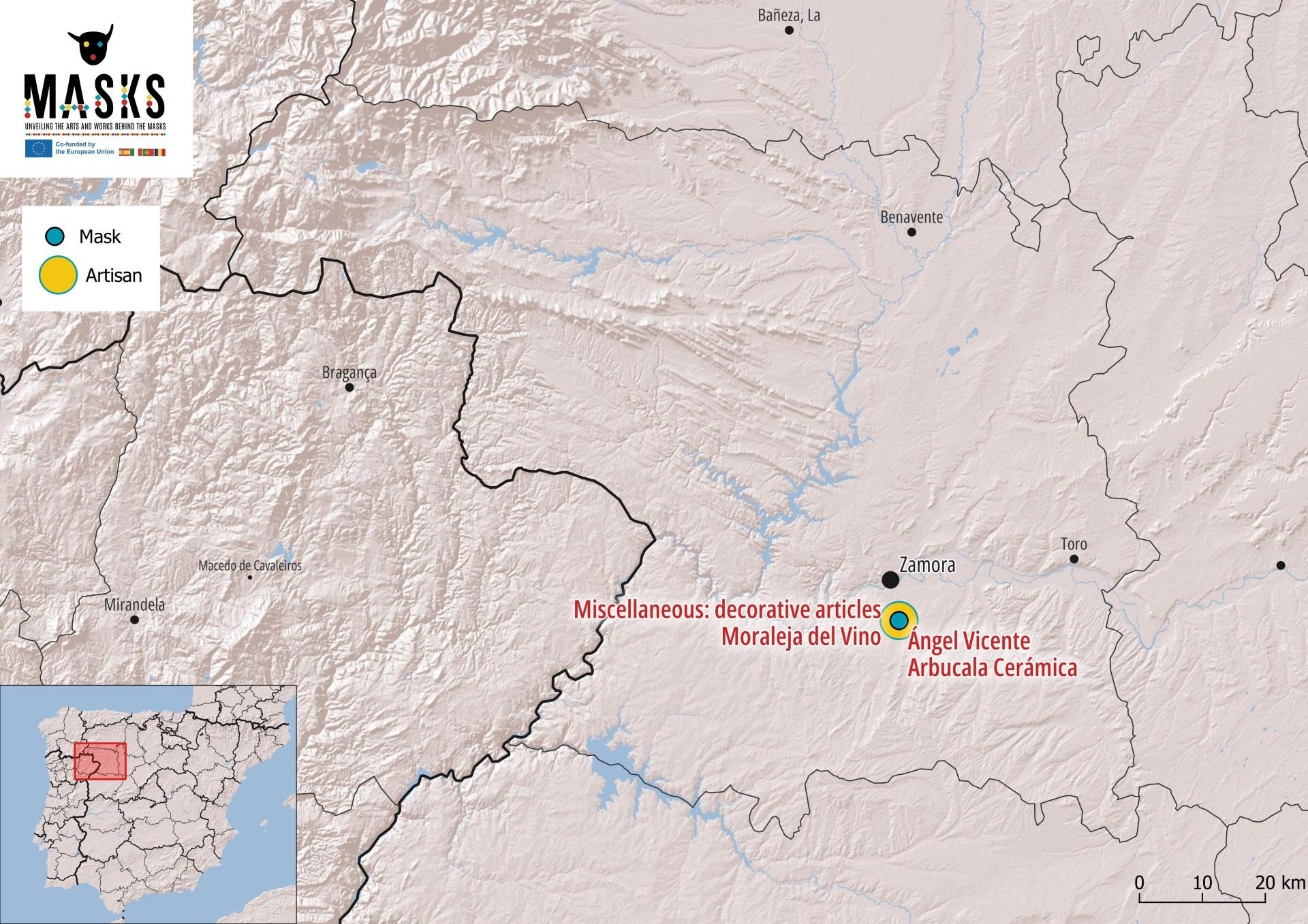
Ángel Vicente Pérez (1975). He is a ceramist based in Moraleja del Vino, in the province of Zamora, after previously running workshops in Portugal and Extremadura. Although trained as a documentalist, he is self-taught in ceramics—a background that has helped him research and revive ancient techniques, such as those used by the Vacceans or the Sephardic communities. His specialty is artistic ceramics, particularly tile painting, as well as relief murals and plates, though he also creates utilitarian pieces. Living in a region rich in masked traditions, he became drawn to masks and began reproducing them in ceramics, allowing their presence to be appreciated year-round. While he is skilled at throwing pieces on the potter’s wheel, he considers painting to be the core of his artistic expression.
Esmeralda Folgado Casado
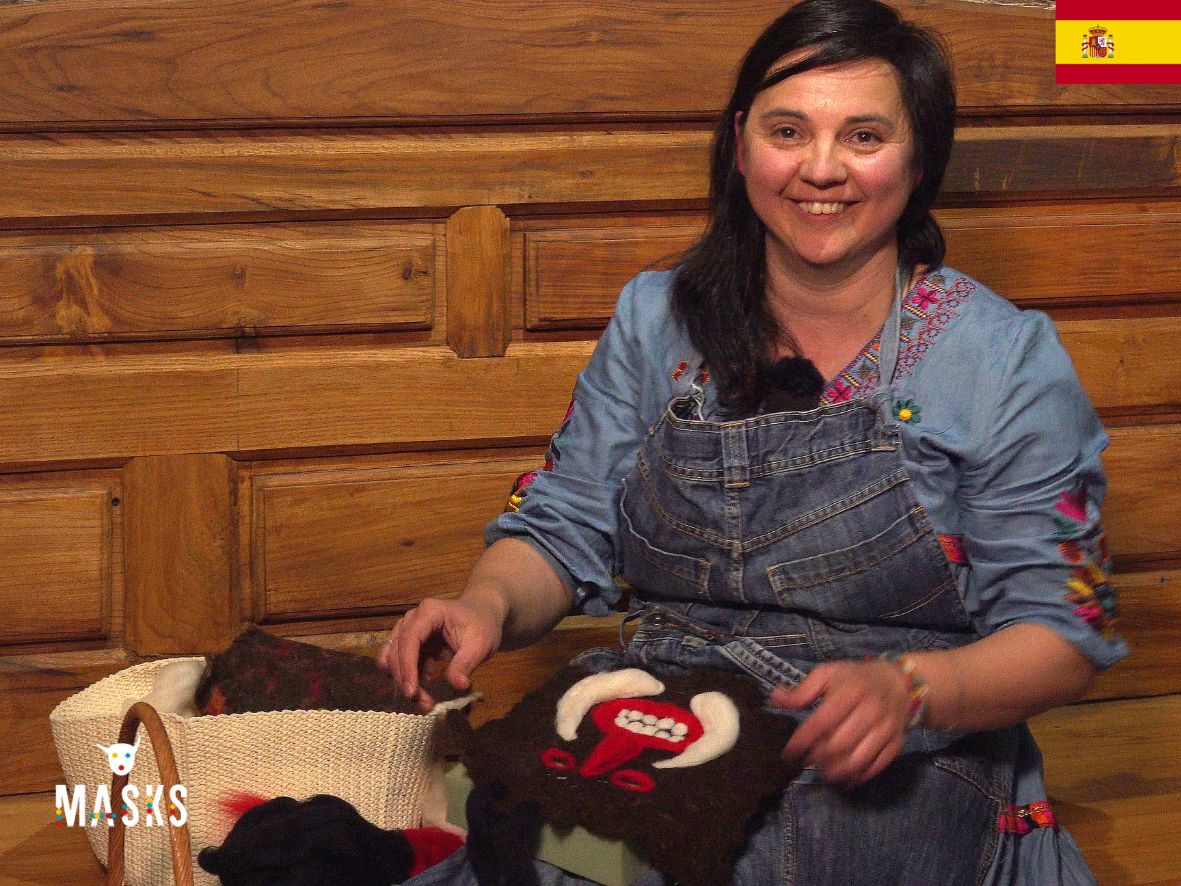
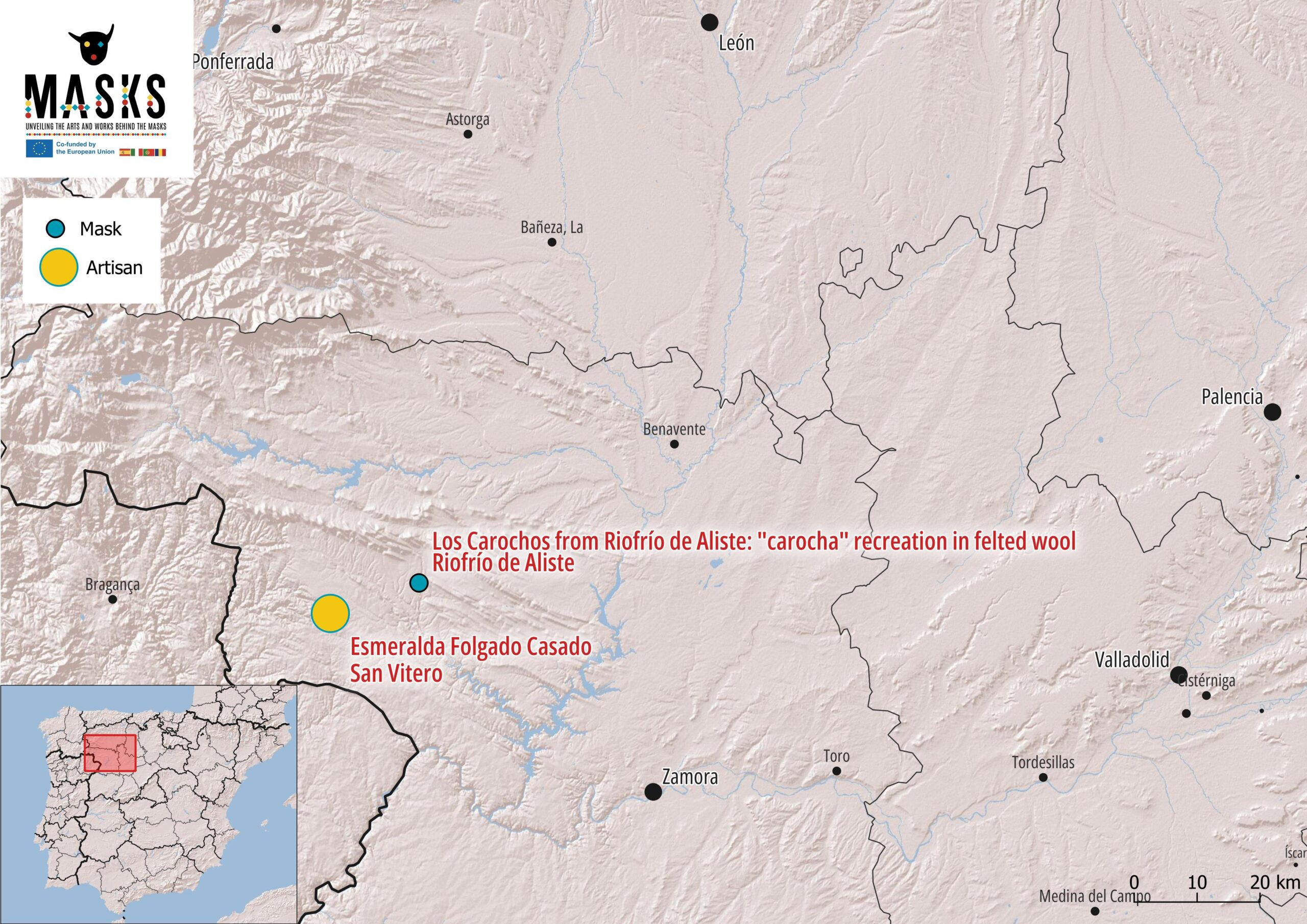
Esmeralda Folgado Casado (1983). She is from Abejera, a village known for the masquerade “Los Cencerrones”, and currently resides in San Vitero. She works as a manager at the Mycological Museum of Rabanales and as a guide at the House of the Carochos in Riofrío de Aliste. With a background in teaching, specialized in music education (2004) and special education (2010) from the University of Oviedo, she has developed professionally as a wool artisan and storyteller. She is passionate about learning and teaching others in a creative and proactive way. Her adaptability allows her to manage various projects and performances, in which she combines original storytelling with the structure of traditional tales and craftsmanship: Cuentos de la lana (Wool Tales) and Mascarada (Masquerade).
Miguel Ángel Tapia
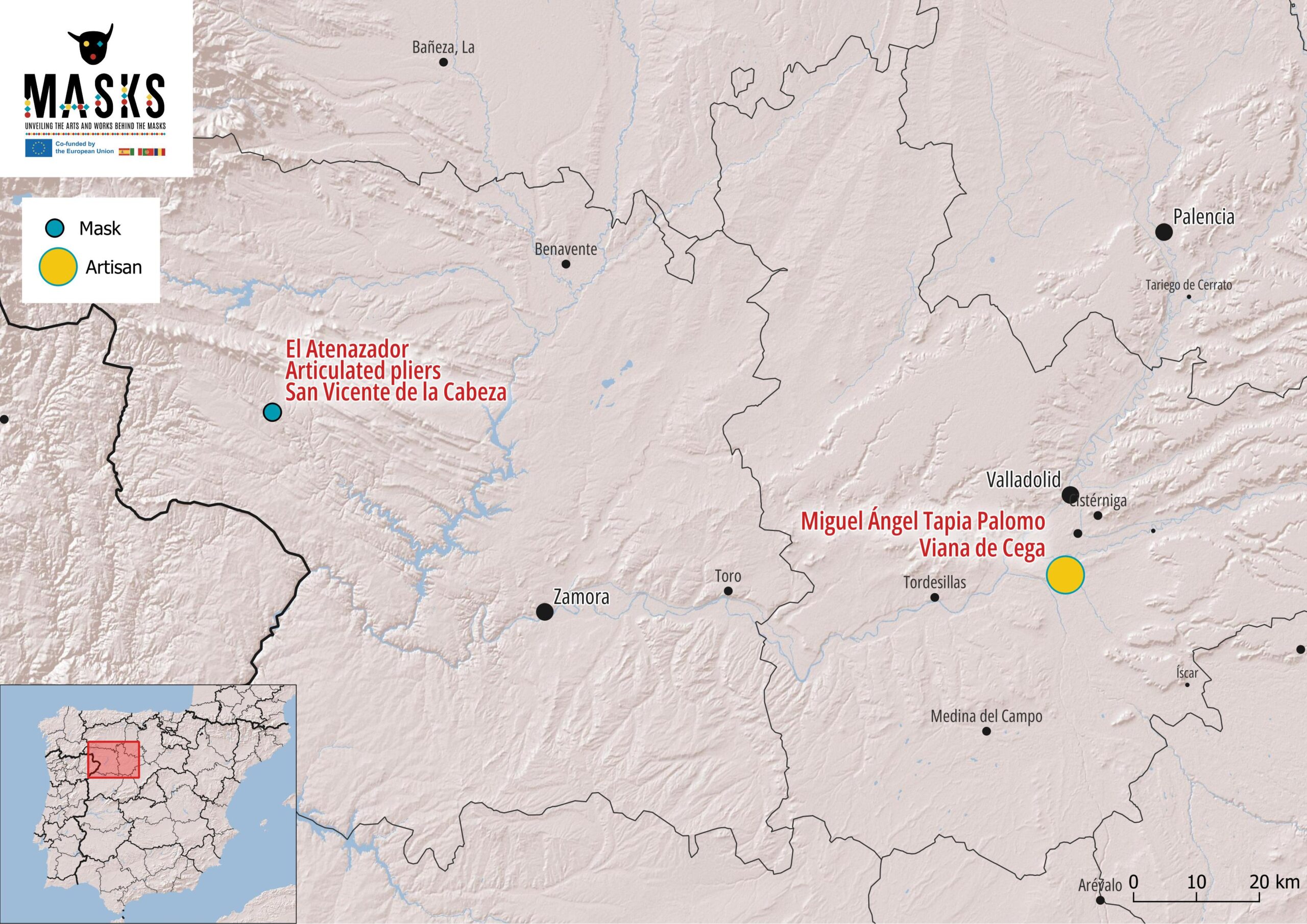
Miguel Ángel Tapia (1966). He is an artisan from Viana de Cega, known for his mastery of imaginería—the traditional art of creating religious sculptures, especially figures of saints. Deeply devoted to this craft, he has spent his life refining the technique, becoming a respected figure in the field. In his workshop, each sculpture is shaped through a meticulous process that blends technical skill, artistic sensitivity, and spiritual depth. He uses high-quality materials to craft pieces that are not only visually striking but also emotionally resonant. He does not work for mass production, but to preserve and honour a sacred tradition. His creations are highly valued by religious communities and collectors alike. Committed to passing on his knowledge, he also mentors young artisans, helping to keep the legacy of imaginería alive in Viana de Cega.
Miguel Elisardo Bueno González
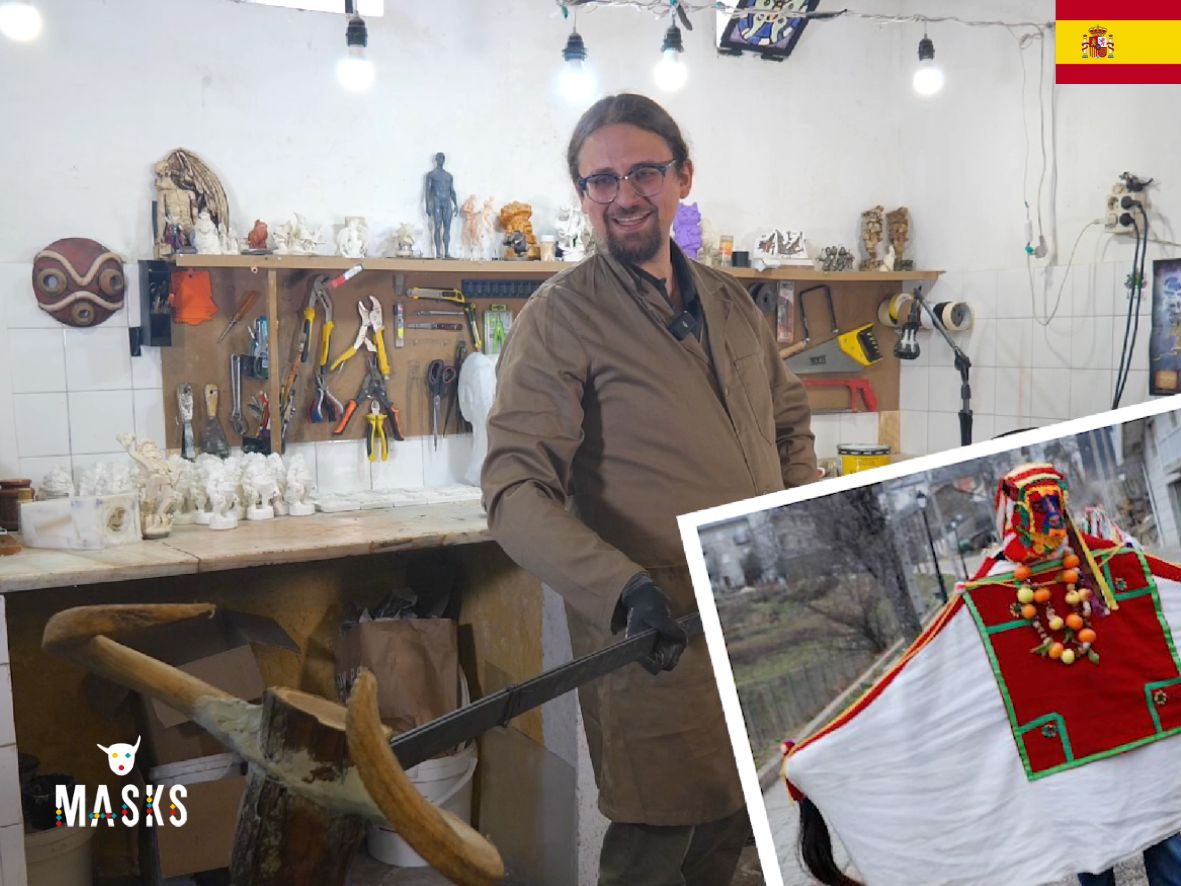
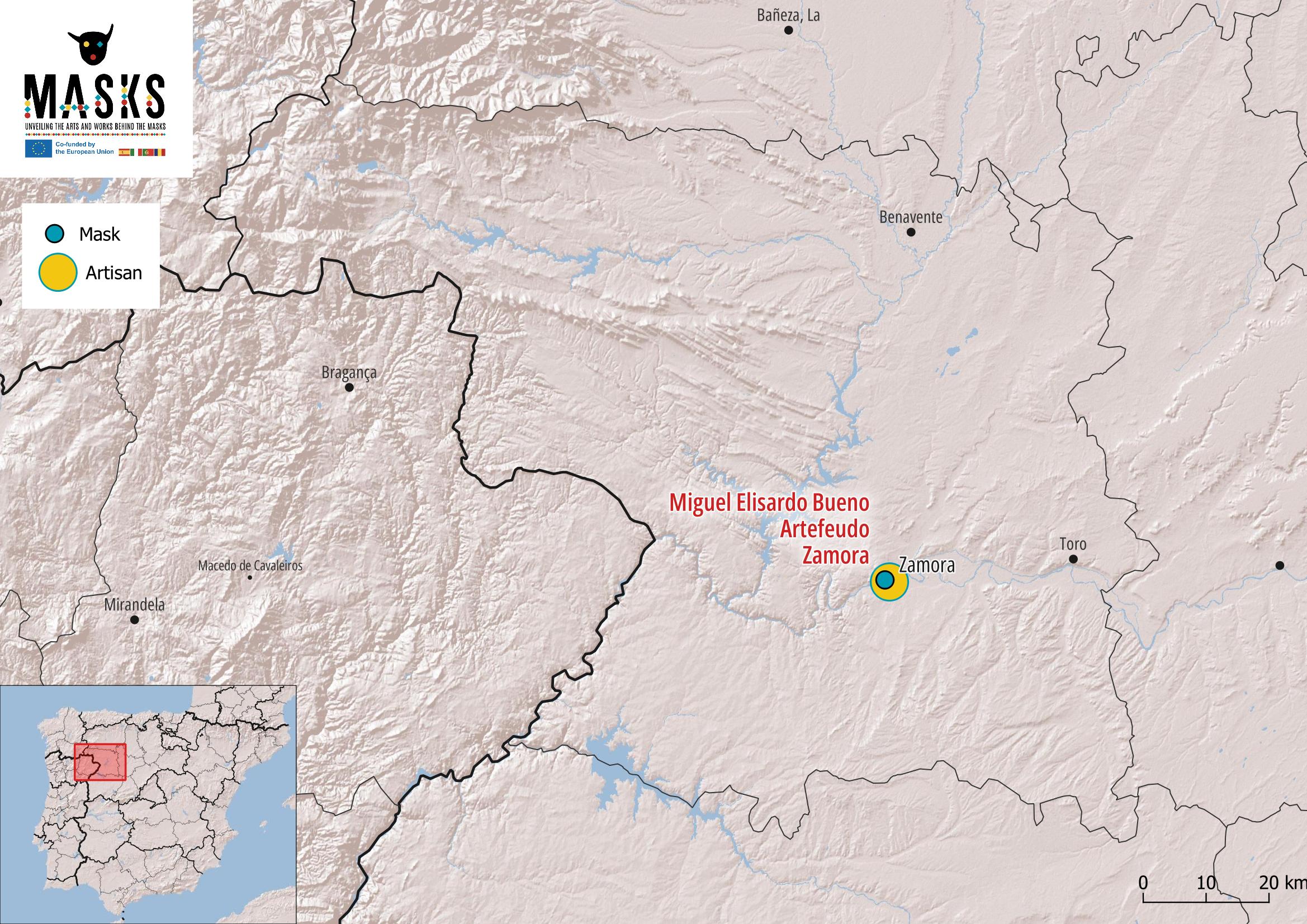
Miguel Elisardo Bueno González (1985). He is a sculptor from Zamora and the founder of the workshop Arte Feudo. With a deep passion for form and expression, he creates sculptures using materials such as stone and wood, combining traditional craftsmanship with a contemporary artistic vision. Each piece is the result of a meticulous process, where emotion and detail take centre stage. He does not produce for mass commercialisation, but to explore and share the narrative power of sculpture. Through exhibitions and workshops, he actively promotes art within his community, inspiring others to discover their own creativity. His work has made Arte Feudo a recognised space where tradition and innovation come together.
José Manuel de Bustos Rodríguez
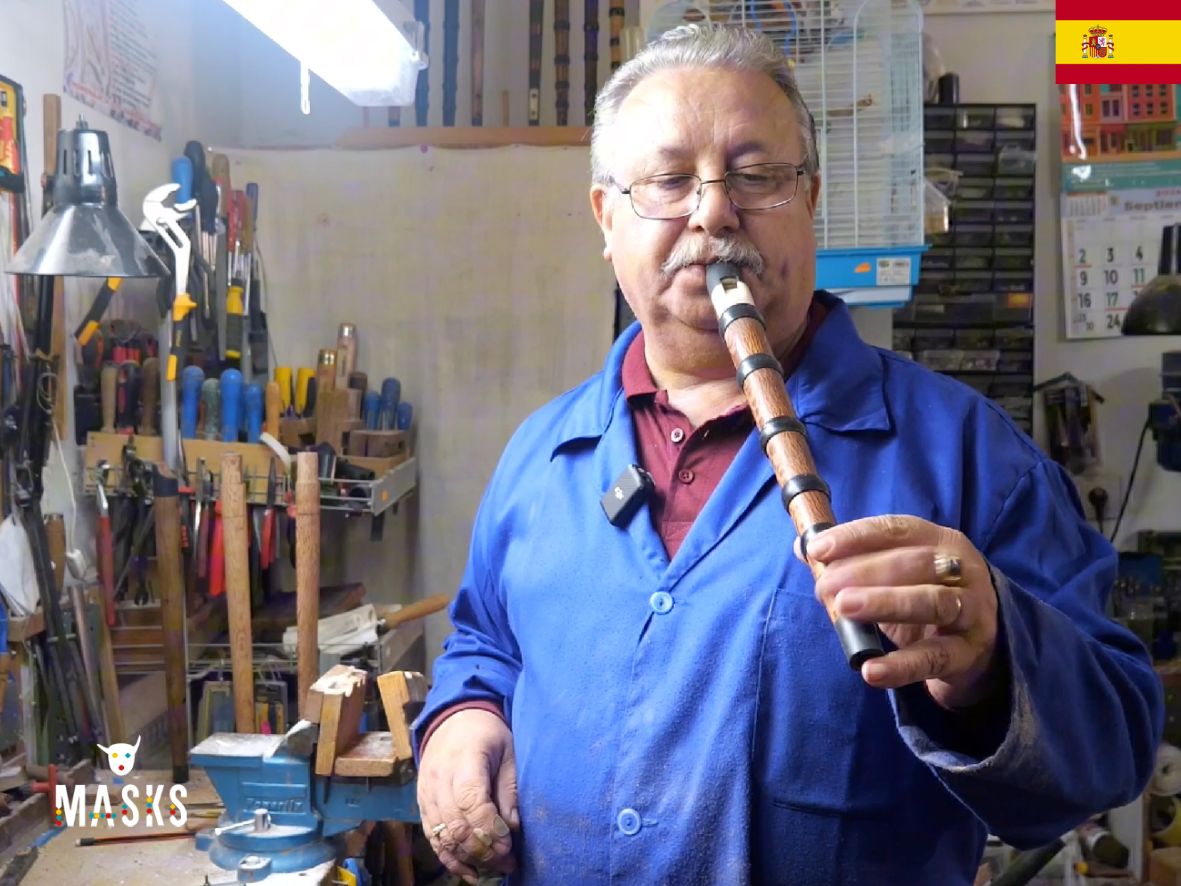
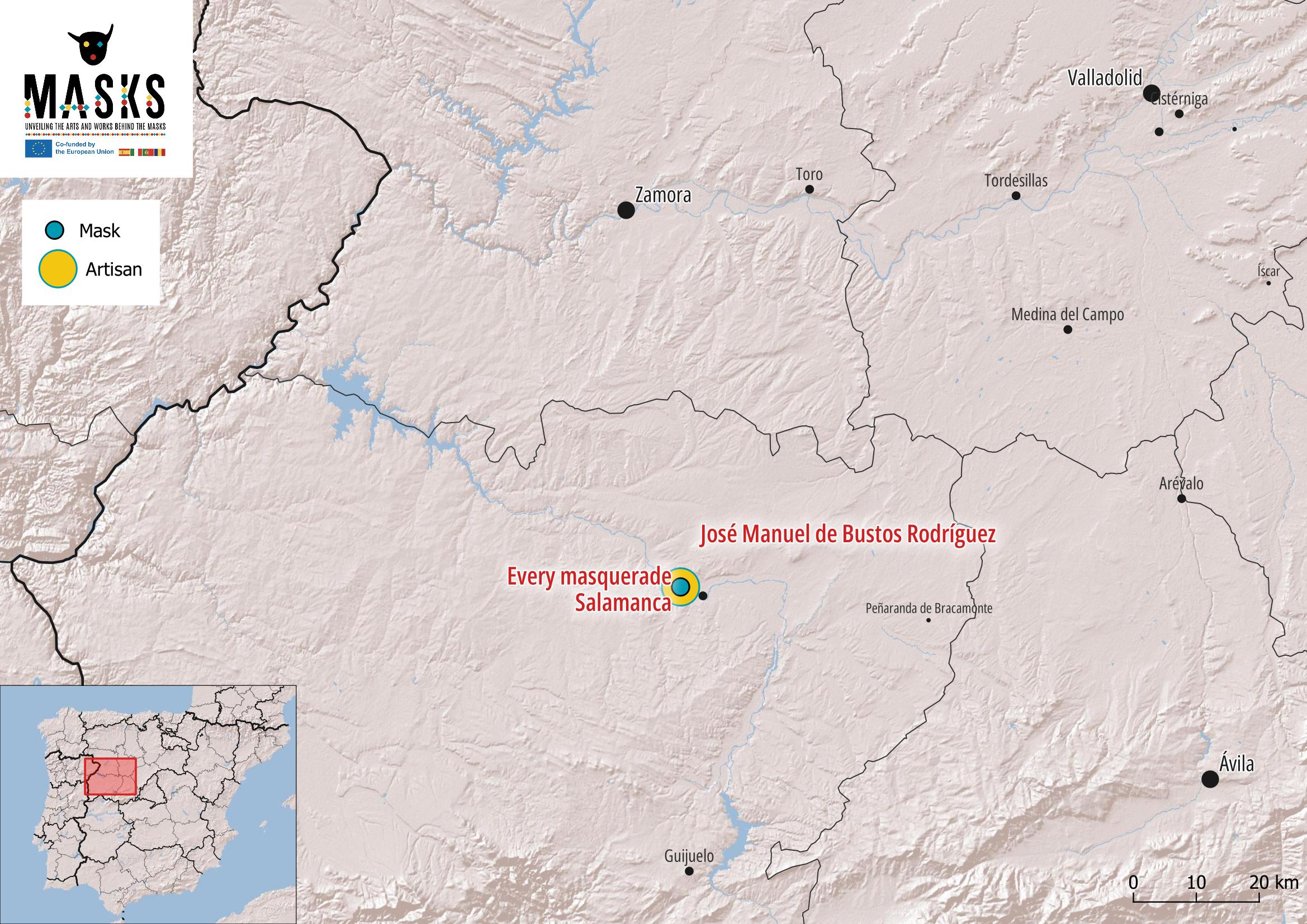
José Manuel de Bustos Rodríguez (1965). He is a craftsman from Salamanca, dedicated to the creation of traditional musical instruments. With a deep passion for music and regional culture, he combines ancient techniques with a contemporary approach to craft instruments that are both sonorous and meaningful. In his workshop, wood is shaped into guitars, dulzainas, and other instruments, each made with carefully selected materials to ensure exceptional sound and authenticity. He does not produce for mass distribution, but to honour and preserve Salamanca’s musical heritage. He also shares his knowledge with younger generations, contributing to the transmission of traditional craftsmanship and the continuity of local music culture.
Adrián Blanco Rivera, Paulino Blanco Garrido and Alexander Vaquero Canas
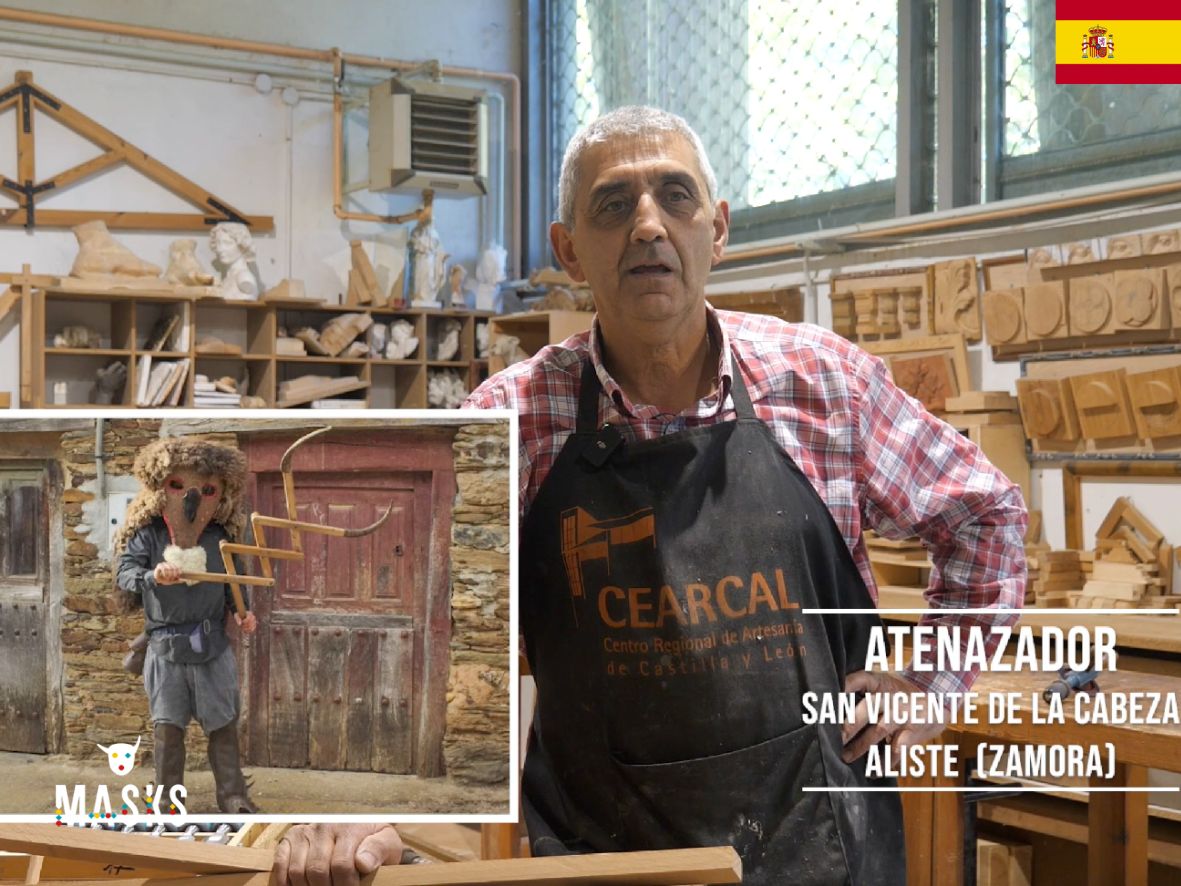
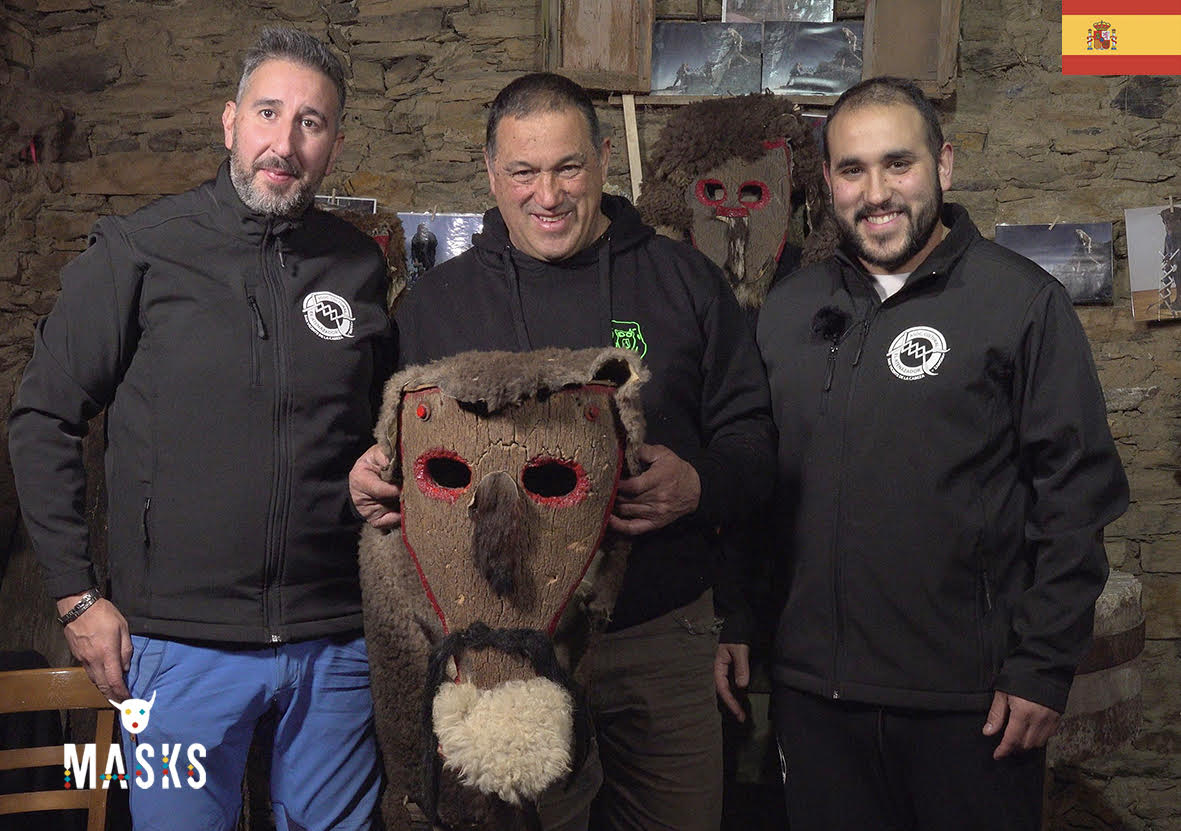
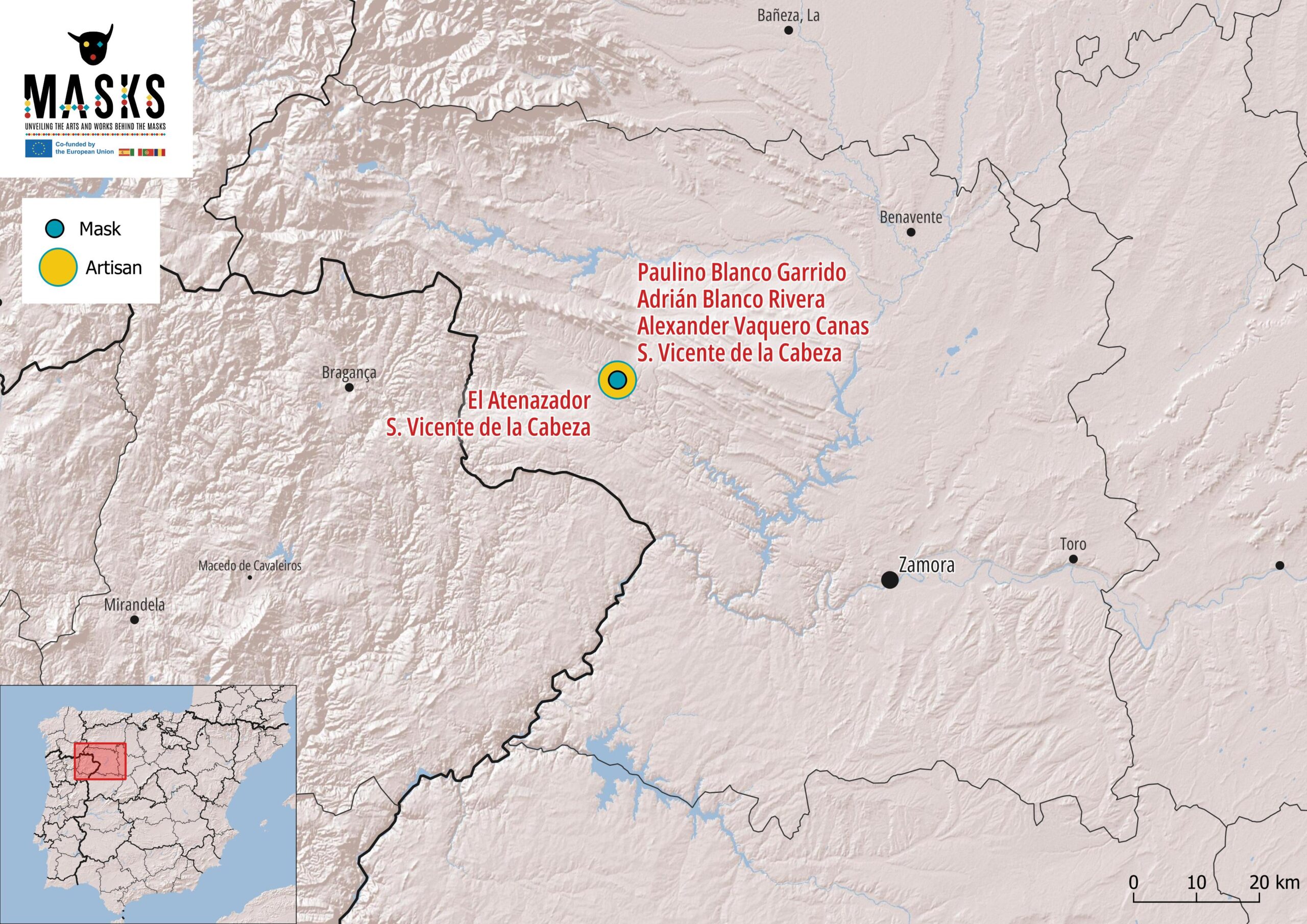
Adrián Blanco Rivera (1992), Paulino Blanco Garrido (1964), and Alexander Vaquero Canas (1980). They are members of the Asociación El Atenazador in the village of San Vicente de la Cabeza, in the province of Zamora. The local masquerade was revived for the second time in 2010 and has since become a cherished festival. The association has steadily grown, conducting research to better understand the historical appearance of the masks. The three of them work collectively to make the masks, and since 2024 they have had their own dedicated space—an old restored mill—where they store the masks along with all the masquerade gear. They do not sell their creations; they make them solely to celebrate the festival and take part in performances, ensuring the continuity of a meaningful community tradition.
Jesús Hernández Sánchez
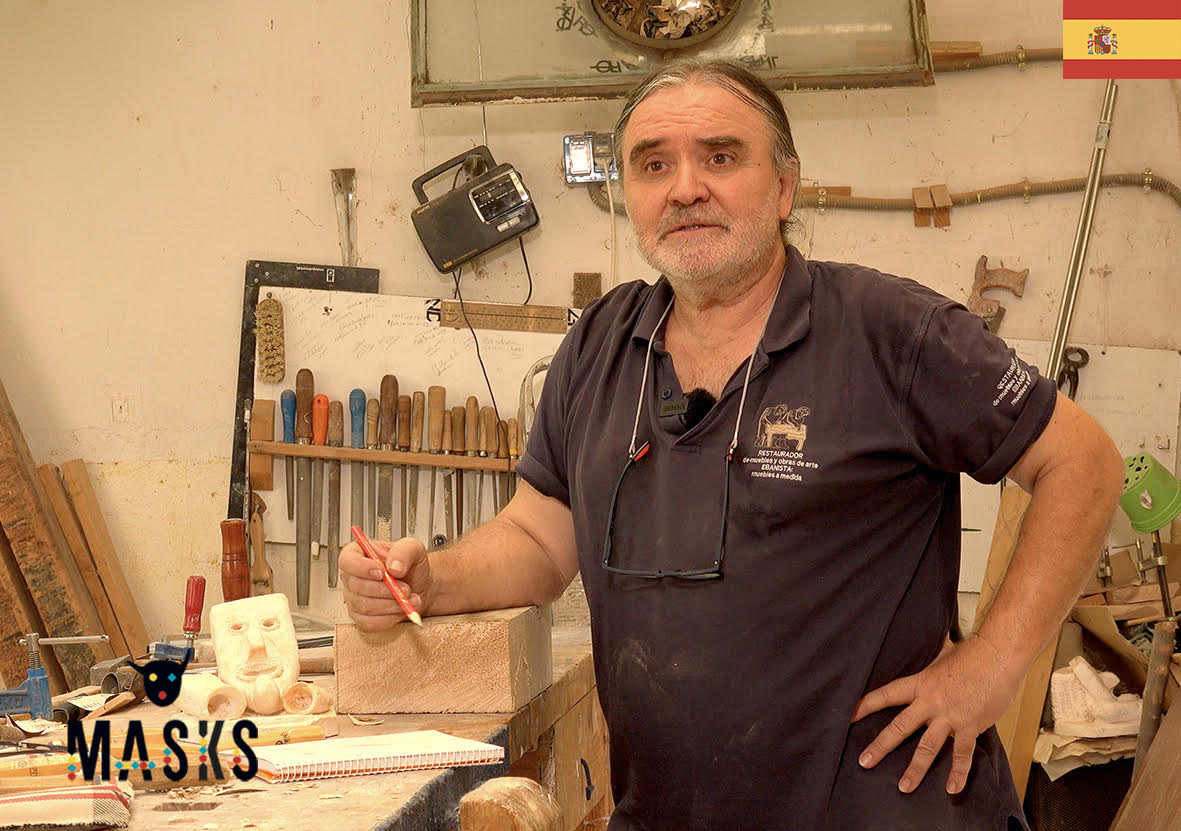
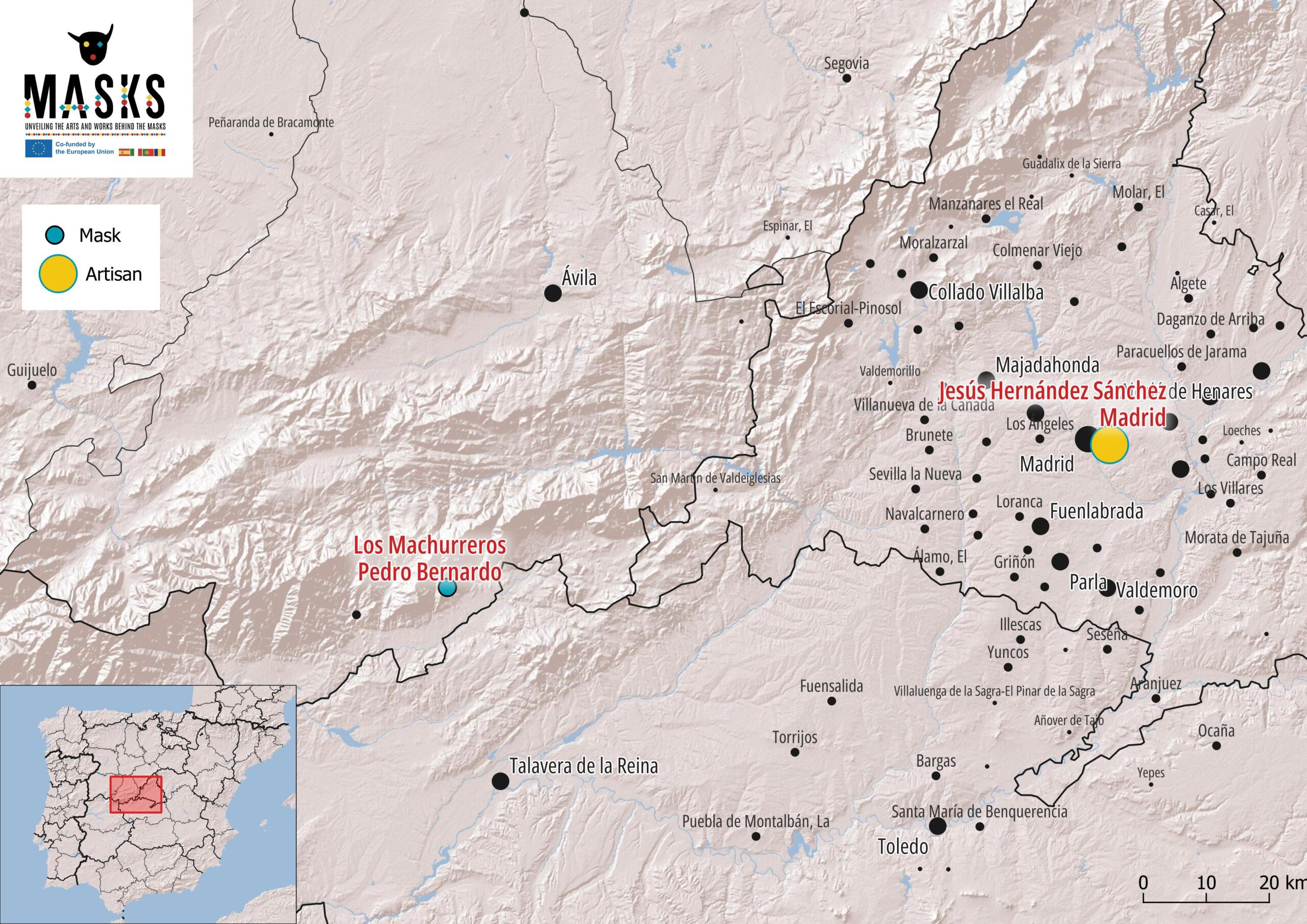
Jesús Hernández Sánchez (1964). Born in Pedro Bernardo, in the province of Ávila, he is a cabinetmaker, restorer of furniture and artworks, and sculptor. He has worked professionally in cabinetmaking and restoration since 1995, and for the past fifteen years has also been teaching these disciplines alongside wood carving. He holds a degree in Applied Sculpture Arts—wood, metal, and stone—and in Furniture Conservation and Restoration. As a sculptor, he has exhibited his work both individually and in group shows, and is the author of the Monumento a los Machurreros in Pedro Bernardo. He has also collaborated with sculptor David Lechuga. As a restorer, he has worked on major projects such as the main altarpiece of the Church of Pedro Bernardo, pieces in the Convent of the Descalzas Reales in Madrid, and choir stalls in various convents in the province of Toledo. Passionate about local heritage, he is eager to apply his knowledge to crafting masks for the village Carnival.
José Ramón Pérez Pérez
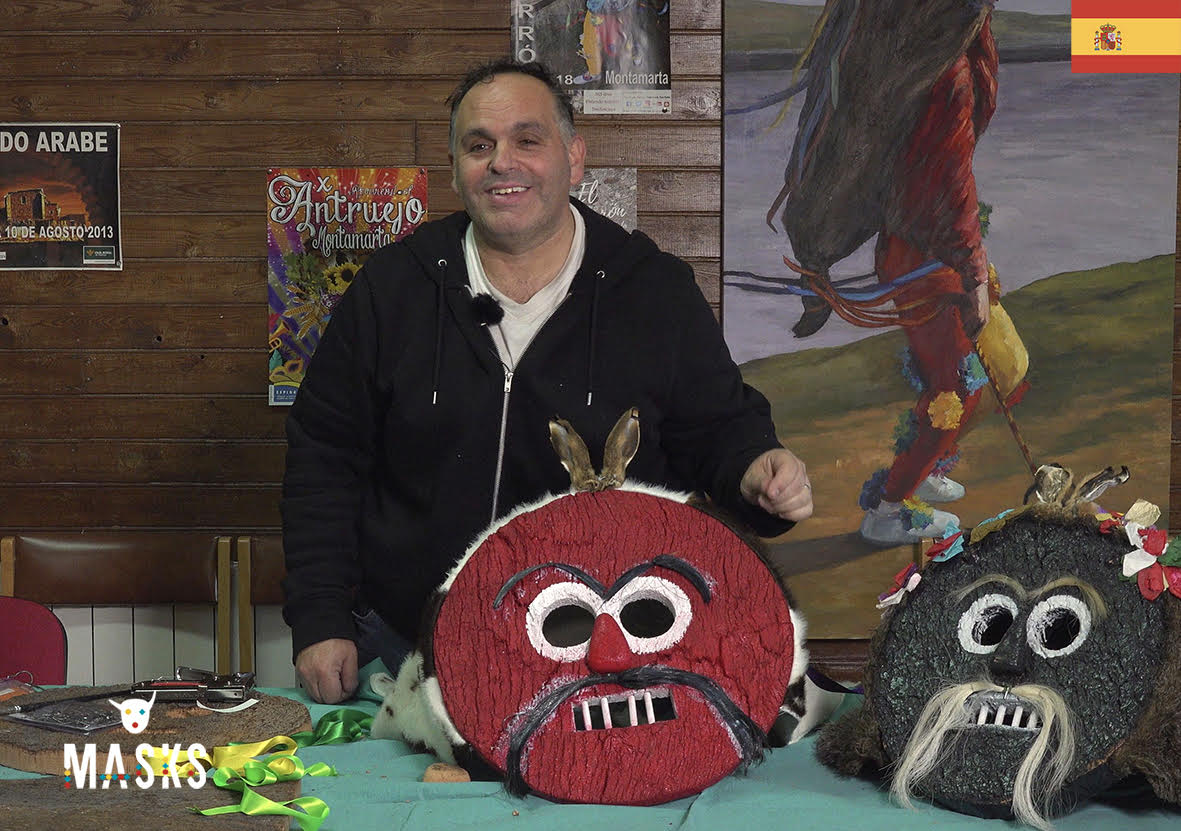
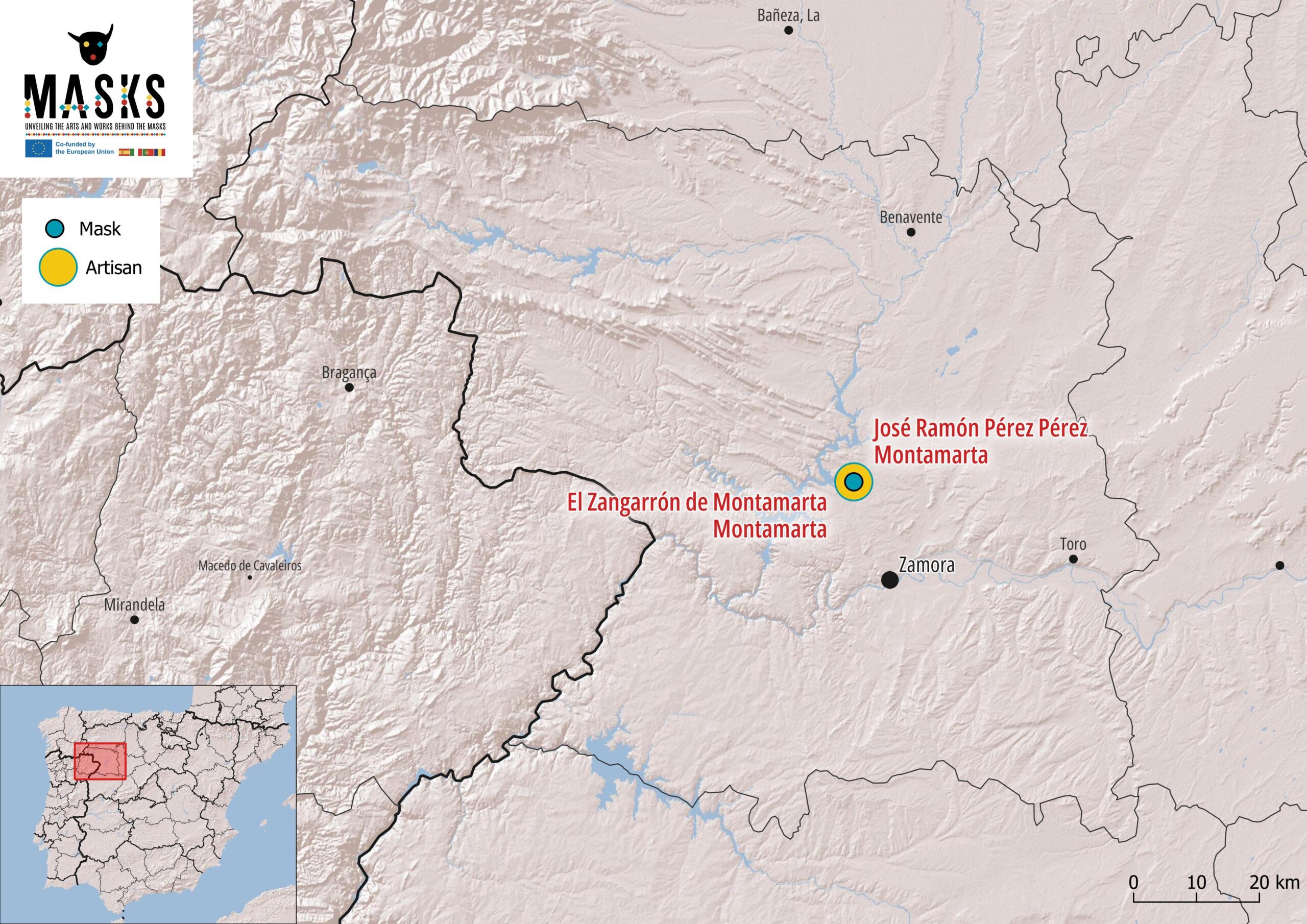
José Ramón Pérez Pérez (1975). He is one of the founders of the Cultural Association El Zangarrón de Montamarta, which he chaired for several years. Although he now plays a more discreet role, he remains a key figure in the festival. For over twenty years, he has been responsible for dressing the masked man during the two days of celebration—a process that is done directly on the body of the young man embodying the Zangarrón. He also builds and repairs the masks when needed. He does not sell them; he makes them for use in the fiesta and parades, ensuring that masks are available throughout the year. In the past, this was not the case, as it was customary for each participant to make their own mask.
Jorge Sancho Santamaría
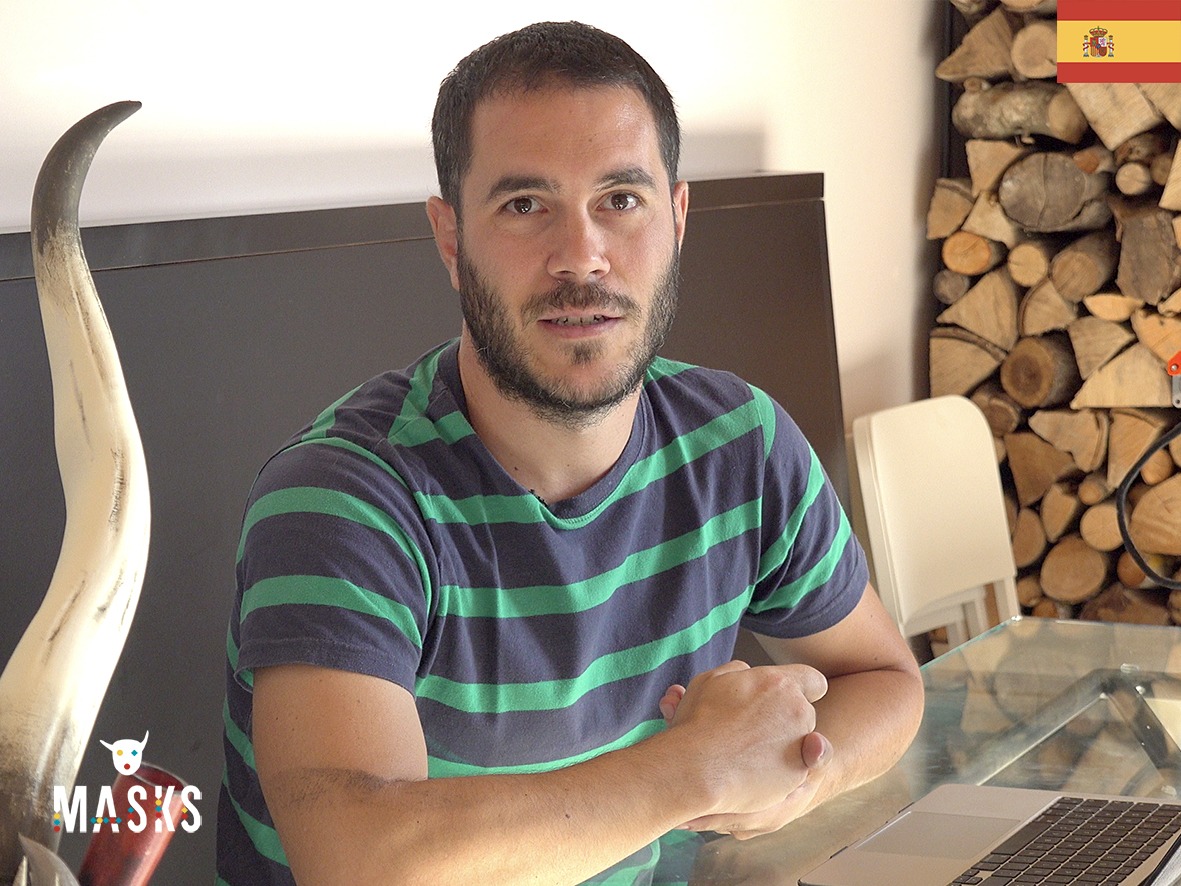
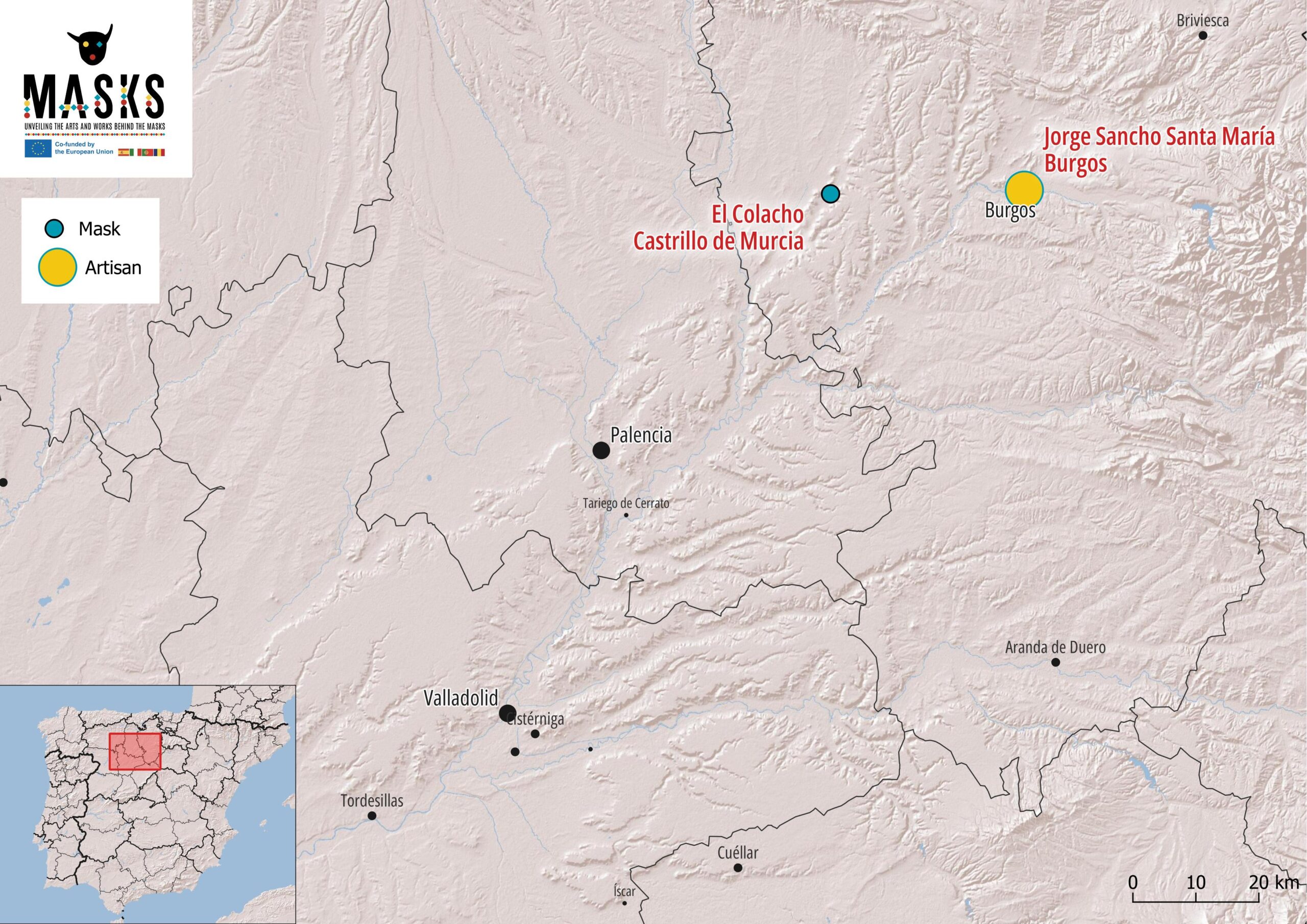
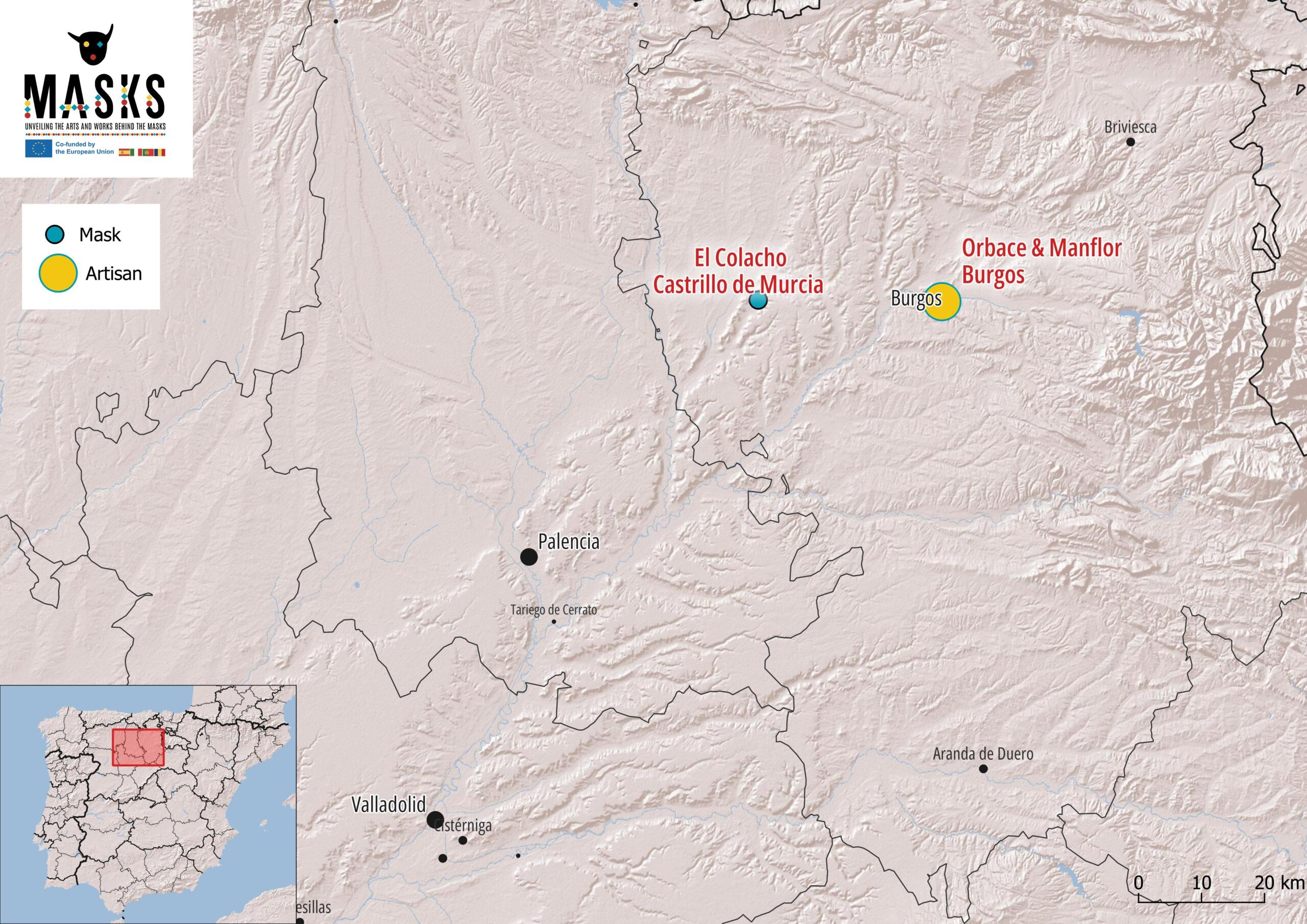
Jorge Sancho Santamaría (1987). With family roots in Castrillo de Murcia (Burgos) on his father’s side, he has been working in the audiovisual field for five years, specialising in 3D content creation and animation for videomapping and related media. This experience led him to explore 3D printing, which he particularly enjoys for its ability to bring digital designs into physical form. A member of the Archicofradía del Santísimo Sacramento de Castrillo de Murcia, he has proudly served as both Atabalero and Colacho. Today, he designs, prints, and hand-paints Colacho masks, combining new technologies with traditional devotion to keep the spirit of the festival alive.
José Ángel Llamas
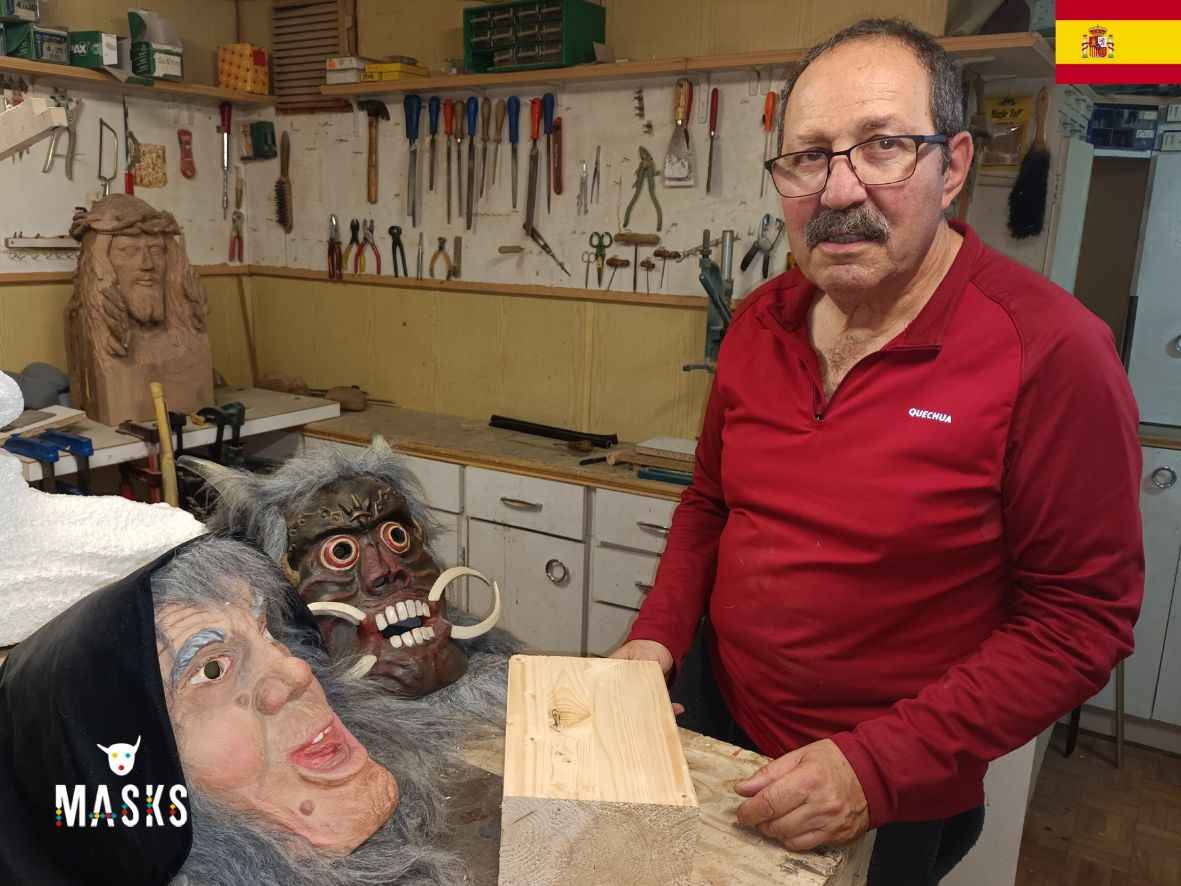
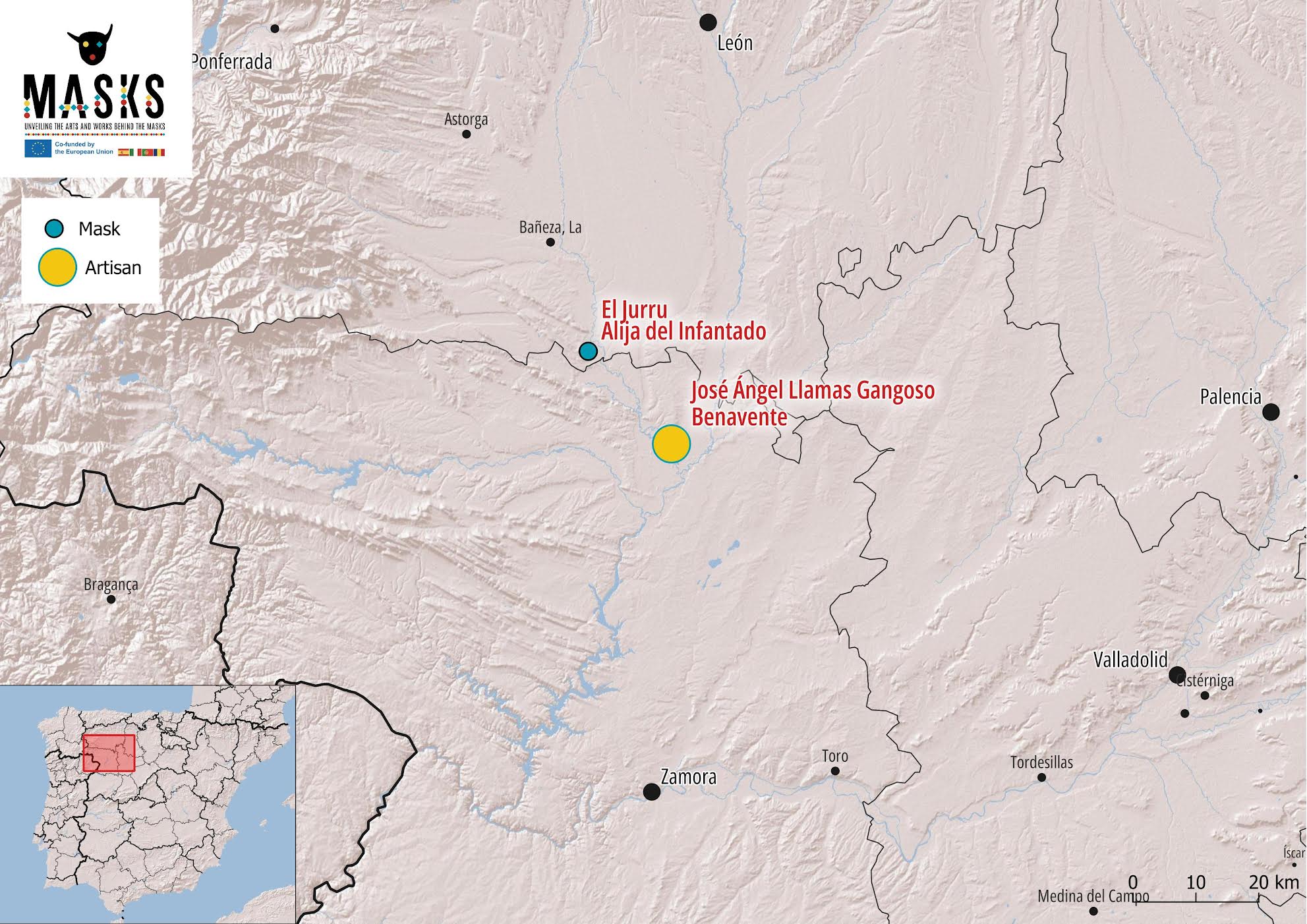
José Ángel Llamas is a multidisciplinary artist who lives and works in Spain. He works with materials such as wood, papier-mâché, clay, and other natural elements to create pieces that blend tradition and imagination. In his workshop, he produces paintings depicting scenes of daily life and traditional trades, zoomorphic figures, sculptures of saints, and masks linked to local festive traditions. His creations are not intended for mass production but are meant to be a living part of popular celebrations, exhibitions, and craft workshops. With years of experience and a spirit open to experimentation, José Ángel contributes to the preservation of local cultural heritage through the art of his hands.
Alfonso Díez Ausín and Wiliam Cara Zanda
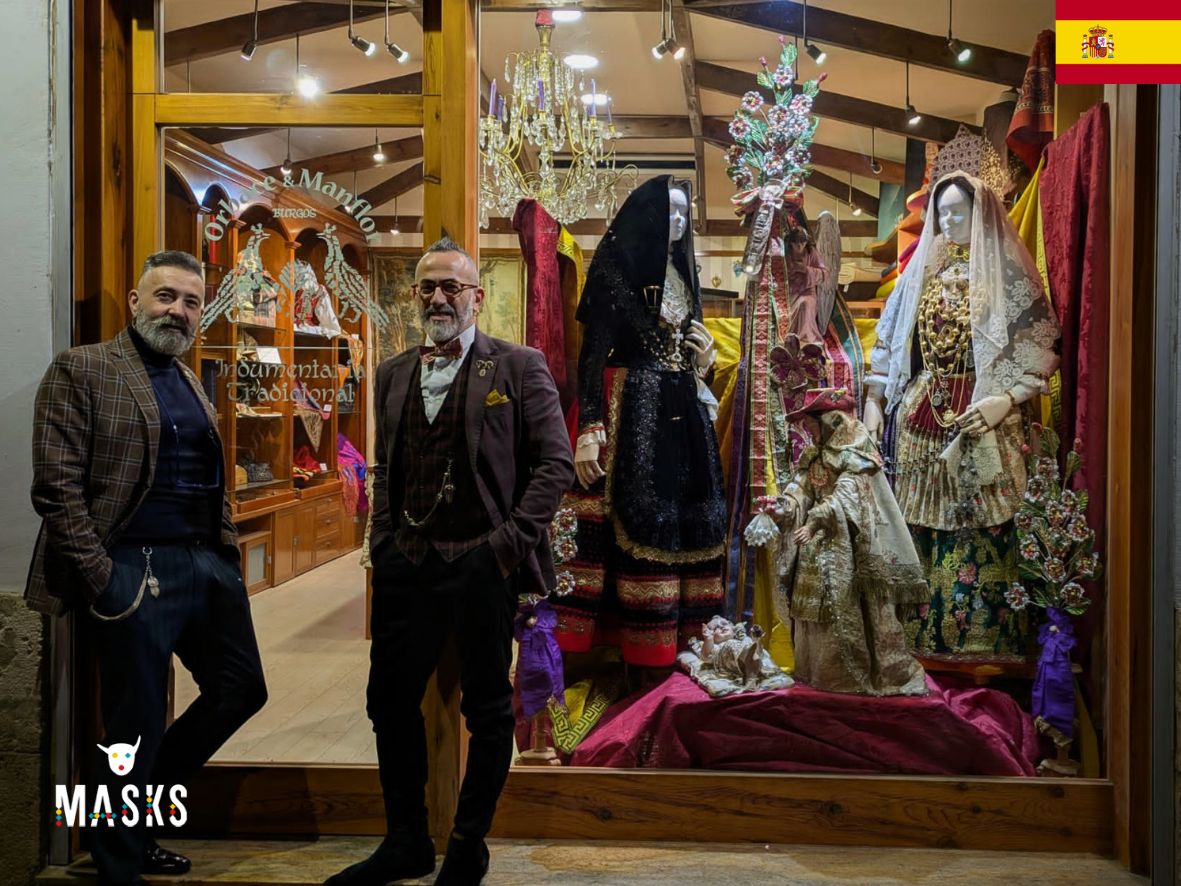
Alfonso Díez Ausín (1969) and Wiliam Cara Zanda (1967). Born respectively in Burgos and Pirri, Sardinia, they have long been dedicated to the research, preservation, and dissemination of traditional culture, with a particular focus on clothing. Each with their own background in garment-making and restoration, they have collaborated for several years on shared projects. This collaboration took shape in their joint shop in Burgos, Orbace & Manflor, named after the traditional fabrics of their homelands: orbace, the twilled wool used in Sardinian costumes, and manflor, the carved wool of the barragán family from Palazuelo de la Sierra, Alfonso’s ancestral village. They create traditional and historical garments based on original pieces, as well as reconstructions inspired by engravings, paintings, and literary sources. Their deep knowledge of ethnographic heritage—rites, music, and more—allows them to contextualise each creation within a broader cultural framework.
María Miano Peralta
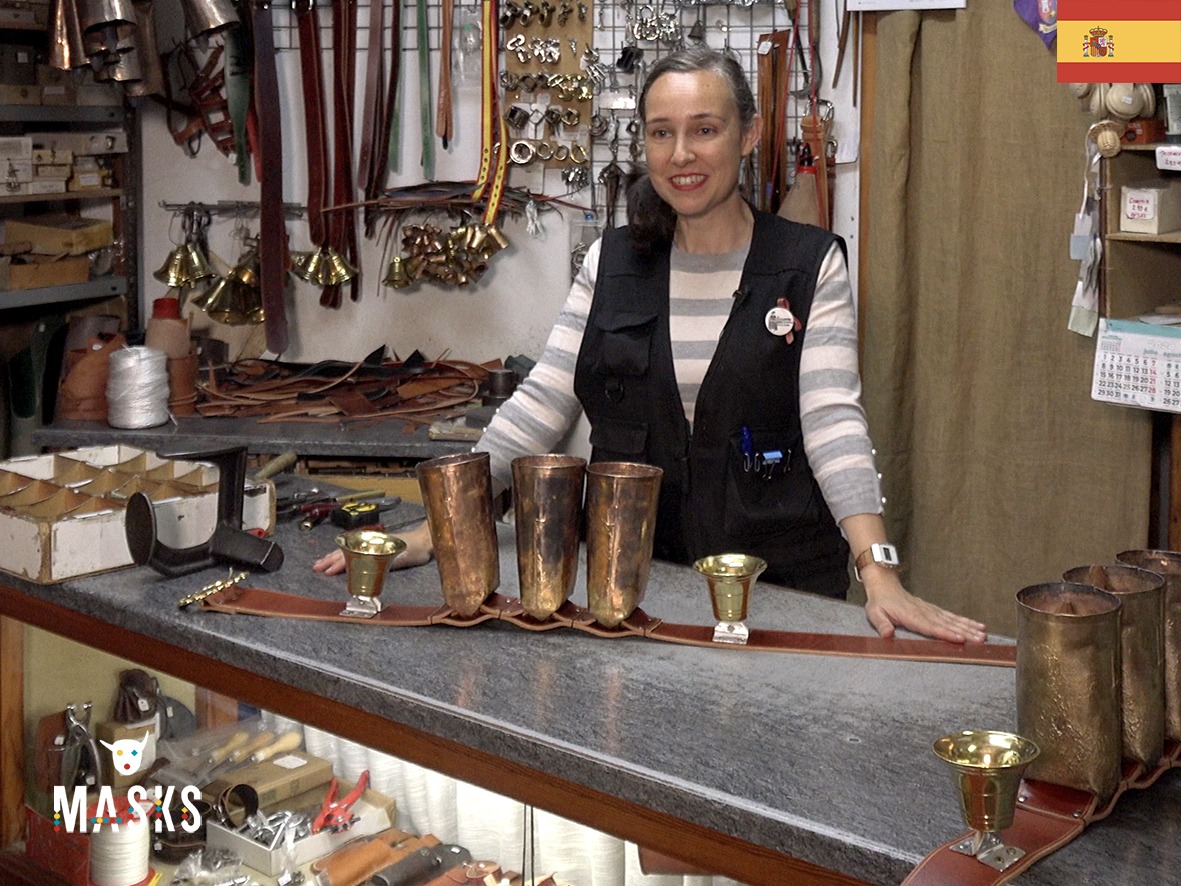
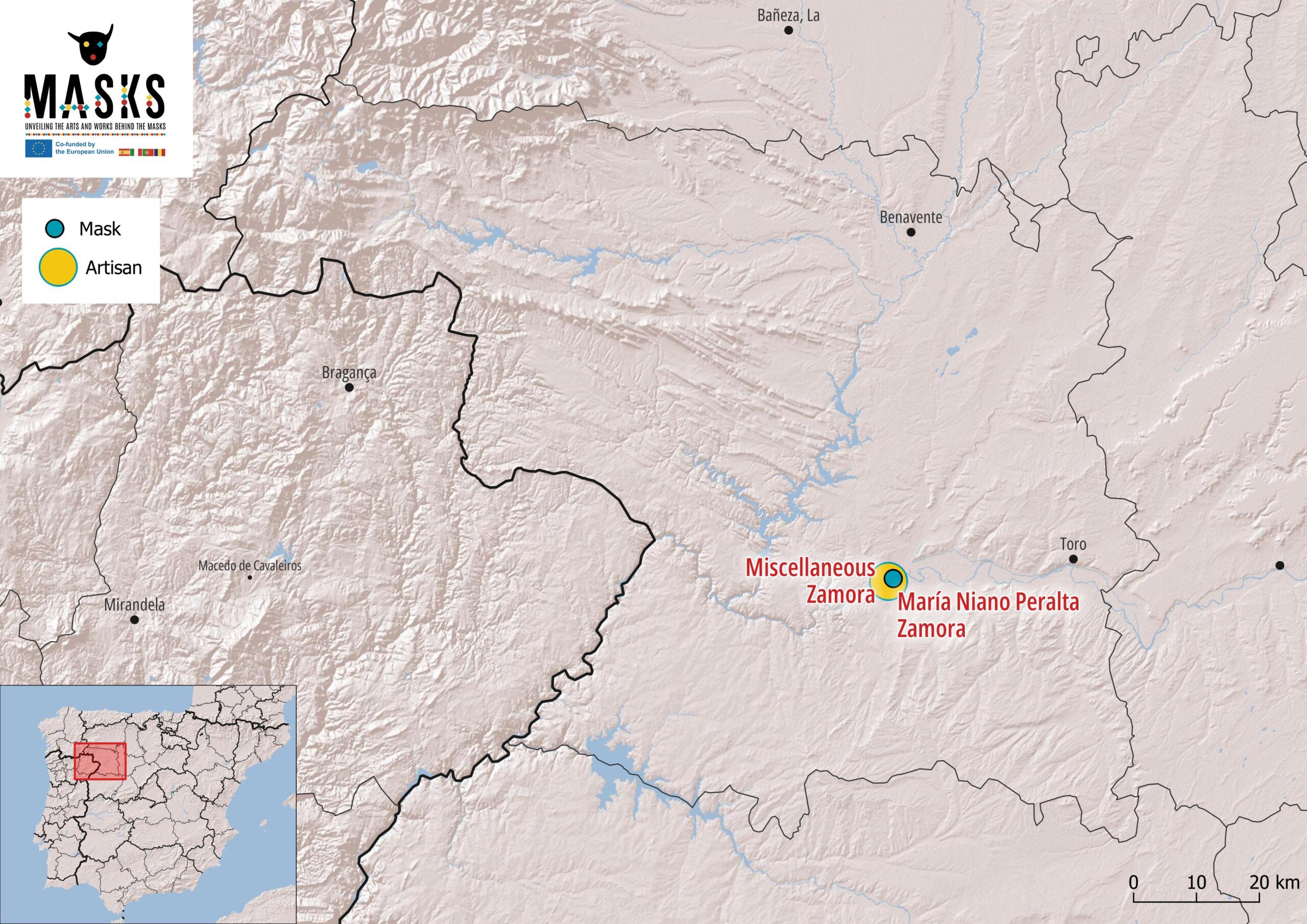
María Miano Peralta (1987). She is from Zamora and manages El Sayagués, a historic shop in the city. After working for several years as a team coordinator in a foreign company, this Geography graduate chose to return to her roots and continue the family business. The shop, originally founded by her great-uncle Baltasar and later run by her father Manuel Miano, has specialised for over fifty years in tools and handmade objects for rural life, agriculture, and livestock. It also offers items used in masked festivities, such as cowbell decks, cayadas, and trallas. María does not make masks herself, but plays a key role in preserving and supporting the material culture that surrounds traditional celebrations in Zamora.
José Javier Sánchez Hernández
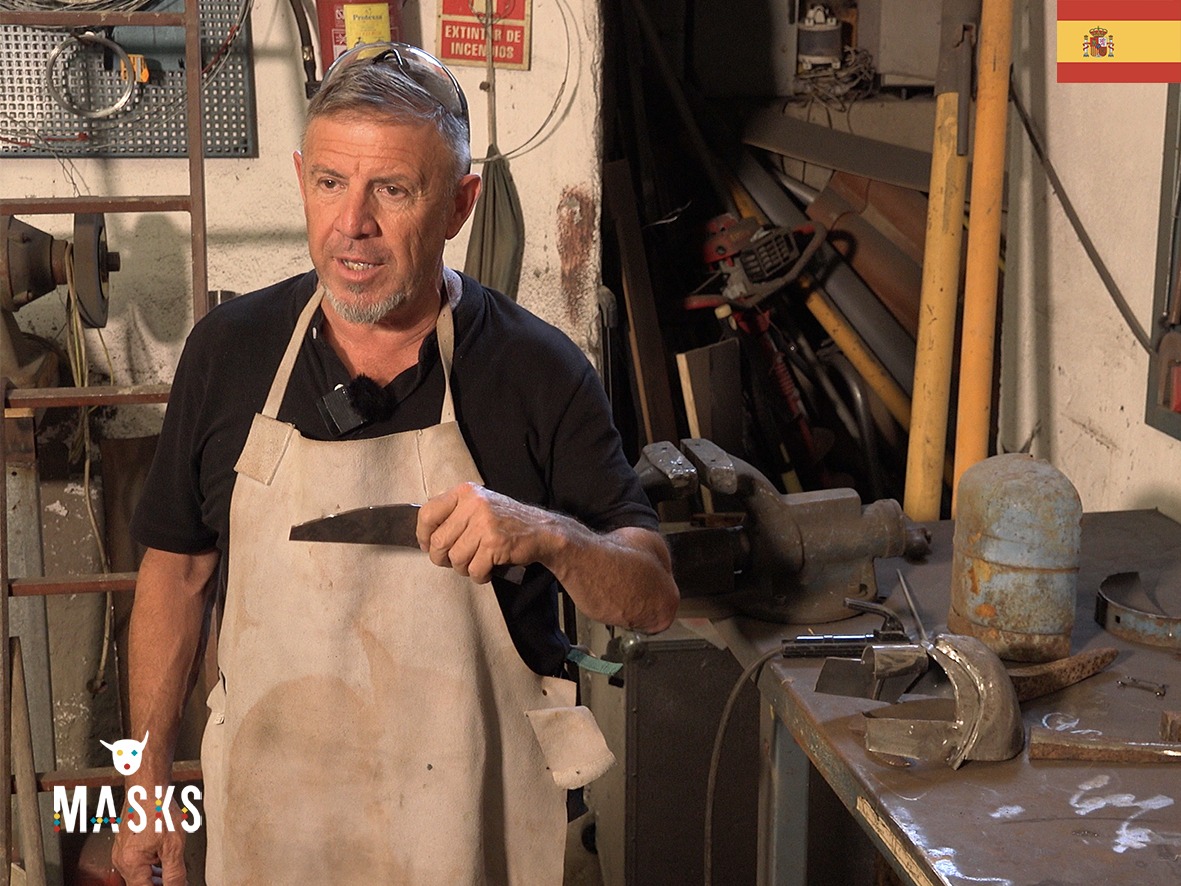
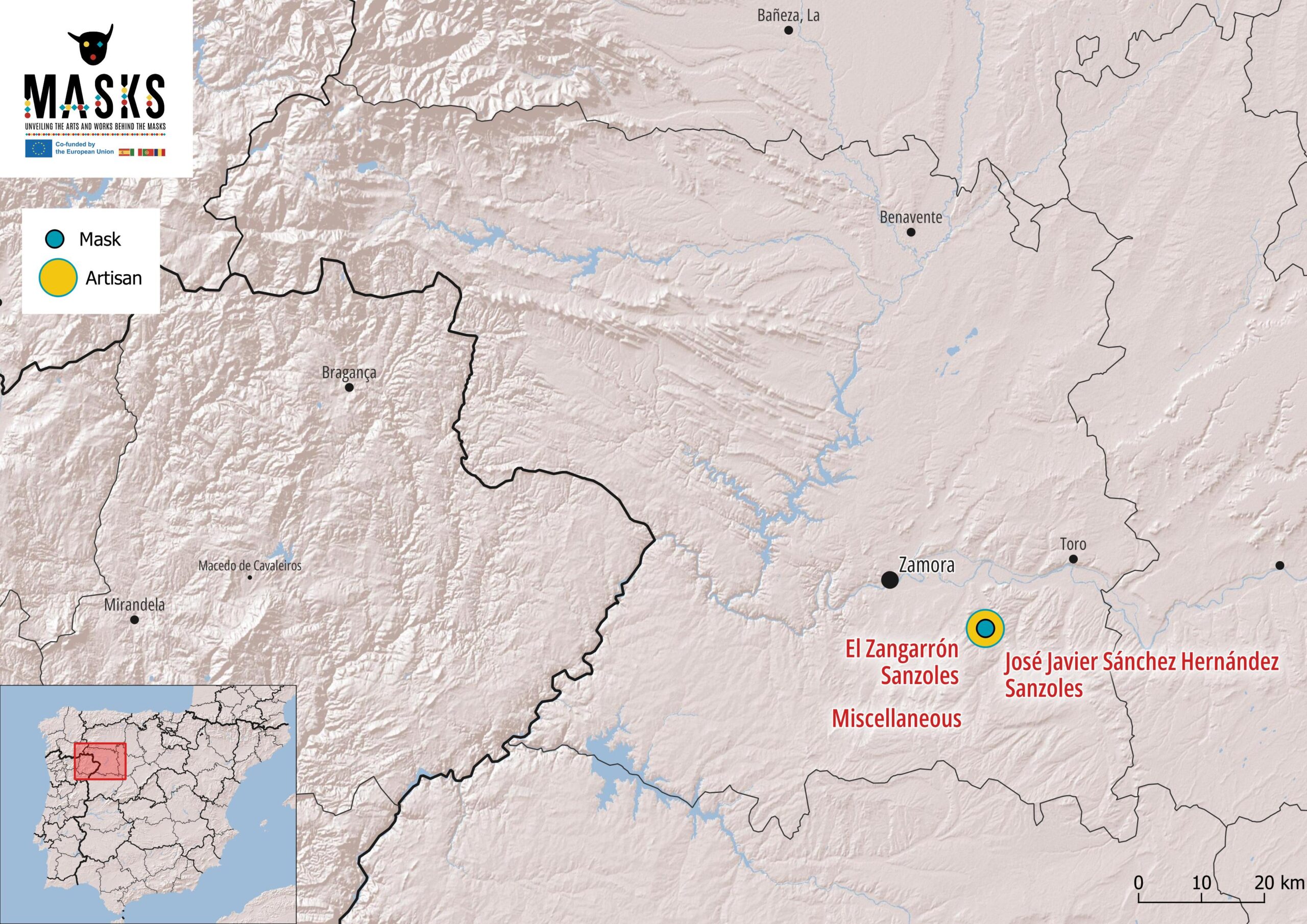
José Javier Sánchez Hernández (1964). Born in Sanzoles, in the province of Zamora, he is the President of the Asociación Amigos del Zangarrón de Sanzoles and also leads the Federación de Asociaciones de Mascaradas de Zamora (MascaraZA). He is the maker of the leather mask used in the Zangarrón Function, as well as replicas for museums. In addition to his work with masks, he creates sculptures using the cold forge technique, with an oxide finish, working with carbon steel and recycled iron from agricultural tools and discarded everyday objects such as gas bottles, picks, or frying pans. Tradition plays a central role in his life and is clearly reflected in his sculptures, where he reinterprets it with creativity and respect.
Carlos Andrés Santos
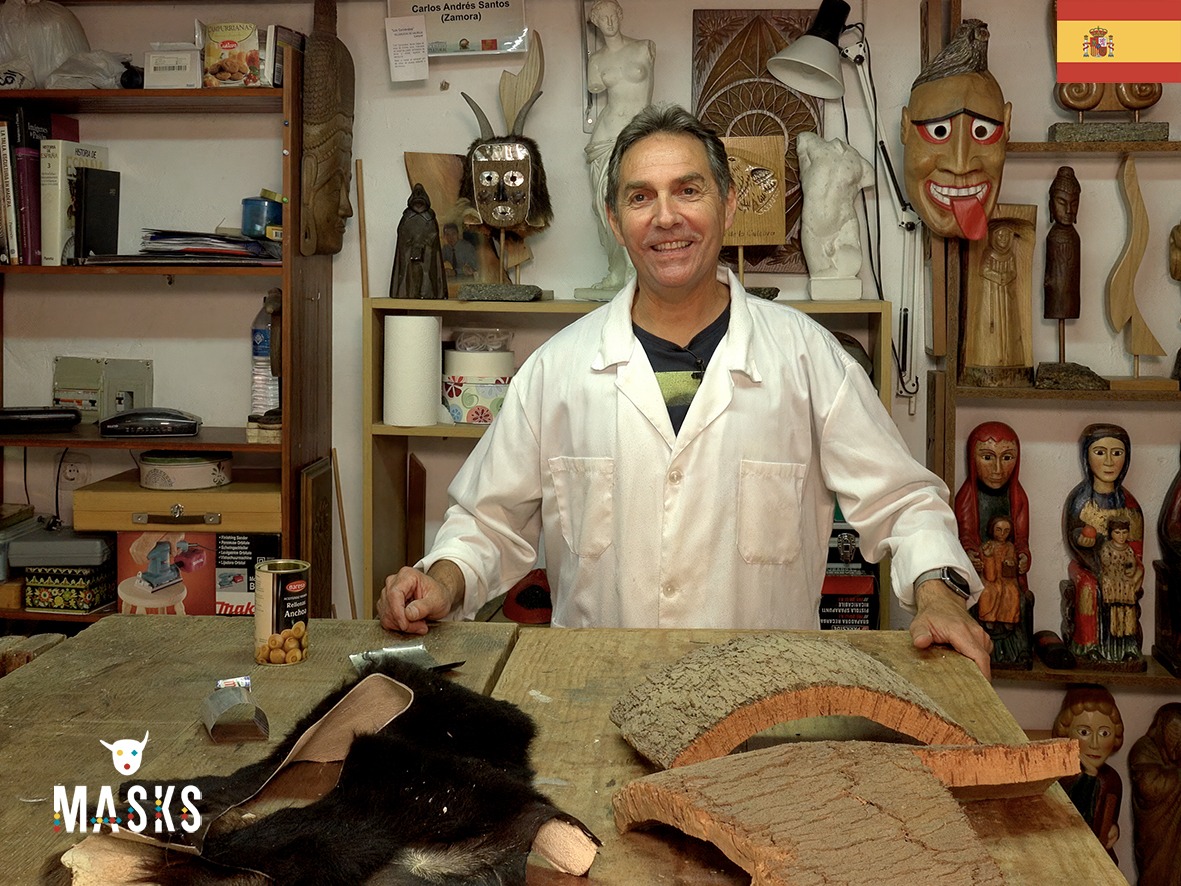
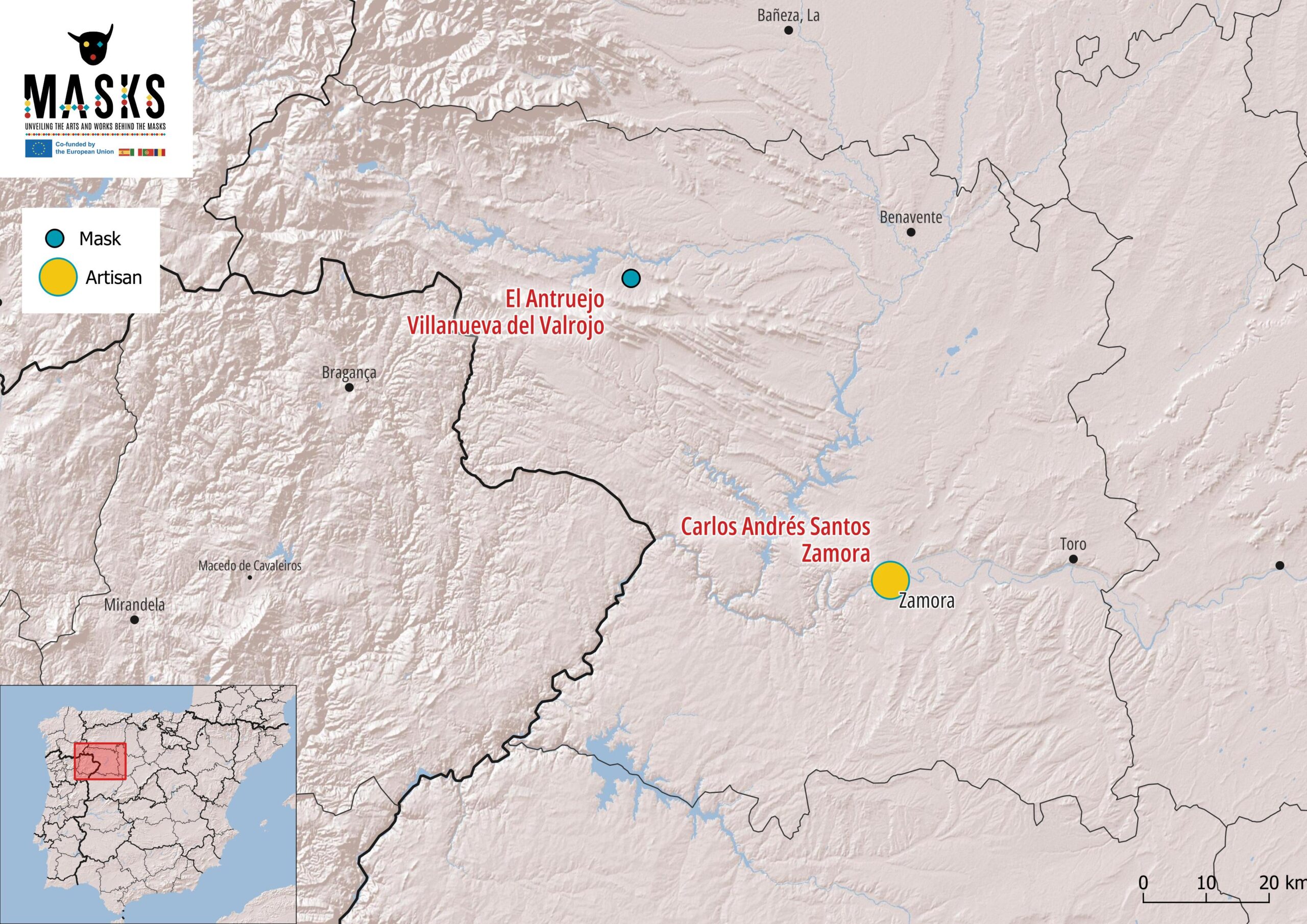
Carlos Andrés Santos (1964). Born in Villanueva de Valrojo (Ferreras de Arriba), in the region of La Carballeda, province of Zamora, he has been making masks for the Antruejo in his village for over 30 years. He works with cork and leather, following the methods of his ancestors, and is also responsible for introducing papier-mâché as an alternative. He made this change when he realised that, without intervention, mass-produced plastic masks would take over the tradition. He does not sell his masks and does not consider himself a craftsman; making them is his passion and personal contribution to preserving the authenticity of the Antruejo.
Carlos Adeva García
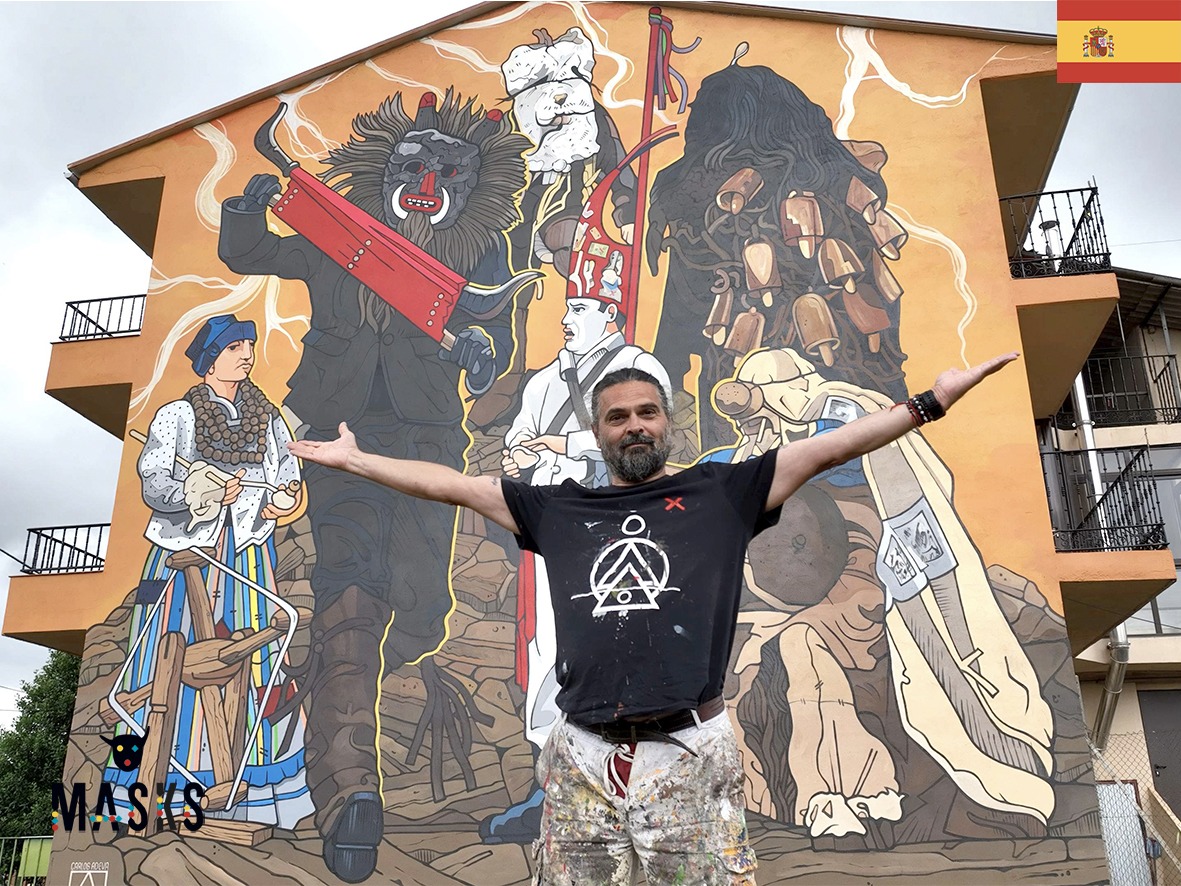
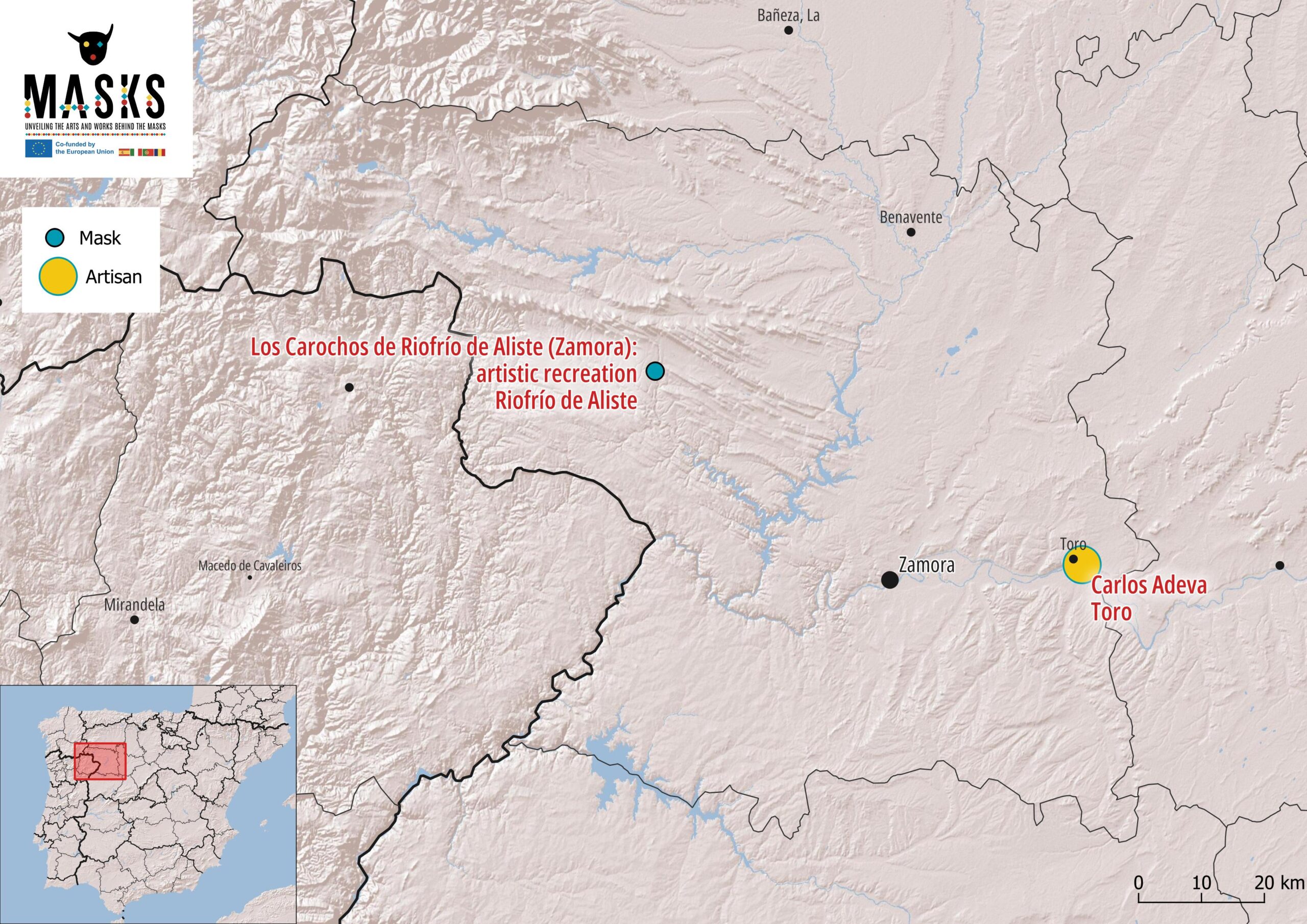
Carlos Adeva García (1974). He is an artist from Toro, where he has his studio. Passionate about drawing, muralism, and painting since childhood, he entered the Escuela de Artes Plásticas de Salamanca at 16, receiving formal training and beginning his first professional commissions. He later spent time in Paris and southern France, where he held several exhibitions. His specialty is drawing that emulates medieval painting, though he embraces a wide range of artistic challenges. He alternates between free-form personal works and commissioned pieces, and has created over seventy murals in various countries. For each mural, he carefully studies the space and context, ensuring that his work evolves in harmony with its surroundings.
Antonio Suárez Fuertes, Manuel Martínez García, Mónica Sevilla Pérez, Julio César Sevilla Pérez
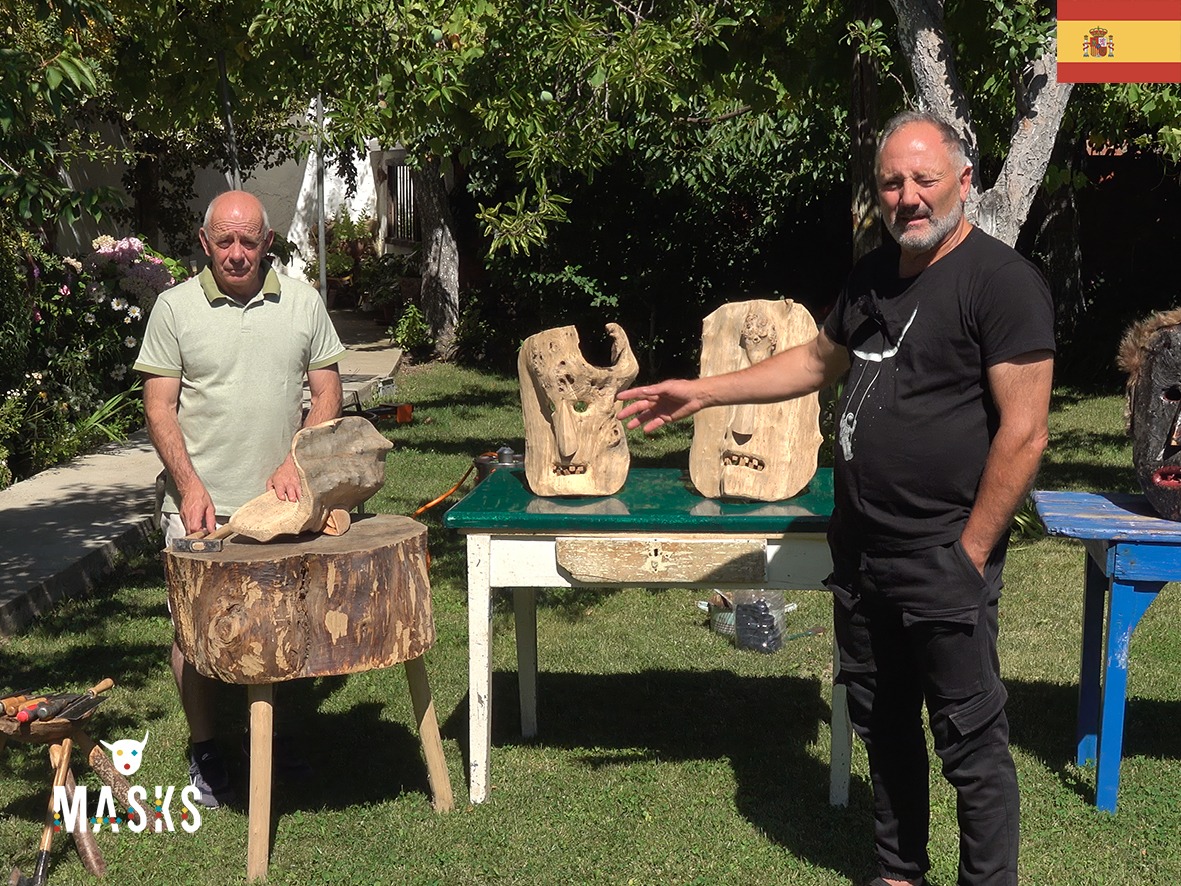
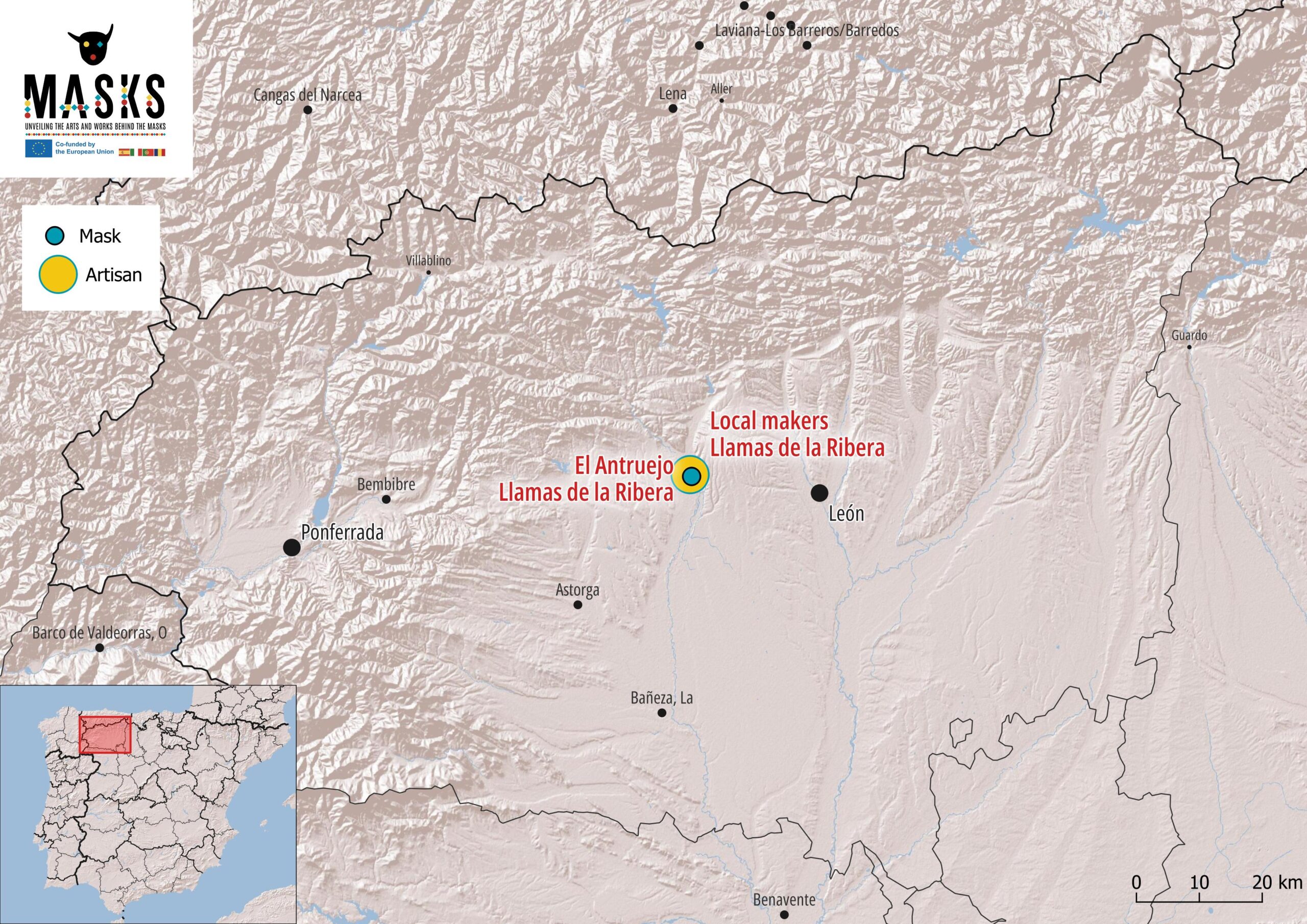
Antonio Suárez Fuertes (1963), Manuel Martínez García (1967), Mónica Sevilla Pérez (1985), and Julio César Sevilla Pérez (1988). This intergenerational group shares a deep love for their village, Llamas de la Ribera, in the province of León, and its traditions. They are members of the Cultural Association of Guirrios and Madamas (GUIMA), dedicated to the recovery, preservation, and promotion of the rich cultural heritage of their municipality. For them, making their mazcaras is a natural act—an expression of collective memory and identity that takes shape during the Antruejo. While there are expert mask makers in the village who carry ancestral knowledge, everyone is encouraged to contribute, because in Llamas de la Ribera, tradition is a shared responsibility and celebration.
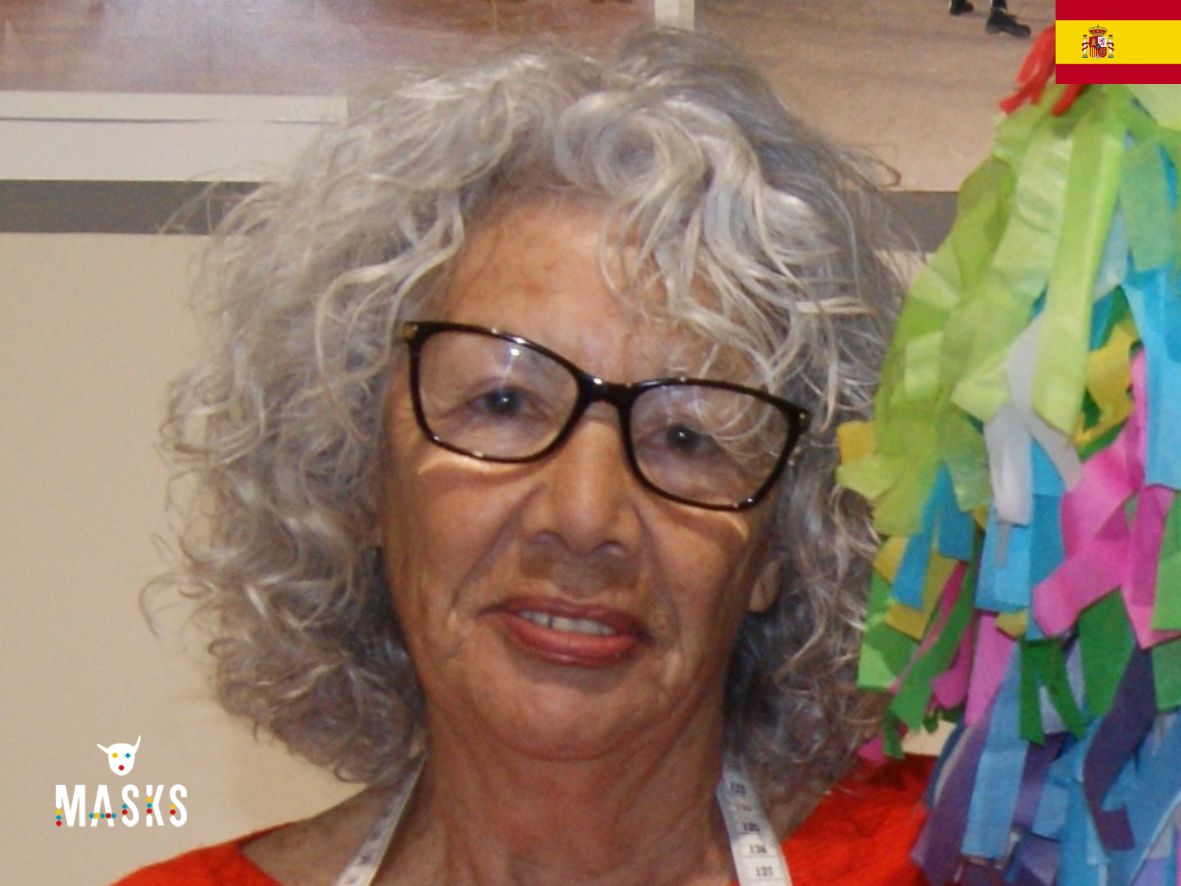
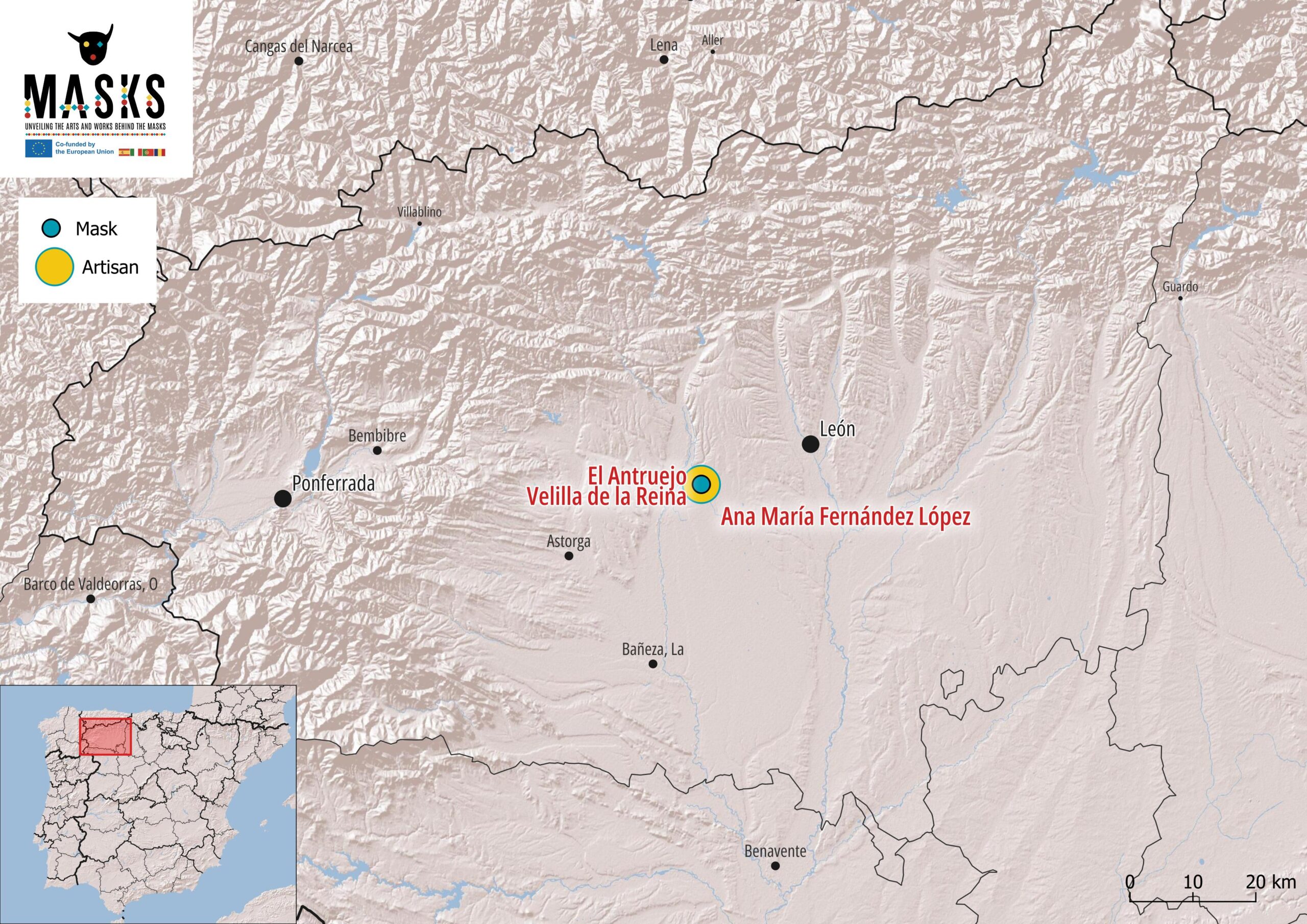
Ana María Fernández López
Born in Velilla de la Reina, she comes from a family of artisans, a background that shaped her lifelong dedication to traditional culture. A member of the Cultural Association Toros y Guirrios since its founding in 1979, she has been one of its most active collaborators and a committed guardian of local traditions. She is especially devoted to transmitting this knowledge to younger generations through sewing workshops for traditional Antruejo costumes and masks, as well as other handcrafted objects. She has also contributed to the Association’s ethnographic exhibitions and plays the rabel, an ancient instrument linked to the pastoral world.
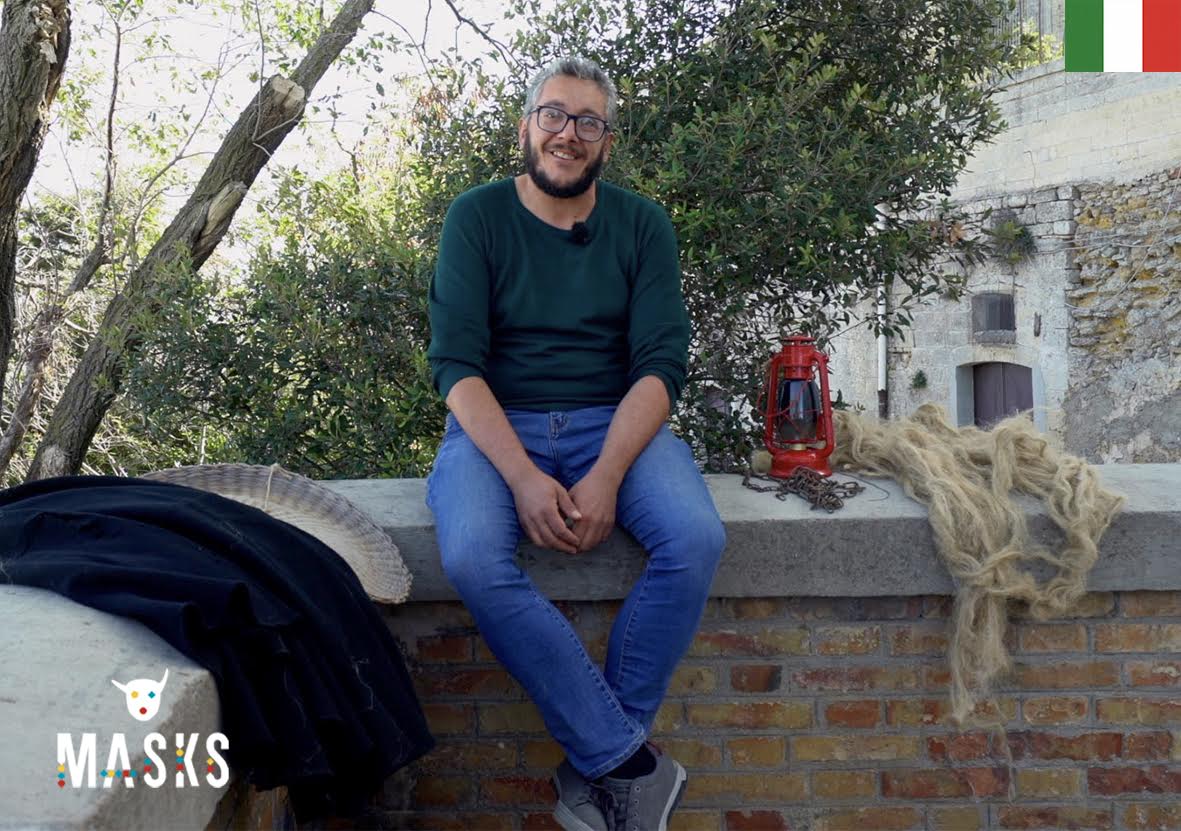
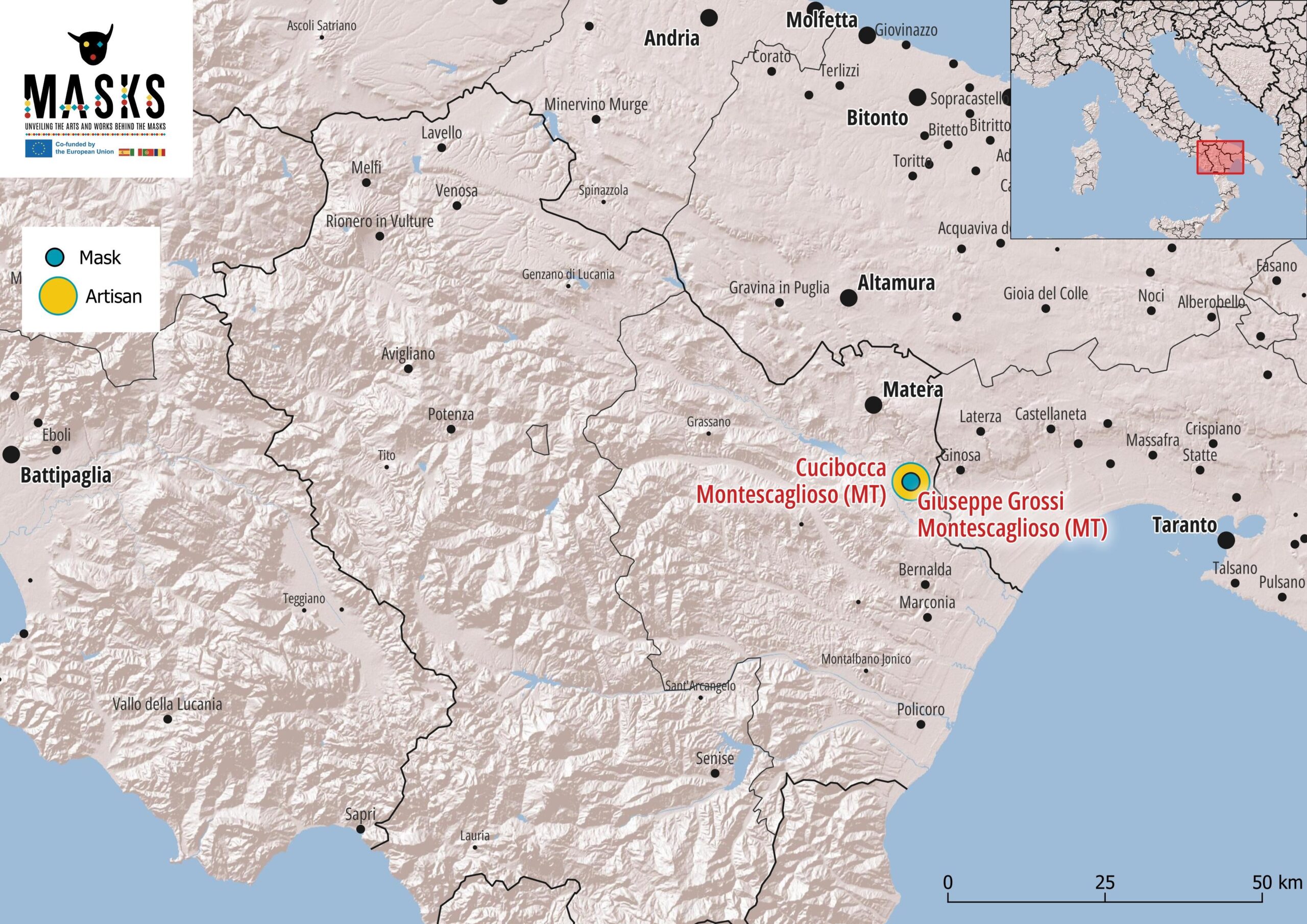
Giuseppe Grossi
Giuseppe Grossi (1987). He lives and works in Montescaglioso and has been actively involved in La Notte dei Cucibocca since the age of fifteen. Deeply committed to the tradition, he collaborates with the Pro Loco and the CEA of Montescaglioso to promote the figure of the Cucibocca and make it known to the younger generations. He does not create masks or costumes professionally, but his dedication plays a vital role in keeping the spirit of the celebration alive within the local community.
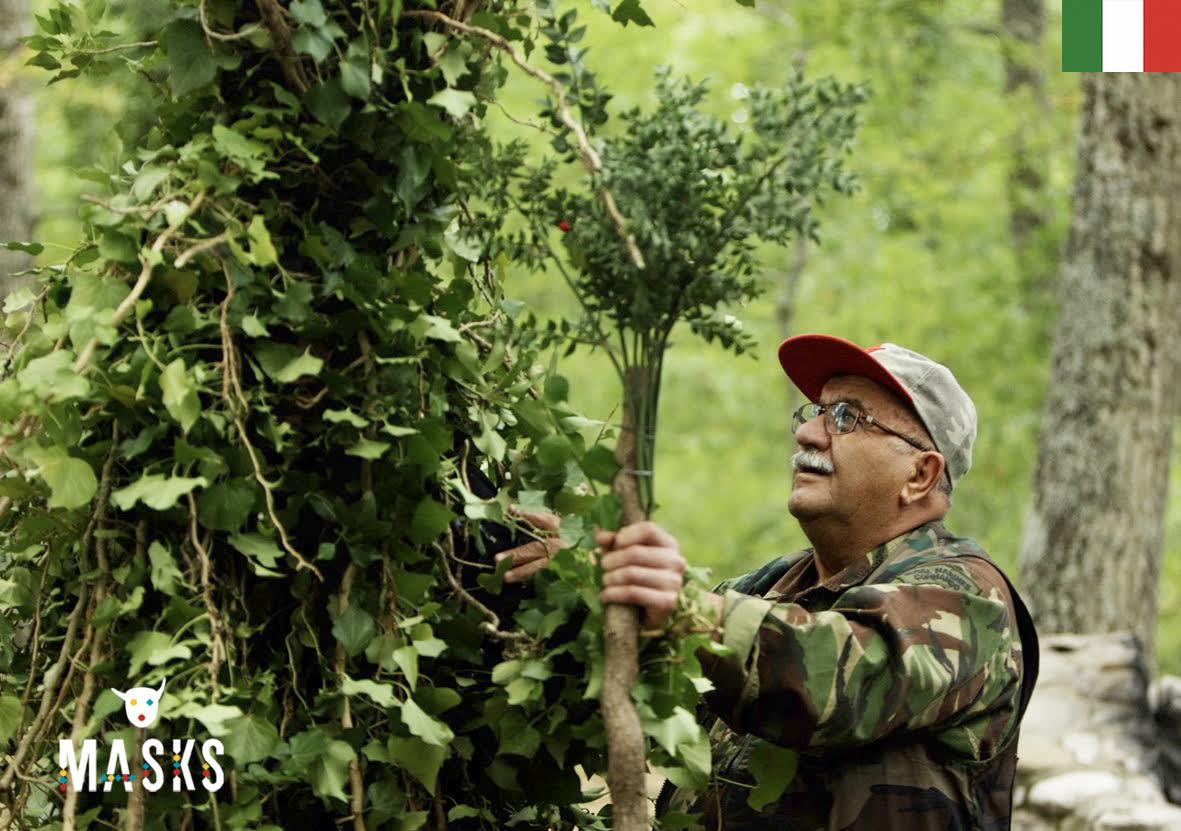
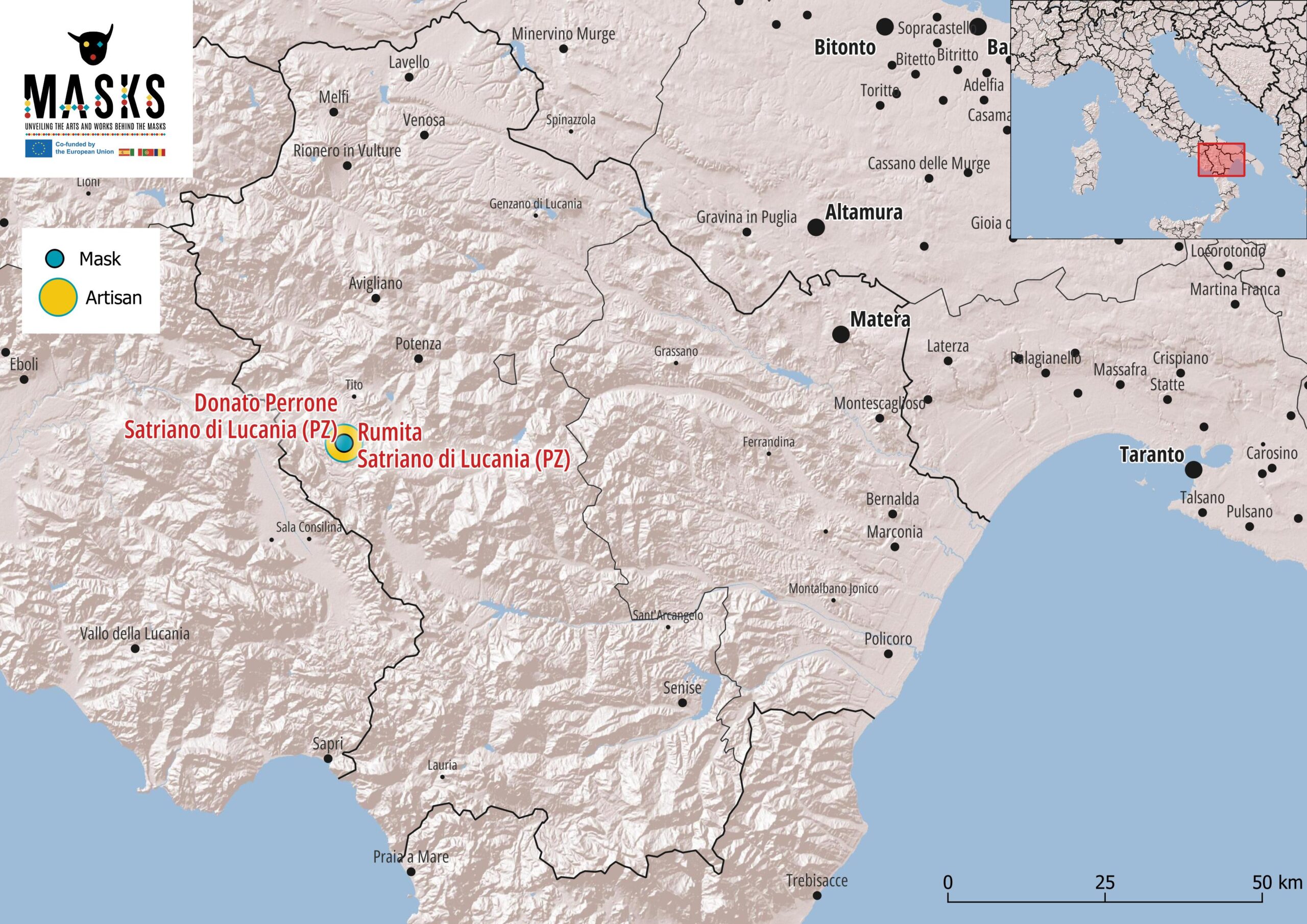
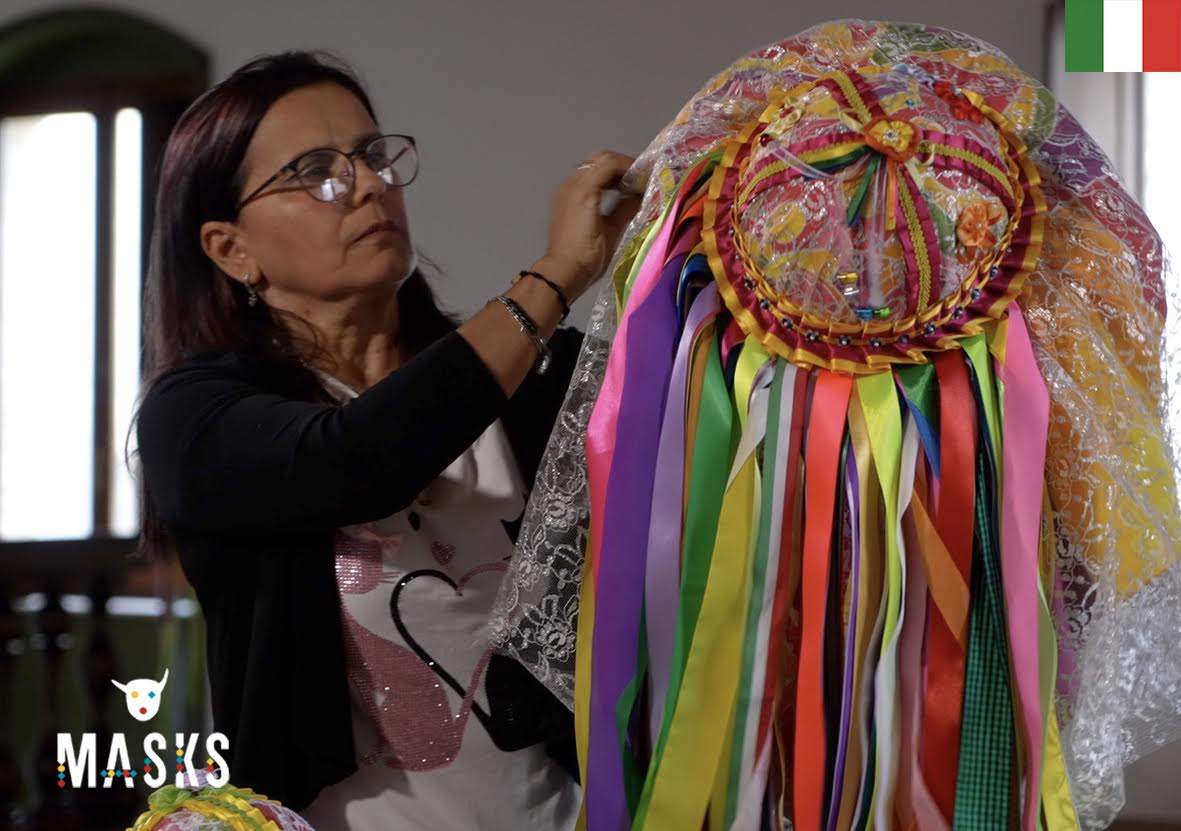
Donato Perrone
Donato Perrone (1950). Originally from Satriano, he is one of the key figures behind the revival of the local carnival. Known as “u professor” for having taught technical education to many of the Satrians now involved in the making of the Rumìt, he has played a crucial role in fostering a new “heritage community.” Thanks to his commitment—and with the involvement of Rocco Perrone, Massimo Cavallo, Michelangelo Potenza, and Antonio Pascale (who took part in the dressing process)—the preparation stages of the Rumìt have been carefully documented. While he does not craft the costumes himself, his support has been essential to the transmission and promotion of this tradition.
Paola Langone
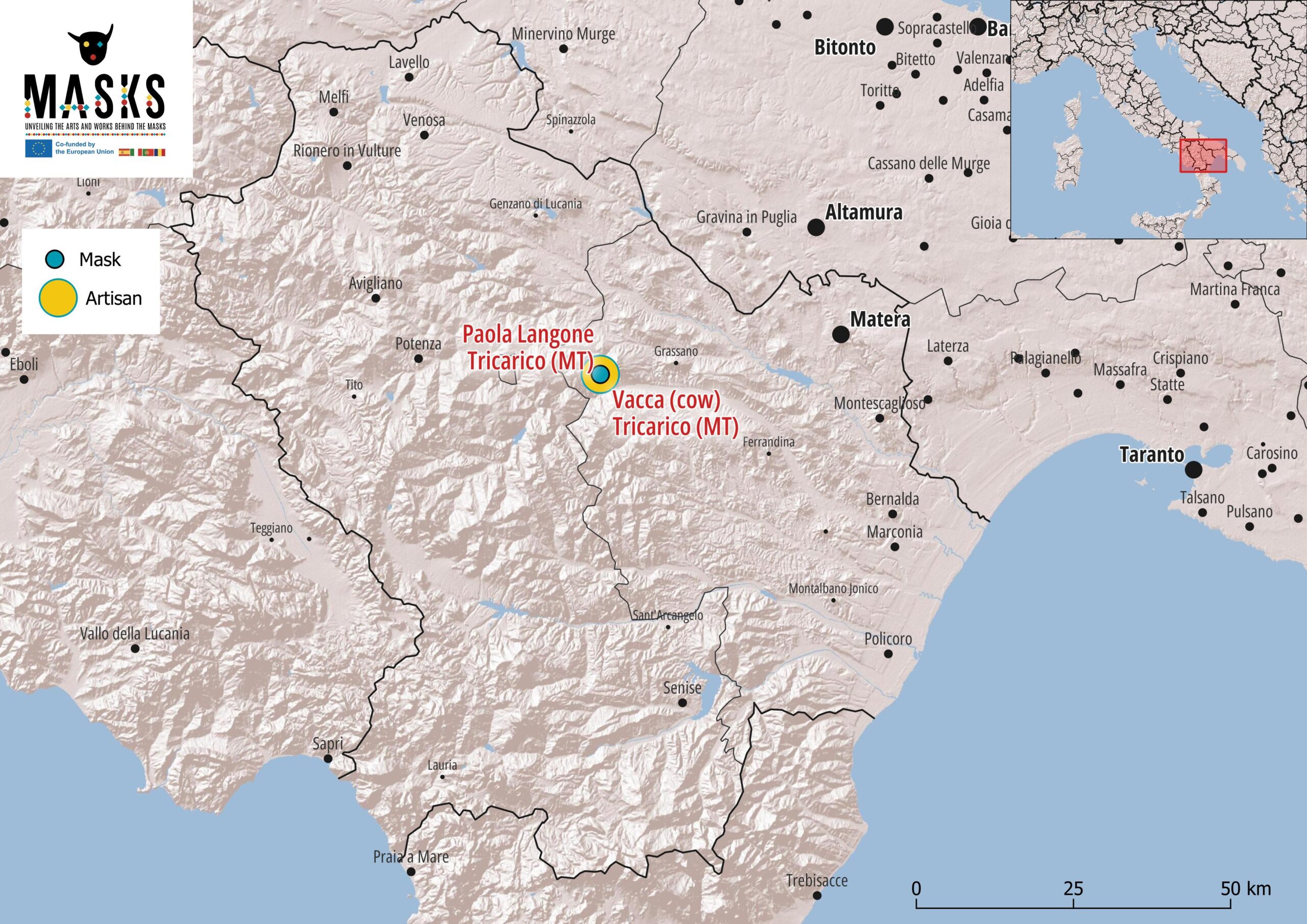
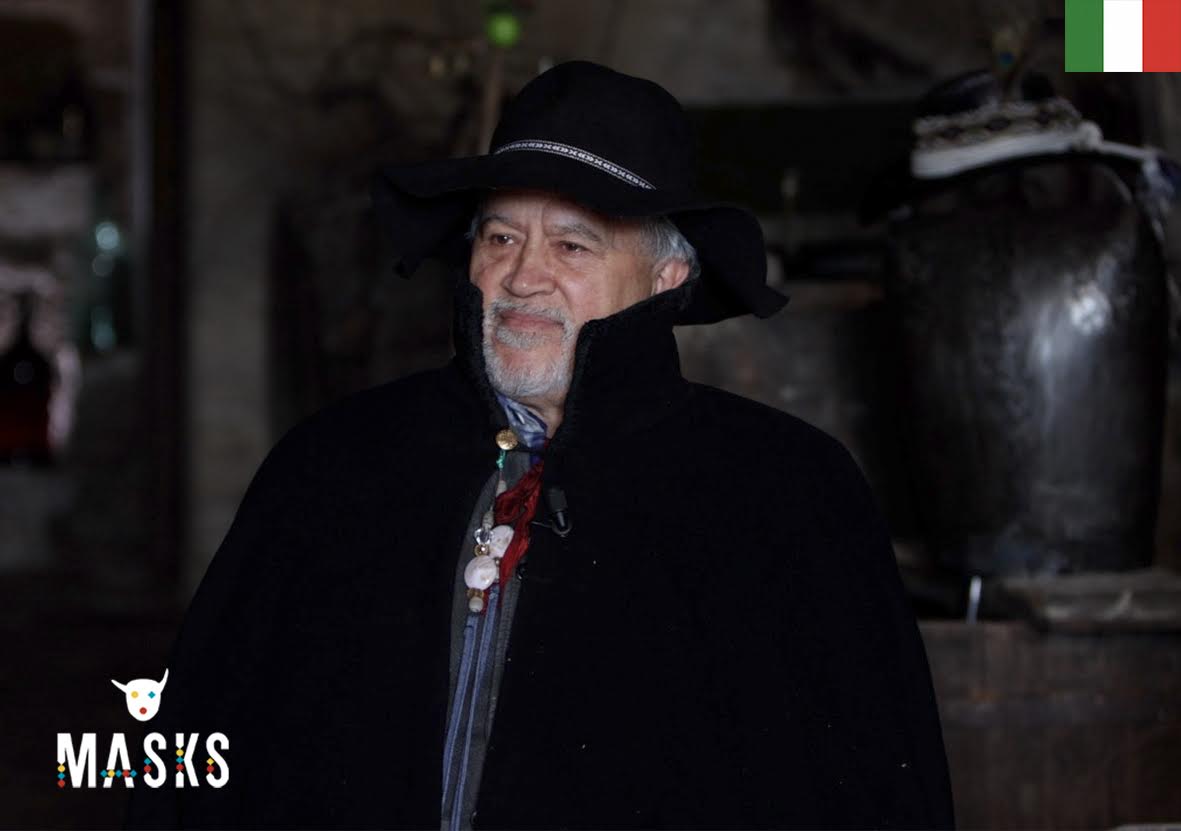
Paola Langone (1969). She is from Tricarico and has been involved for around ten years in tailoring and making the traditional carnival masks of the cow and the bull. She creates the costumes used in the procession and takes part in the celebration herself, dressed as a cow and ringing her cowbell.
Mauro Tremamondo
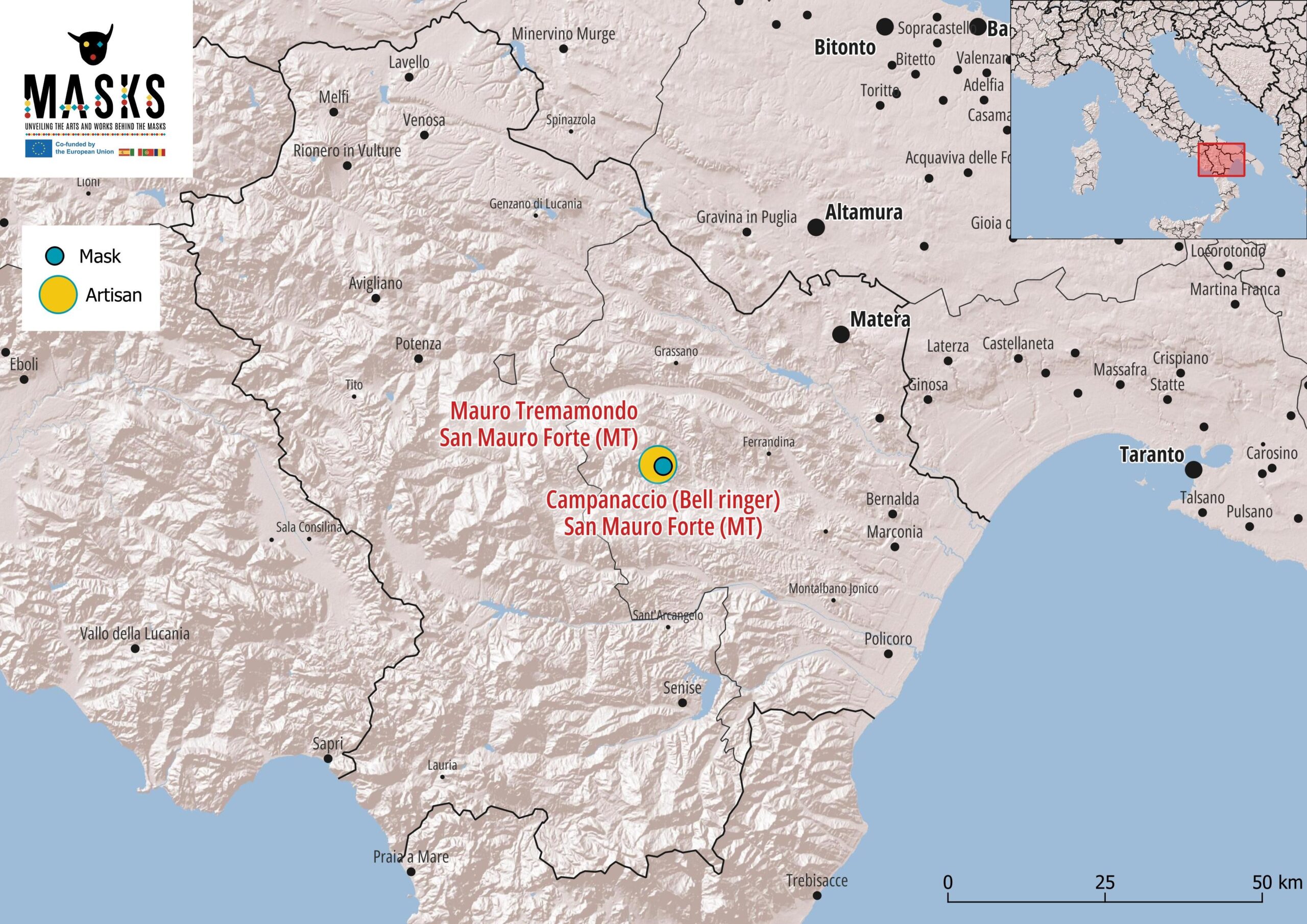
Mauro Tremamondo (1956). He is from San Mauro Forte and the son of one of the “leaders,” as he calls his father, of the Il Campanaccio event, in which he has participated since childhood. The cloak he wears is more than a costume—it once belonged to his grandfather, who passed it down to his father, along with the bell. He does not create or sell masks, but preserves the tradition through his active and emotional participation. His presence in the festival keeps alive a family legacy rooted in the sound and spirit of Il Campanaccio.
Isidro Rodrigues
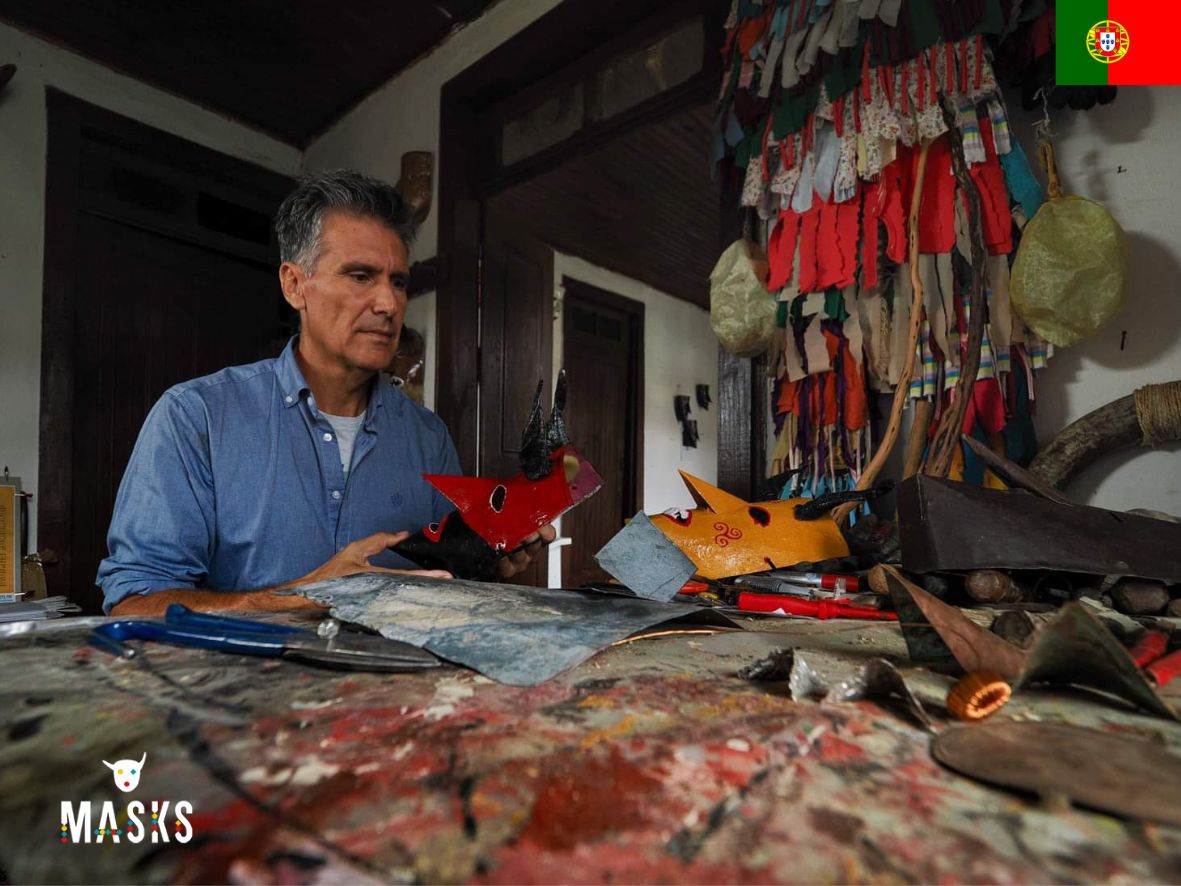
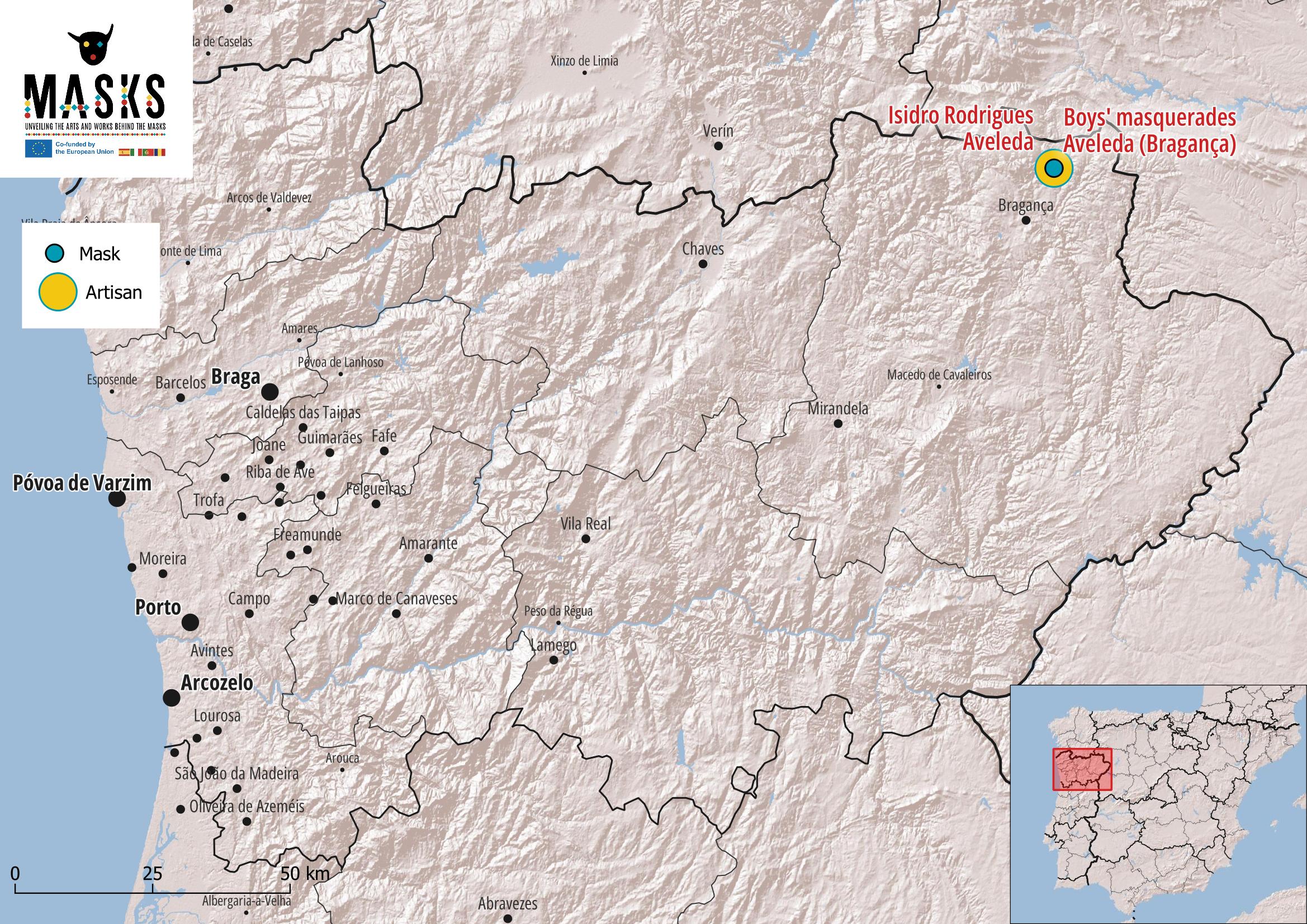
Isidro Rodrigues (1969). Born in Aveleda, he is a teacher and works at Bragança City Hall. He describes himself as an “improvised artist,” creating traditional caretas used by the Caretos during the Boys’ Festival in Aveleda. Aware that these masks are not merely decorative but essential for preserving the ritual, he began making them during his time as President of the Parish Council, when the village lacked a dedicated mask-maker. Using an old local mask as a model, he crafted new ones from galvanized metal or old brass, adding horns, animal fur, and wool. His initiative helped restore a key element of the December 25 celebration, ensuring the tradition could continue.
Sofía Pombares
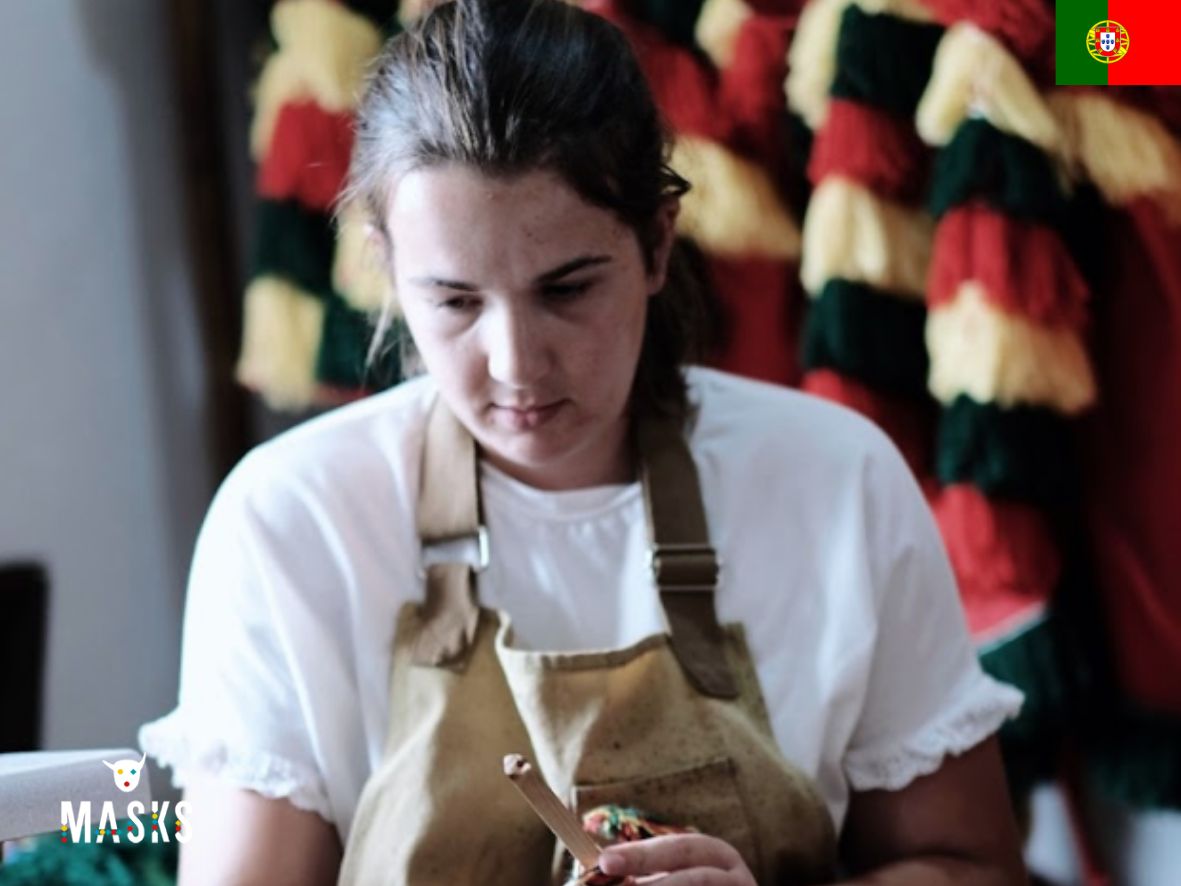
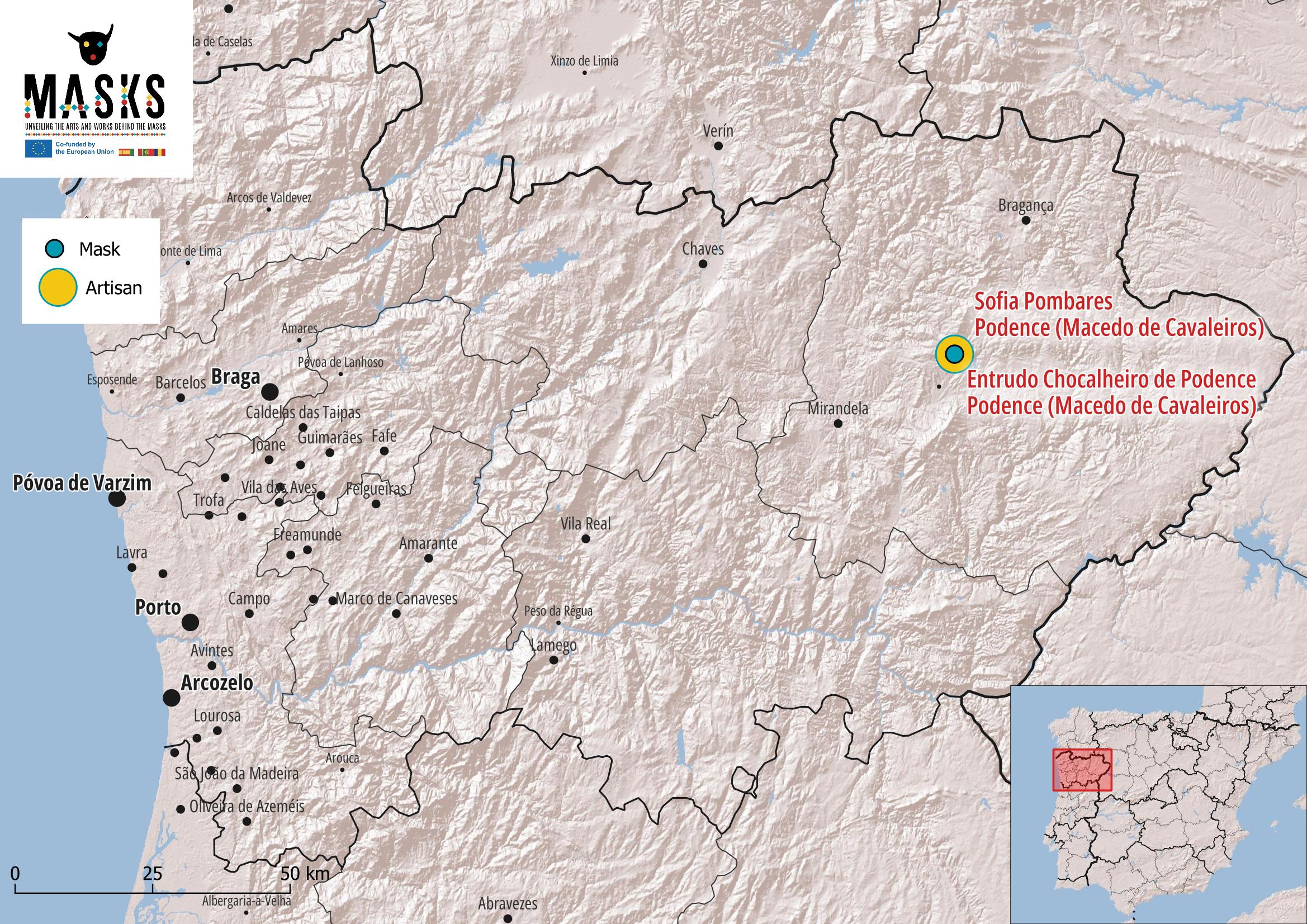
Sofía Pombares (1999). She is a nurse and tourism student living in Podence, Macedo de Cavaleiros (Bragança), where she runs “Quinta do Pomar,” a craft workshop and shop selling regional products. In this space, she creates tin and leather masks, as well as costumes for the Caretos of Podence and other masked festivals in the region. She makes the costumes using wool blankets, woven in the traditional artisanal way, which she then cuts, sews, and finishes with fringes. She does not produce them for mass sale, but for use in festivities and workshops that she also hosts in her space. In 2023, she was a finalist for the National Craft Award in the New Talents category.
Sandrina Fernandes
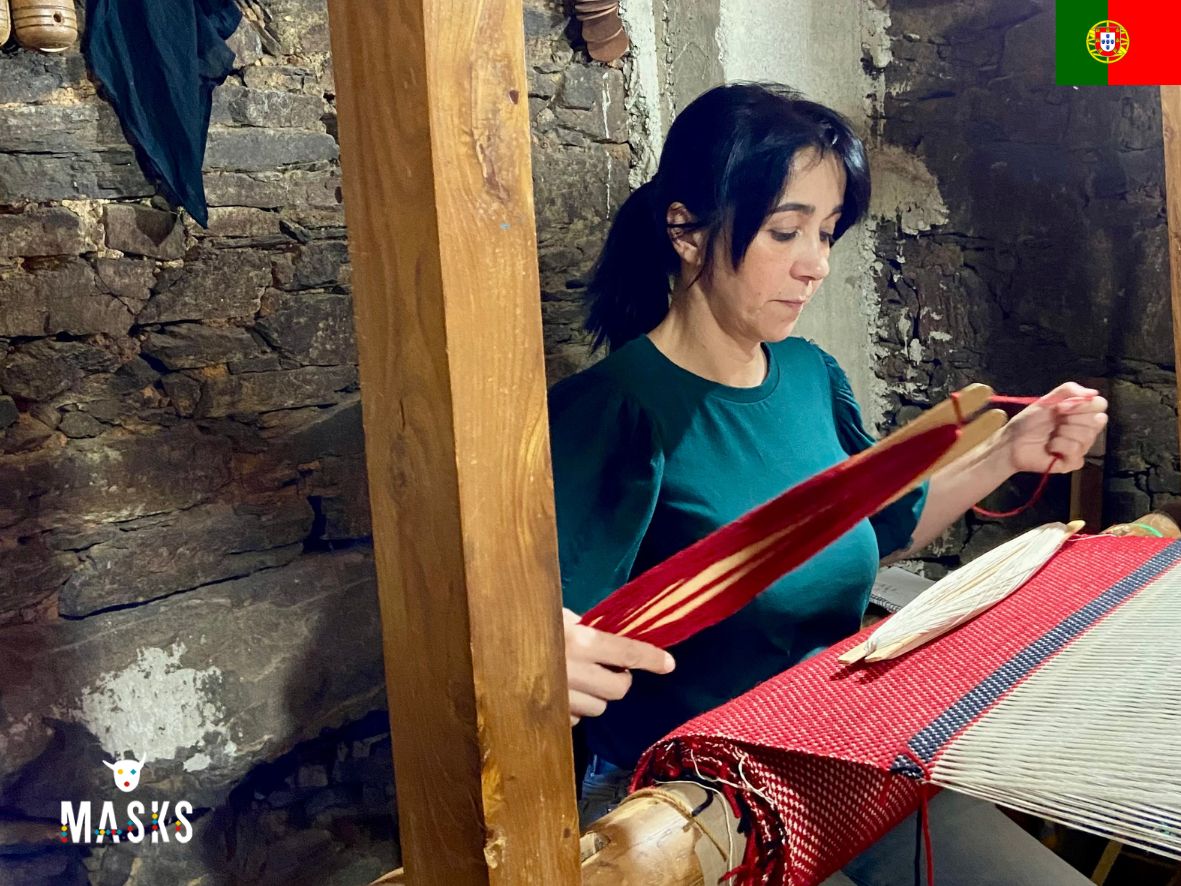
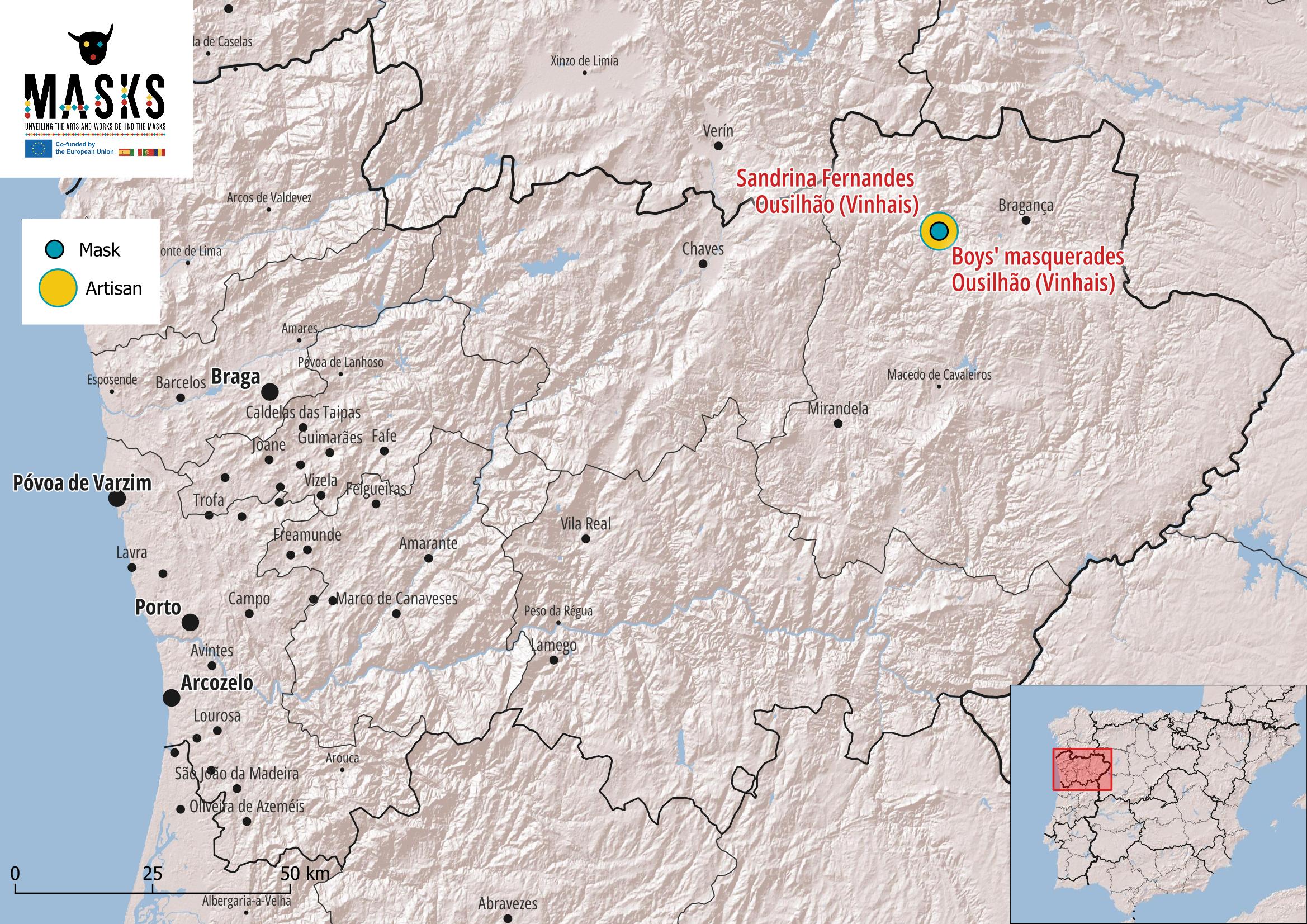
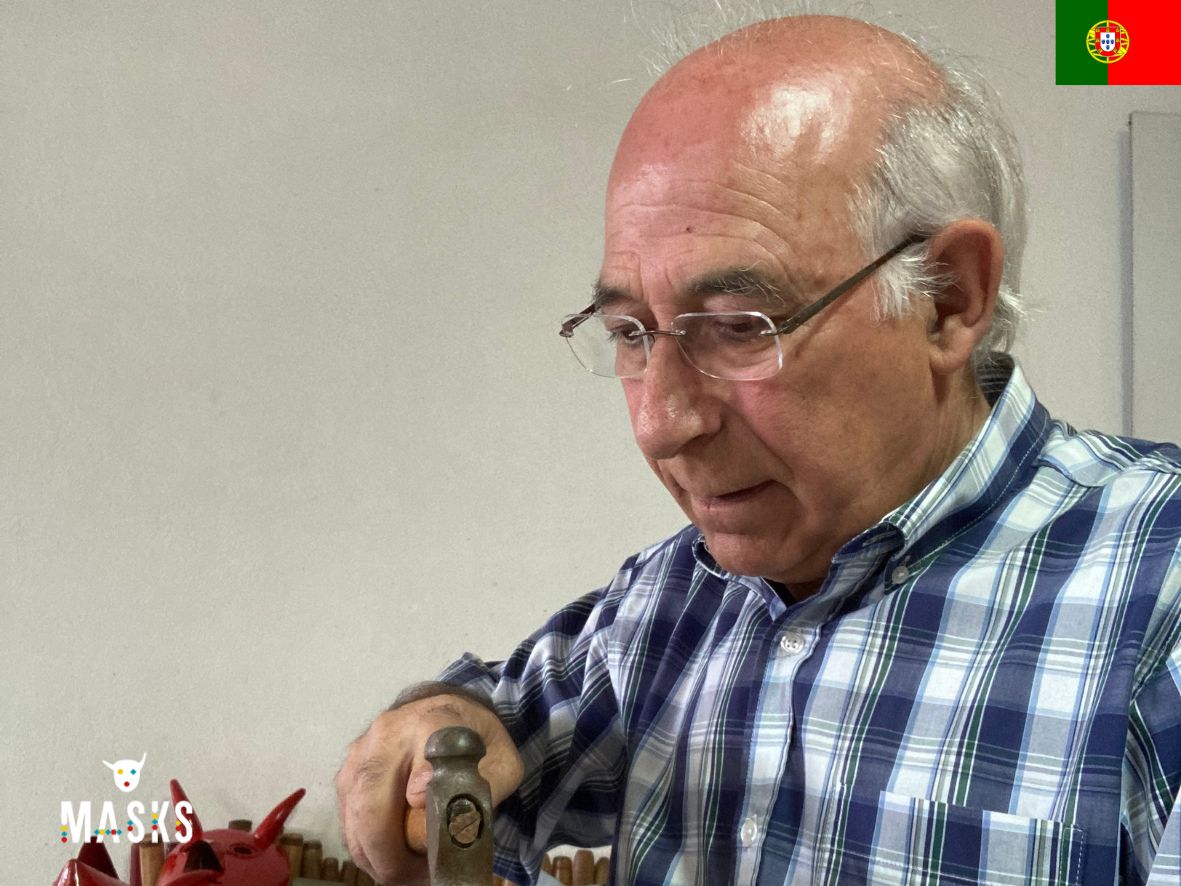
Sandrina Fernandes (1976). She is an Arts teacher living in Ousilhão, Vinhais (Bragança), where she runs a craft workshop. There, she creates wooden masks and weaves wool blankets and fringes on traditional looms, used to make the costumes for the "máscaras" of Ousilhão and other regional masquerades. She made her first wooden mask in 2019 to wear during the Saint Stephen’s Feast, celebrated in her village on December 25 and 26. In 2021, she founded the brand O Barandoco and began training in traditional weaving, with the aim of reviving the production of fringed wool blankets in vibrant colours, following ancestral techniques and patterns. Passionate and curious, she draws inspiration from the culture and nature of her homeland.
Óscar Barros
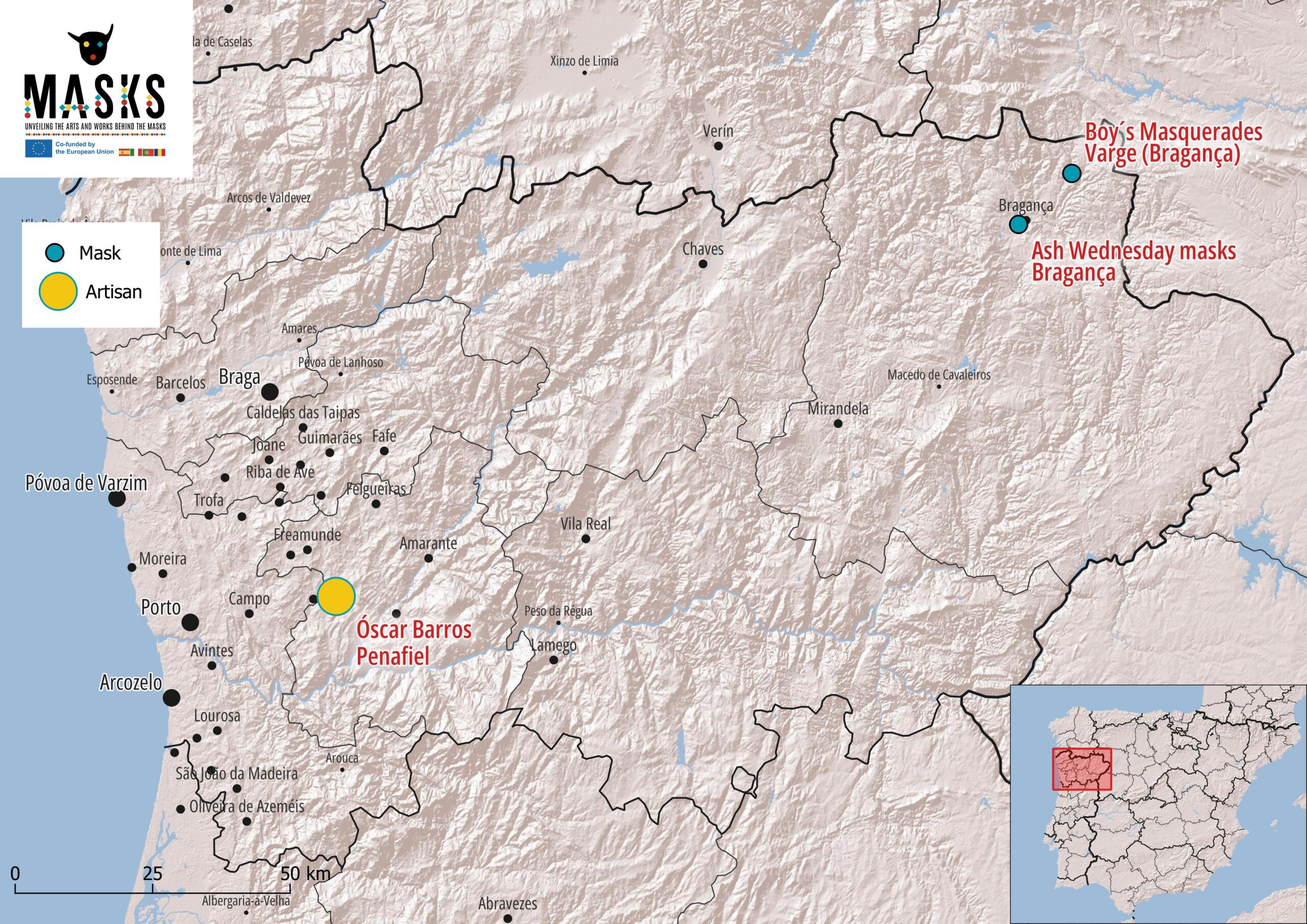
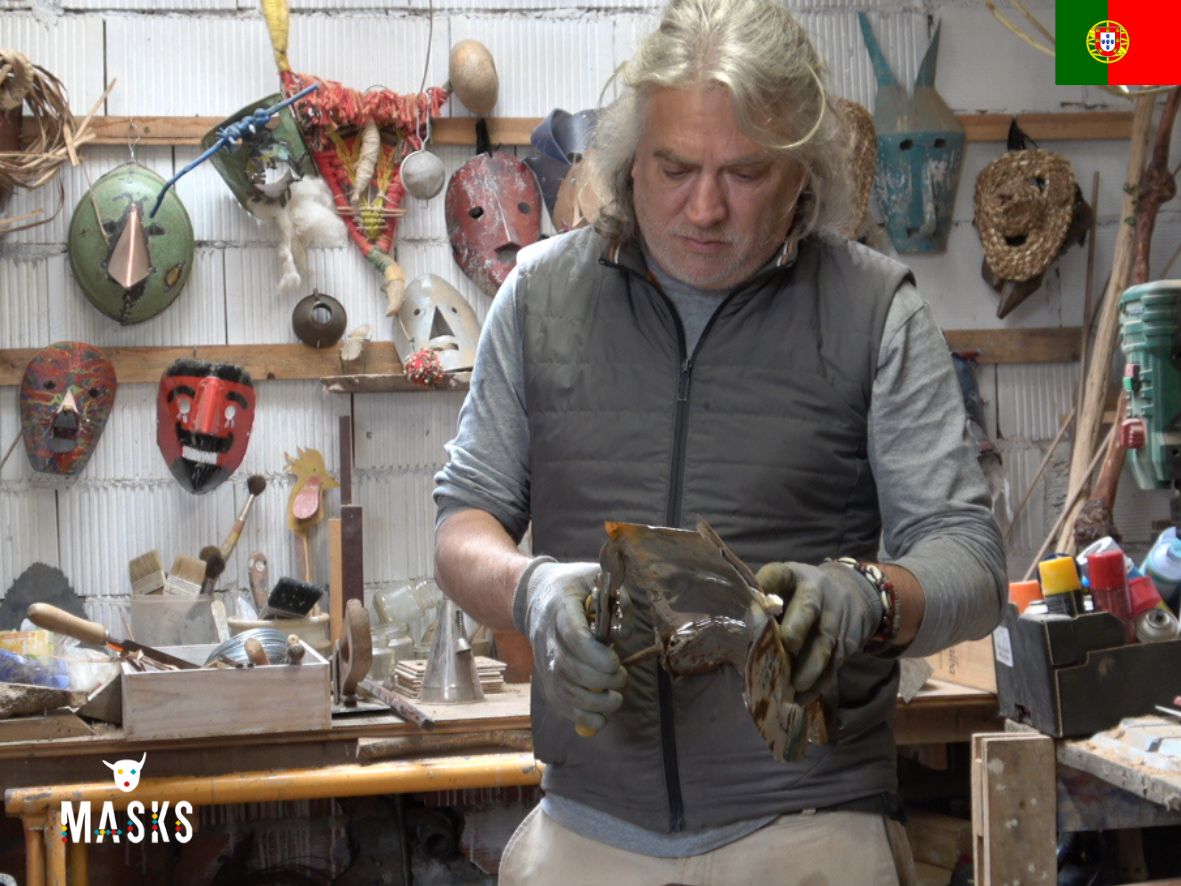
Óscar Barros (1951). Born in Bragança and now living in Penafiel, he is a retired Arts teacher with family roots in the village of Varge, where the Boys’ Festival is celebrated on December 25 and 26. Over the years, he developed a personal vision of the masked figures he remembered from his childhood—such as Death, the Devil, and Censorship—which once appeared in Bragança on Ash Wednesday. He creates traditional masks for the winter festivals of northeastern Trás-os-Montes, using galvanized metal, brass, and leather. He decorates them mainly in red and black, though occasionally uses other colours without misrepresenting tradition. He does not sell them commercially; his focus is on preserving and reinterpreting the cultural memory of the region.
Octávio Marrão
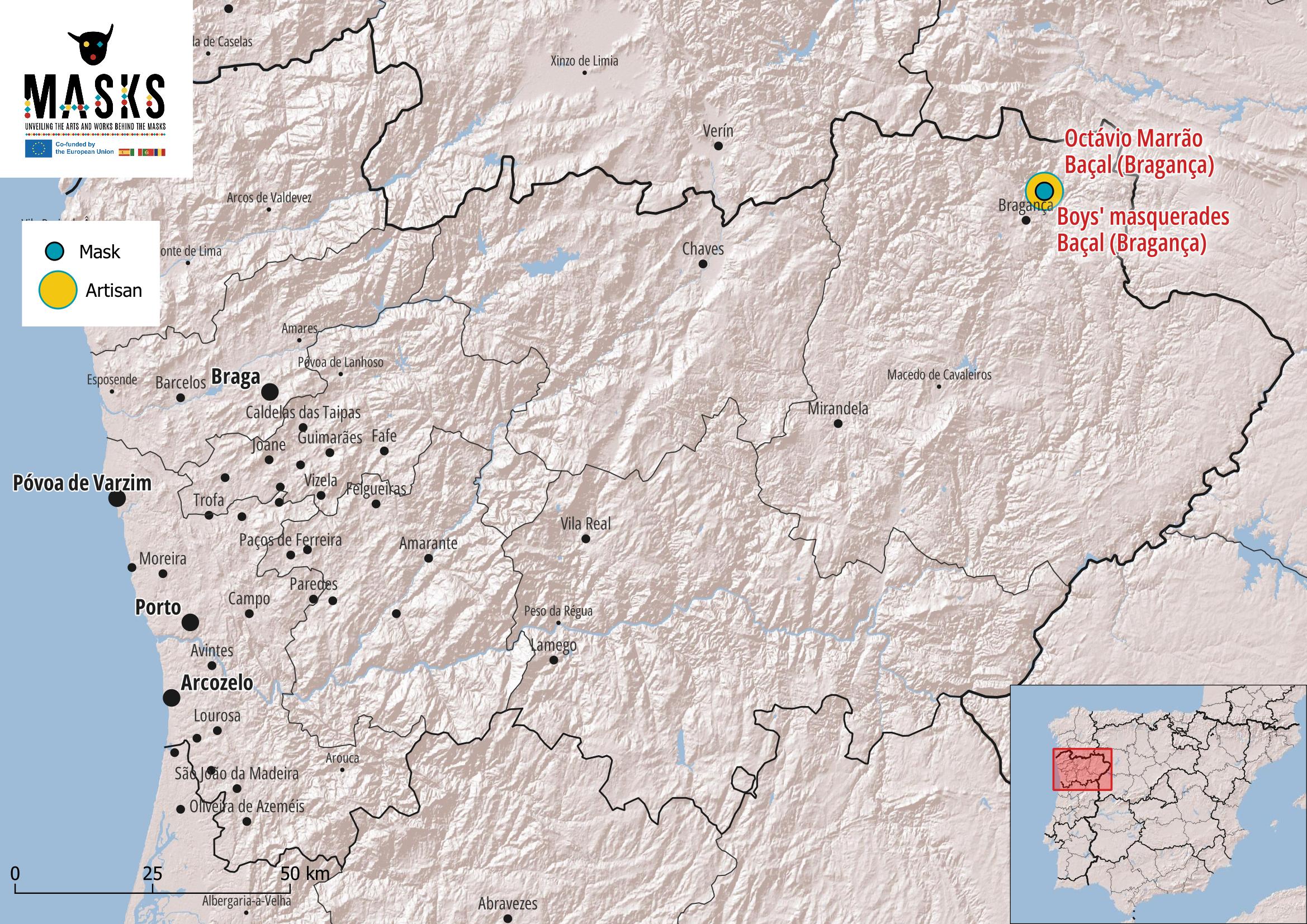
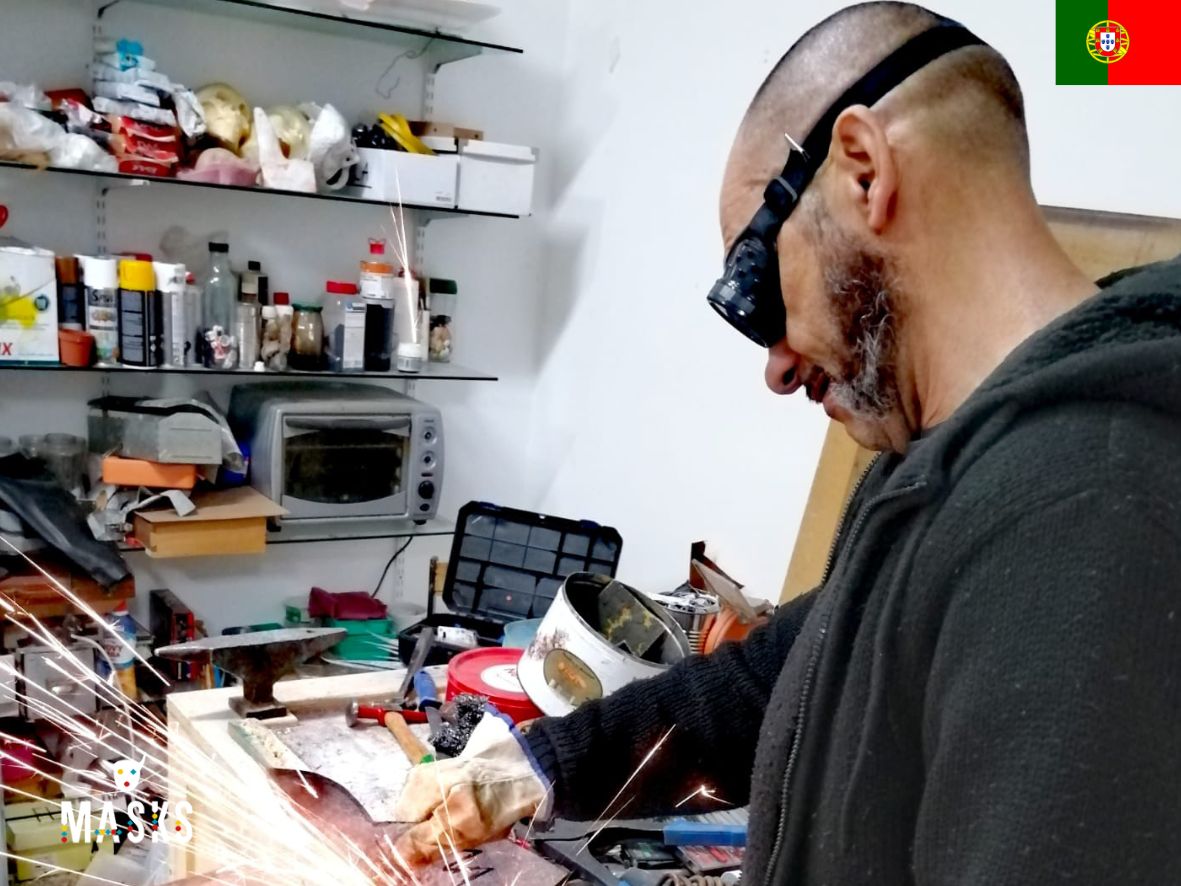
Octávio Marrão. He was born in Baçal, Bragança, where he still lives and works as an architect. In his free time, he creates traditional masks worn by the caretos during the Kings’ Festival of Baçal, held in January. His involvement began from the need to provide the boys with this essential accessory for the celebration, organised by the “Abade de Baçal” Cultural Association, which he also chairs. He uses materials such as tin, brass, copper, aluminium, zinc, galvanized metal, wool, roots, old furniture parts, straw, and bramble bark, applying the escrinho technique. Passionate about art and craft, he gives new life to discarded objects—like old boilers and tin cans—creating unique and authentic-looking masks that reflect the spirit of the festival.
Miguel Moreira Silva
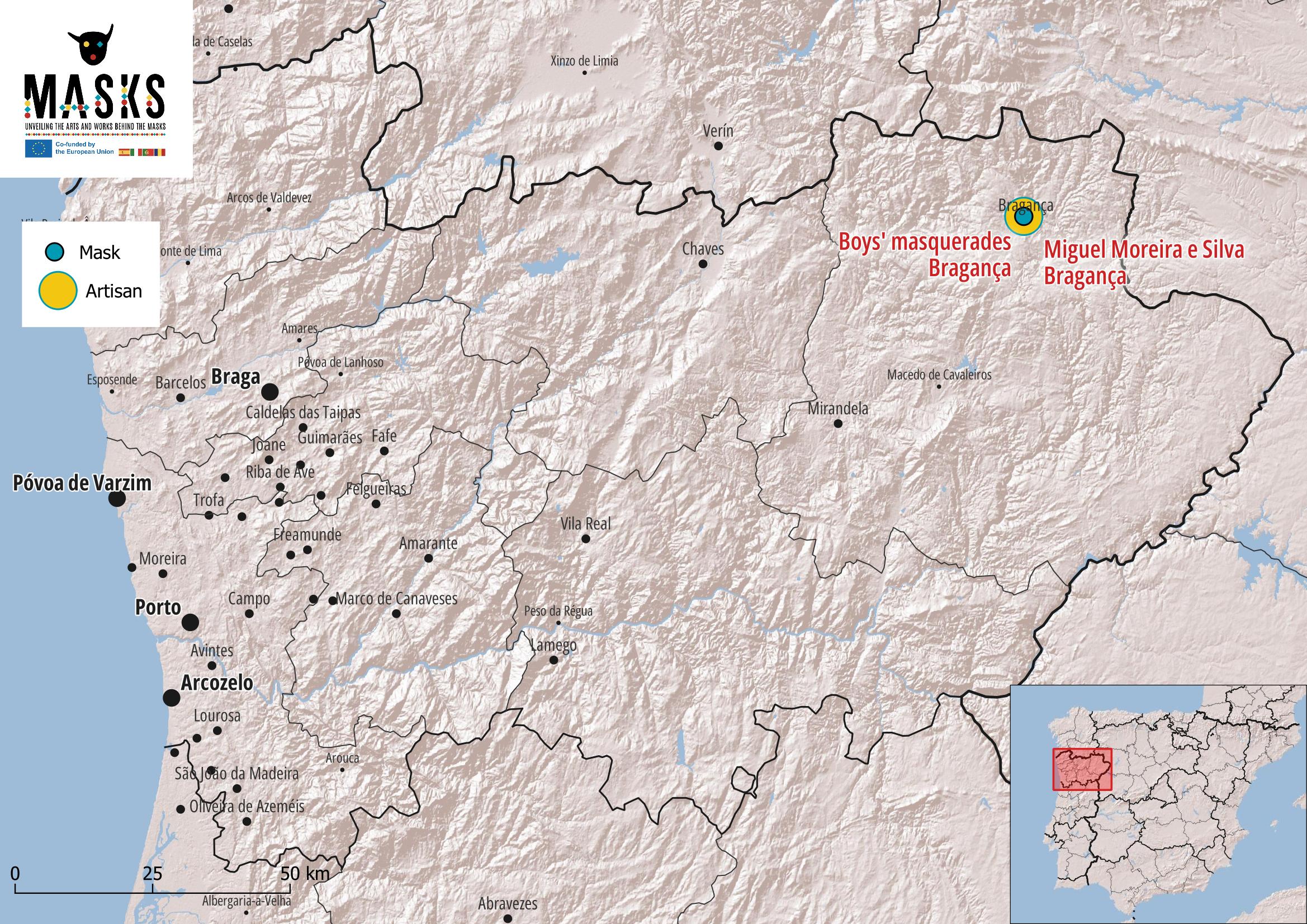
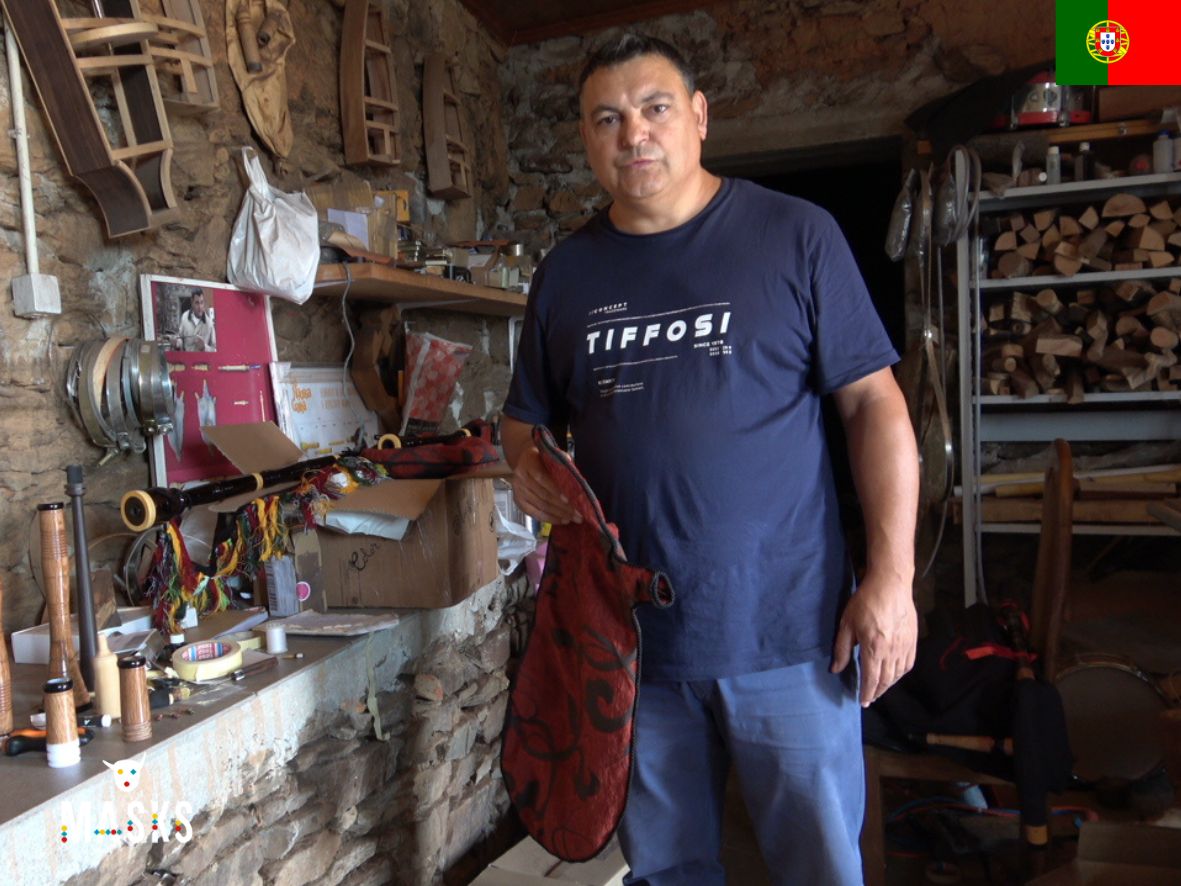
Miguel Moreira e Silva (1967). Born in Alenquer and living in Bragança, he holds a degree in Artistic Animation and Production. A sculptor and painter, he has devoted recent years to the creation of masks. His works are featured in the History and Art Gallery and the Iberian Mask and Costume Museum in Bragança. He began his artistic journey early, moving between painting and sculpture and exploring a wide range of materials and techniques. Masks became part of his work in the 1990s, inspired by a fantastic imaginary world that permeates all of his creations. His masks are known for their reinterpretation of transmontana culture and ancient pagan rituals, blending influences from Maori art to the Japanese Hannya tradition. He creates not for commercial purposes, but as an extension of his artistic and cultural vision.
Célio Pires
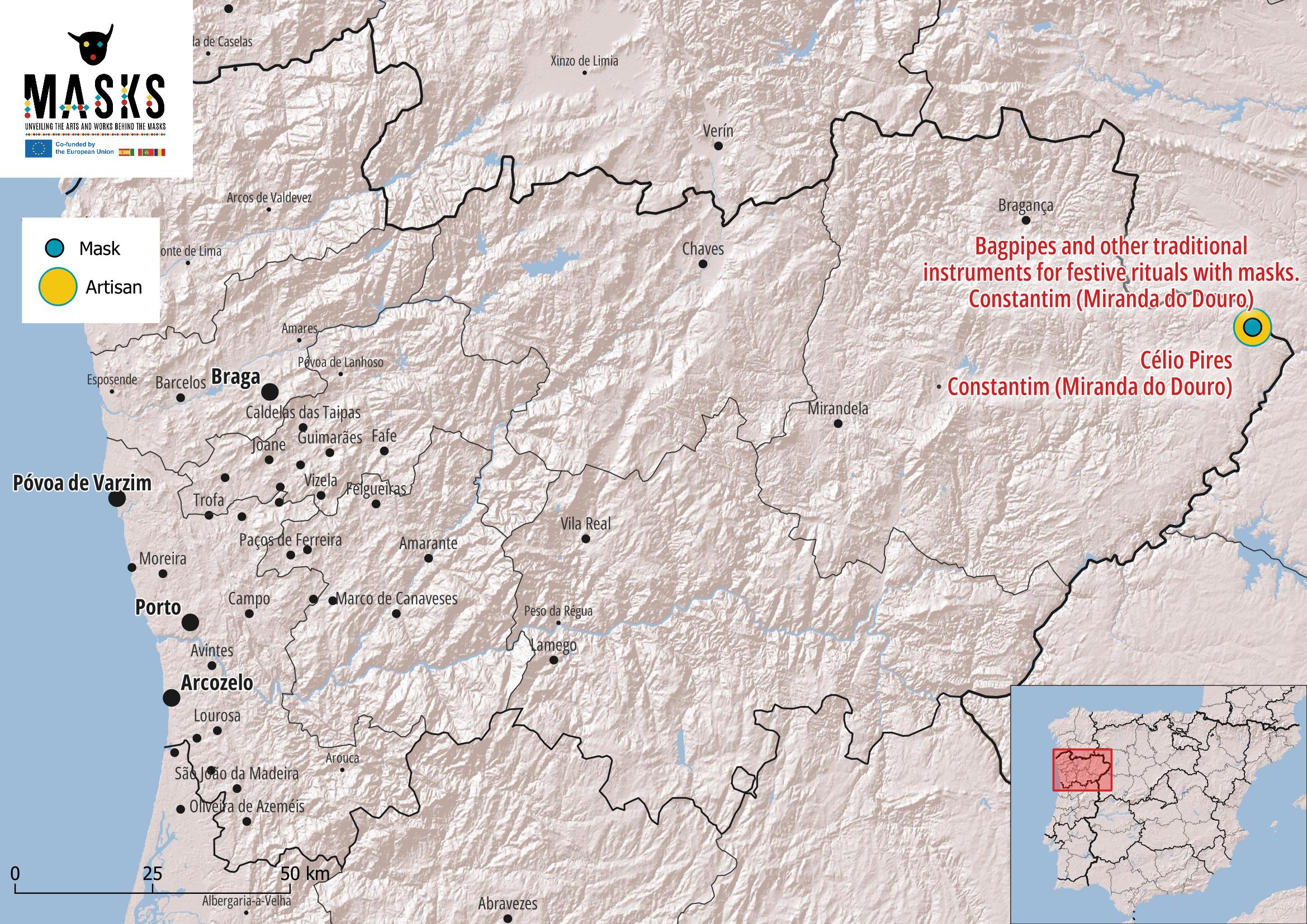
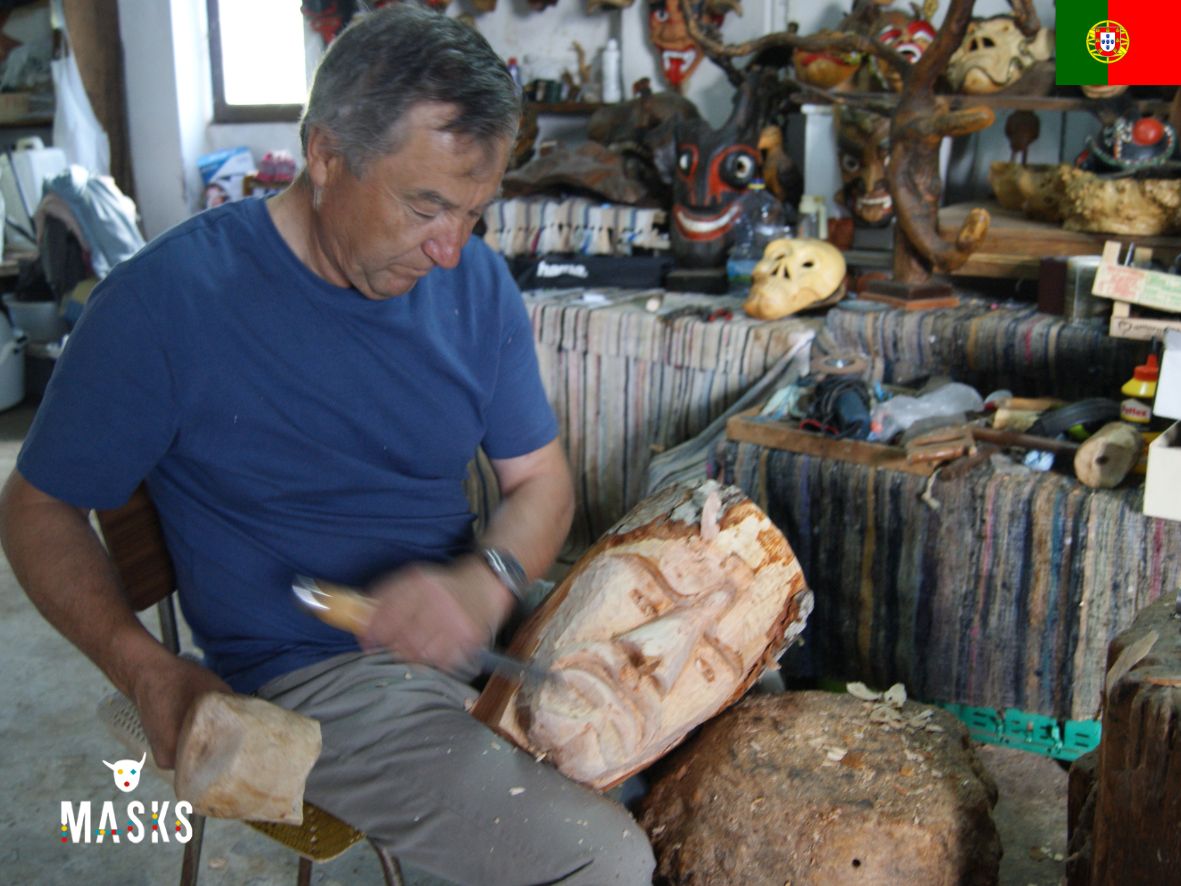
Célio Pires (1976). Born in Constantim, Miranda do Douro (Bragança), he is a National Republican Guard officer and a passionate maker of traditional musical instruments. He joined the Pauliteiros Group of Constantim at the age of 8, started playing the flute at 9, and the bagpipes at 14. At 16, he began crafting his own instruments, focusing especially on bagpipes and flutes. He works mainly with blackwood, boxwood, and enguelgue (Acer monspessulanum), using resin rings and bags made from goatskin or Gore-Tex from Scotland. He has built over 500 bagpipes—15 different models, mostly standardised Mirandese types—as well as hurdy-gurdies and flutes, often using tools he designed himself. His work is not only technical but also musical: he has released several CDs featuring original, traditional, and sacred music, contributing to the living heritage of Miranda do Douro.
Amável Alves Antão
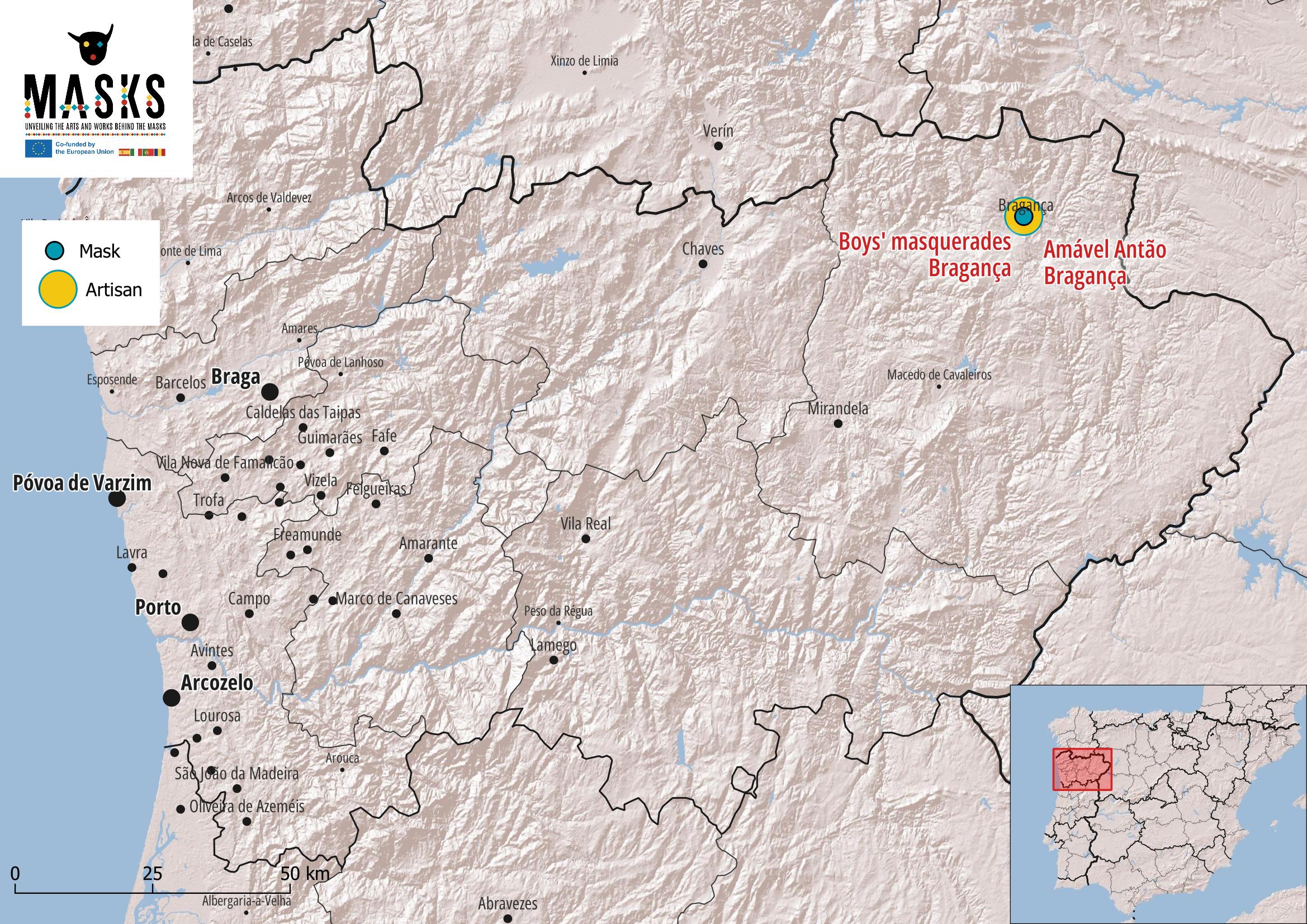
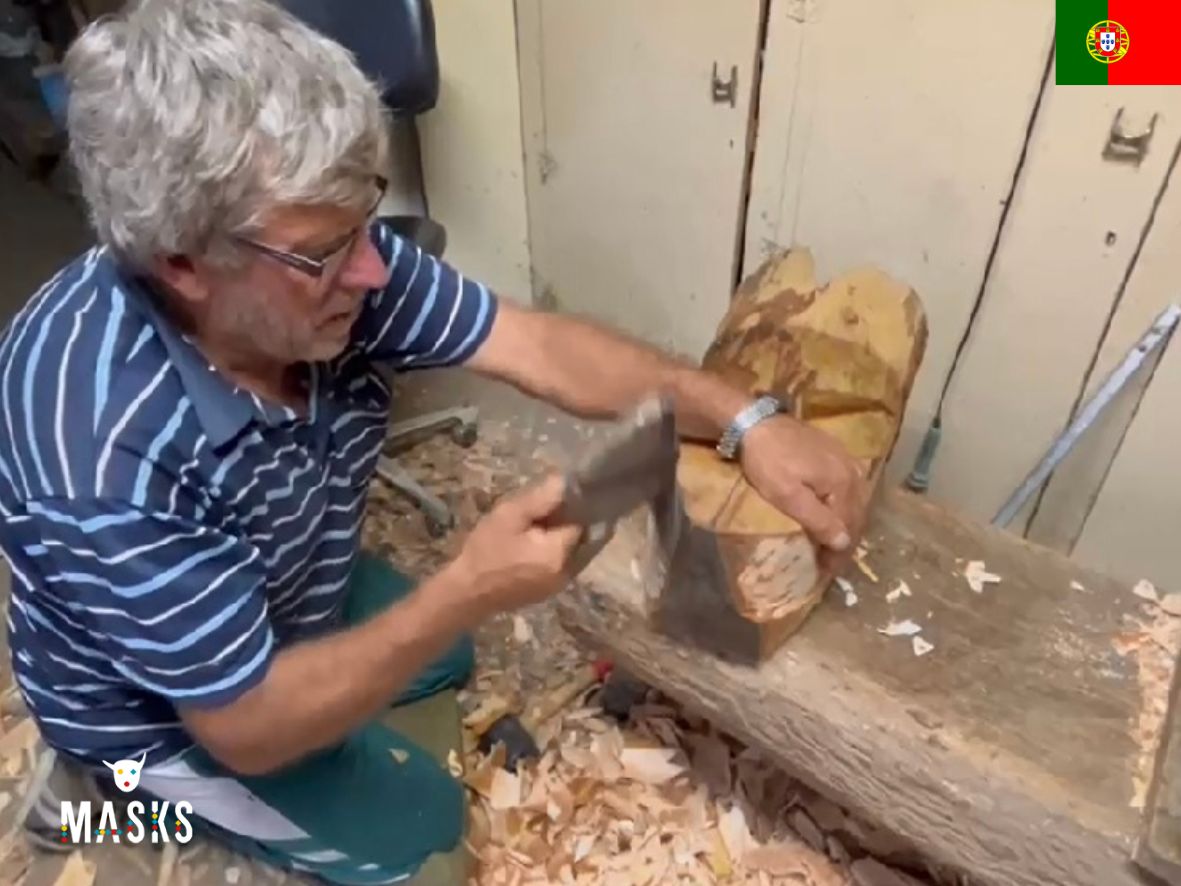
Amável Alves Antão (1961). Born in Geníso, Miranda do Douro (Bragança), he works as a technical assistant at the Abade de Baçal Museum in Bragança. In 2003, he discovered a talent for wood carving and, after creating his first mask, never stopped. A self-taught artist, he describes himself as an "accidental craftsman." Using different types of wood, he creates expressive and striking masks inspired by the winter solstice masquerades of Trás-os-Montes. His works have been featured in numerous solo and group exhibitions, earning him several awards. In addition to original creations born from his imagination, he also crafts replicas of community masks used in festivals, such as the Chocalheiro of Bemposta, contributing to the preservation and celebration of regional traditions.
Adão Almeida
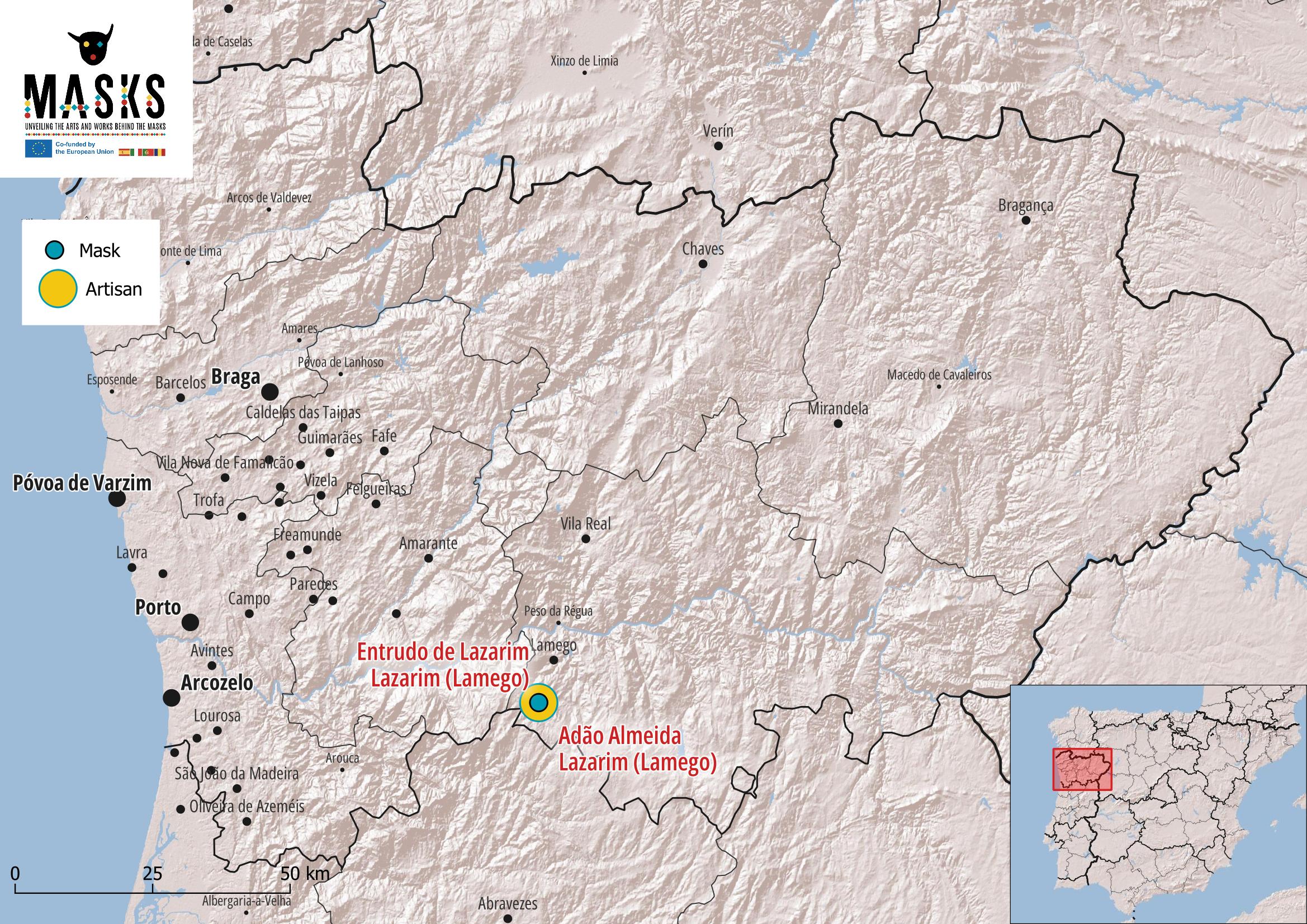
Adão Almeida (1962). Born in Lazarim, Lamego, he is a maker of traditional Carnival masks from his village. He works primarily with alderwood (Alnus glutinosa), which he cuts in winter and sculpts while still green to avoid cracking. From tree trunks, he carves expressive masks that follow local tradition, enriched by his own taste, imagination, and creativity. Alderwood is lightweight and breathable, making it ideal for wearers; although he occasionally uses chestnut wood (Castanea sativa), he rarely does. The masks are left in their natural whitish or beige colour and are not painted. A lifelong participant in Lazarim’s Carnival, he began with simple costumes and masks, eventually turning to the making of traditional ones—keeping alive one of Portugal’s most iconic masquerade traditions.
Șerban Terțiu
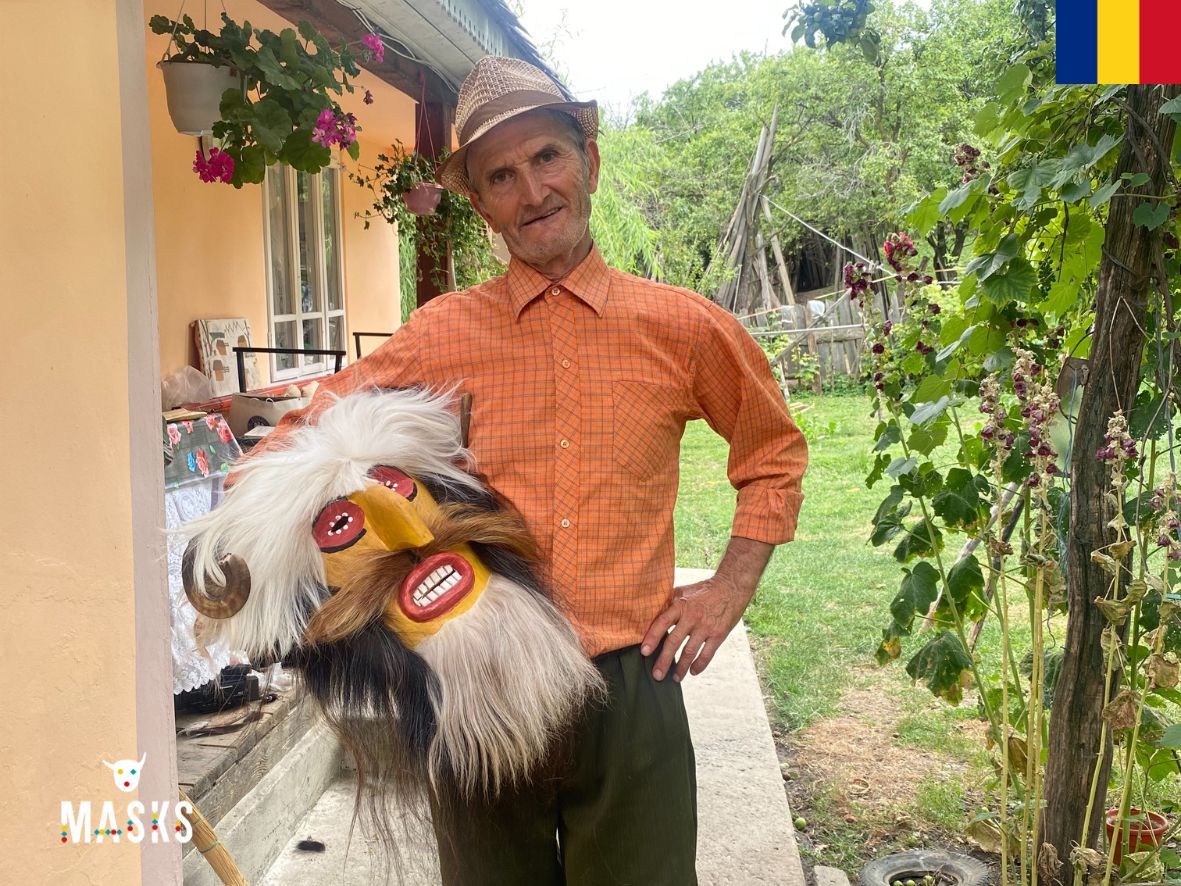
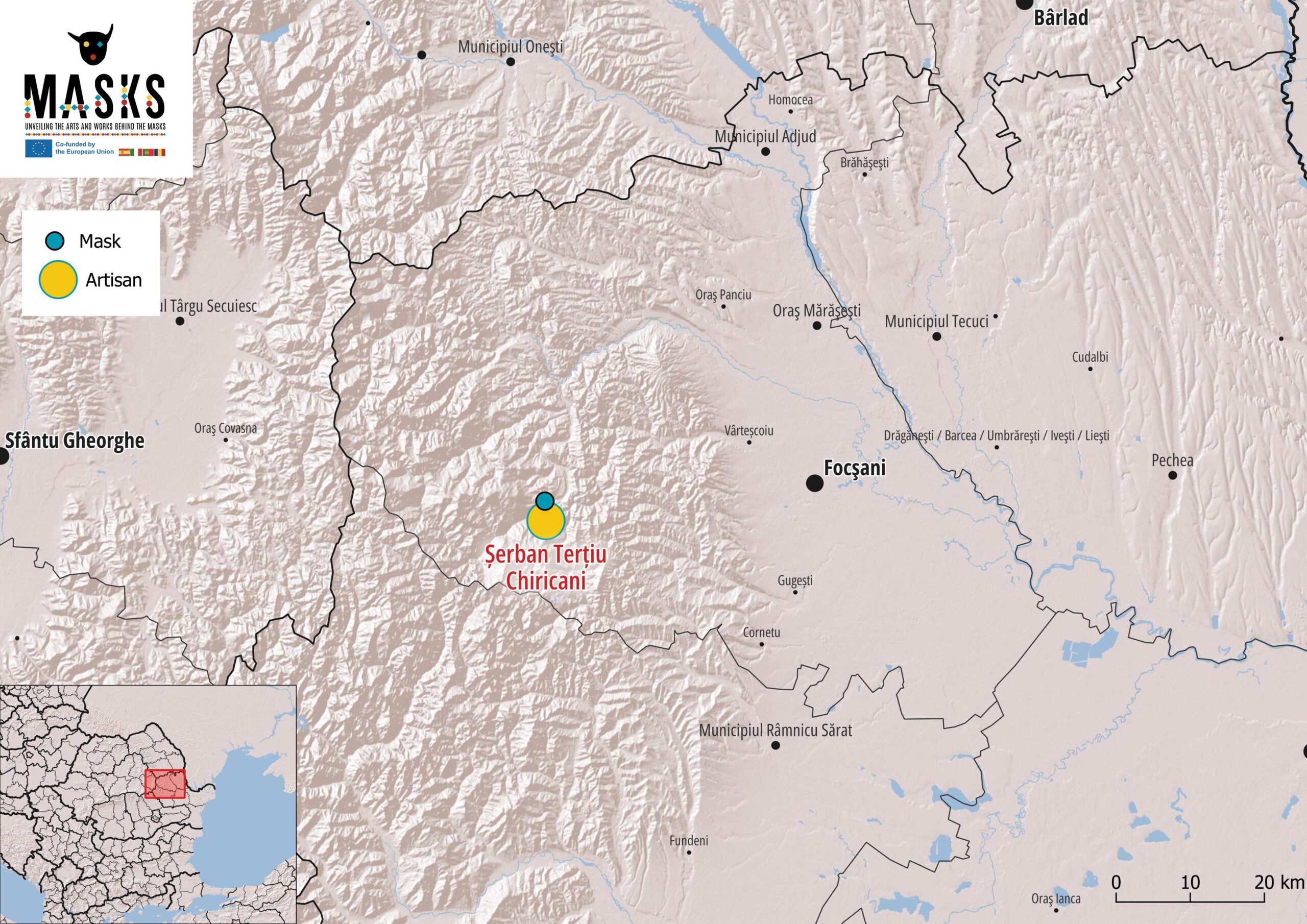
Șerban Terțiu (1955). He is a craftsman from Nereju, in Vrancea County, known for his traditional masks made of leather and wood. He learned the craft from his father, Pavel Terțiu, and has been creating masks used in winter customs and rituals typical of the Vrancea region. Each mask reflects local traditions and cultural symbols. He also produces other wooden objects, continuing the practice of traditional craftsmanship. He does not commercialise his work on a large scale; his focus is on preserving the customs and sharing his knowledge. In 2018, he was awarded the title of “Living Human Treasure” by the Romanian Ministry of Culture and National Identity for his contribution to safeguarding intangible cultural heritage. Through workshops and educational activities, he passes on these traditions to younger generations.
Constantin Anghel
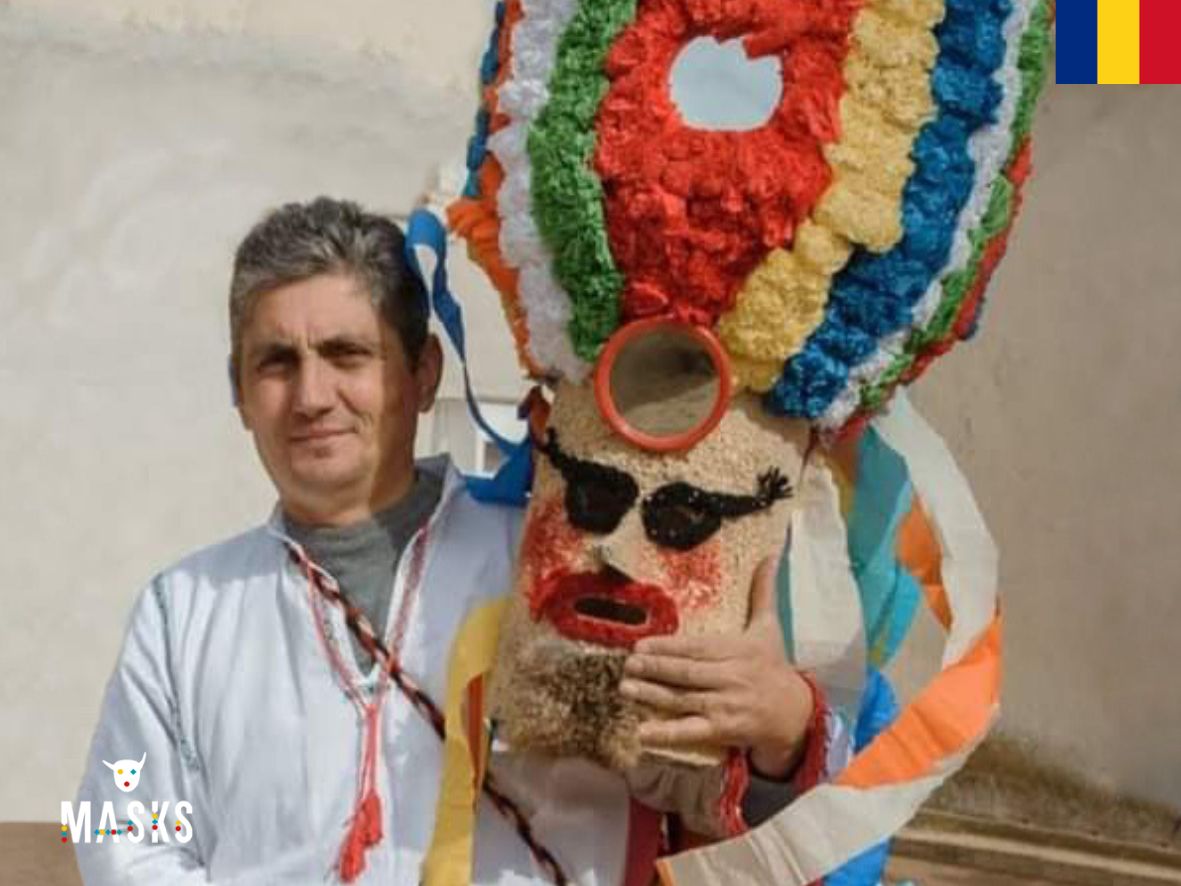
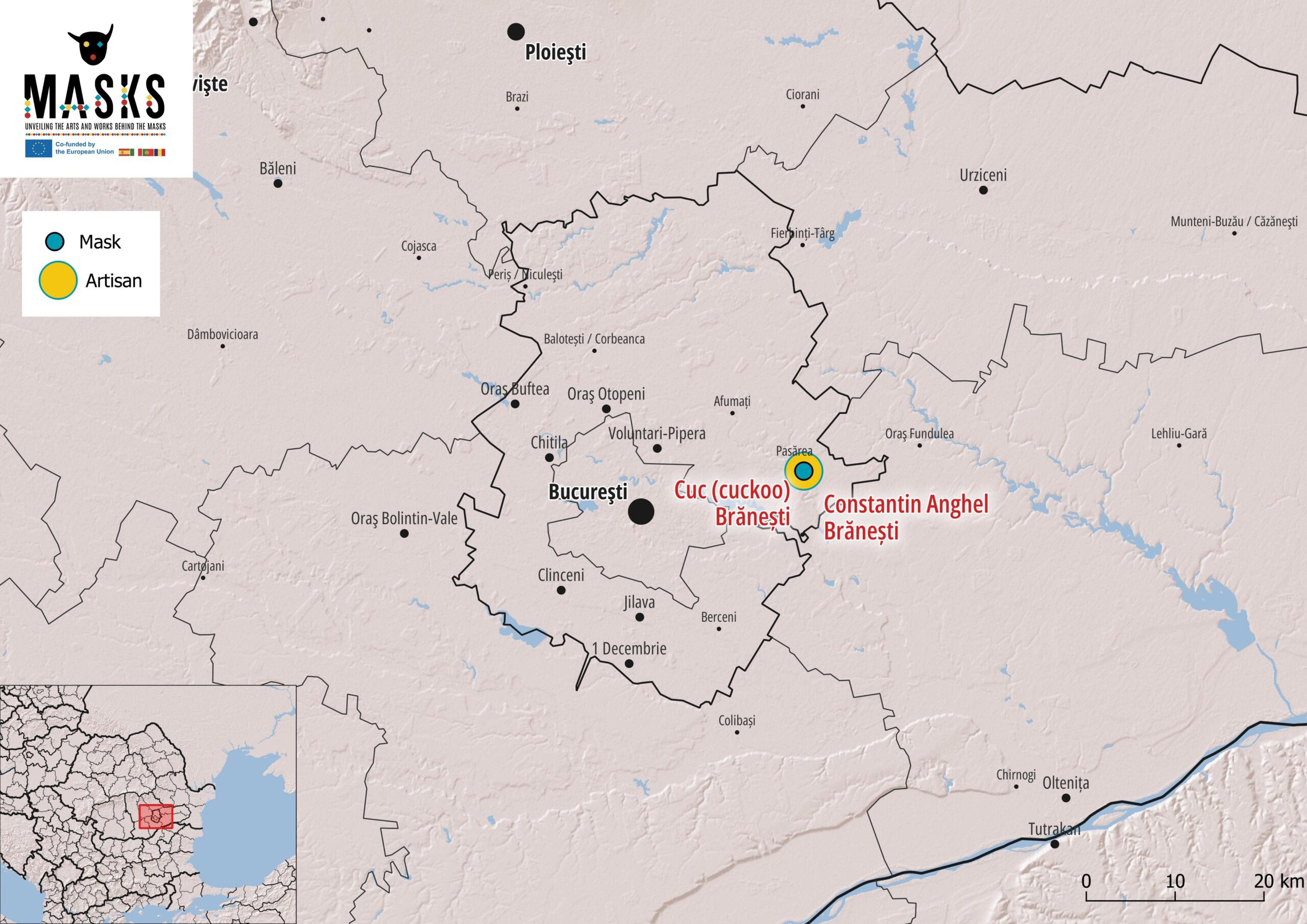
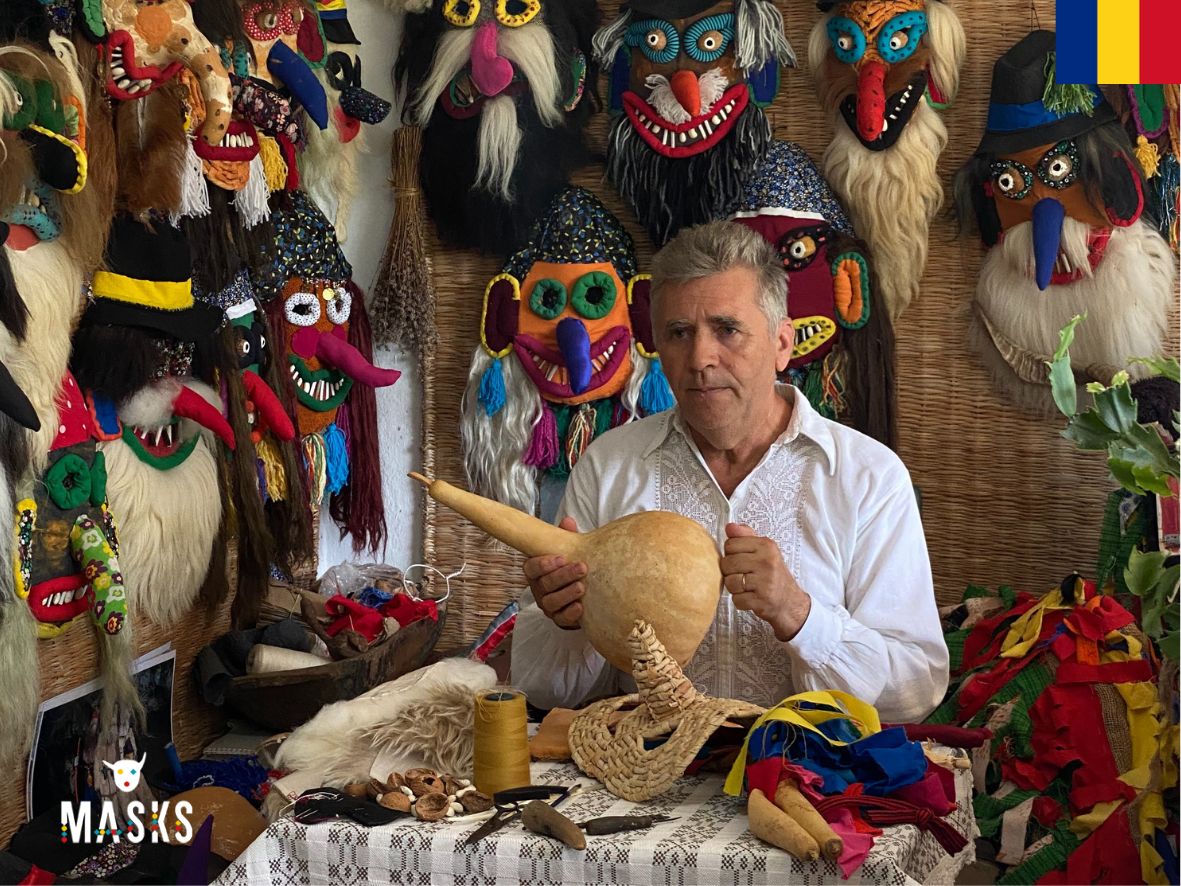
Constantin Anghel. He is a mask maker from Brănești, Ilfov County, who creates masks exclusively for the Cucii custom. He also takes part in the celebration as a masker himself, demonstrating his deep commitment to preserving and passing on local traditions. In his creative process, he has adapted traditional techniques by incorporating more accessible and sustainable materials, including recycled elements. His role in the revitalisation of the Cucii tradition is reinforced through his active involvement in the Cucii din Brănești Association, where he contributes to safeguarding and promoting this heritage through participation in festivals and cultural events both in Romania and abroad.
Paul Buță
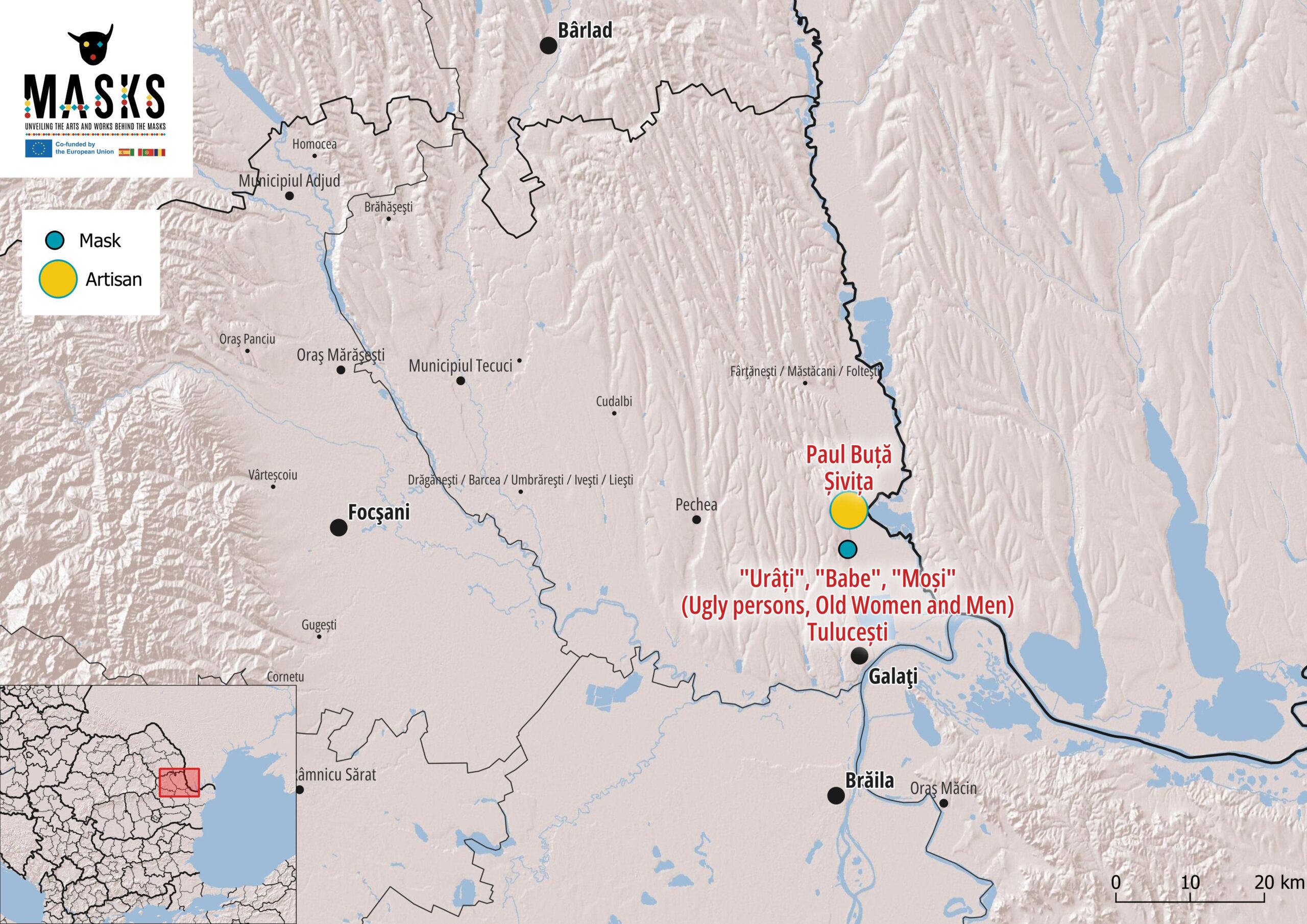
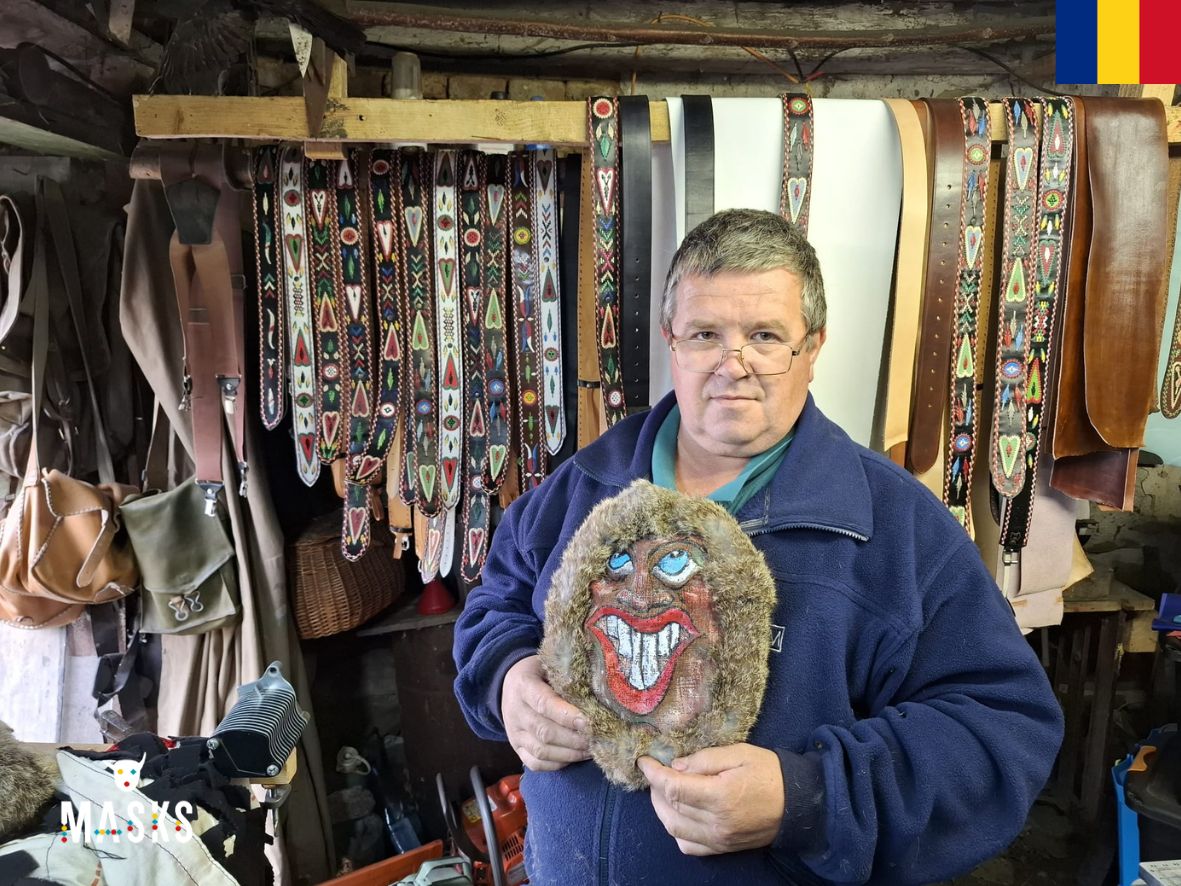
Paul Buță (1961). He is a craftsman, actor, and director from Șivița, Galați County, known for his traditional Romanian masks used in winter customs from the regions of Moldova and Bucovina. His expressive and artistically refined creations have been featured in international exhibitions and included in theatre and film productions. He does not focus on commercialisation; instead, he creates to preserve and share cultural heritage. Through his foundation, Vatra cu Dor, he organises workshops and cultural events, teaching the craft to younger generations and actively contributing to the preservation of Romania’s folk traditions.
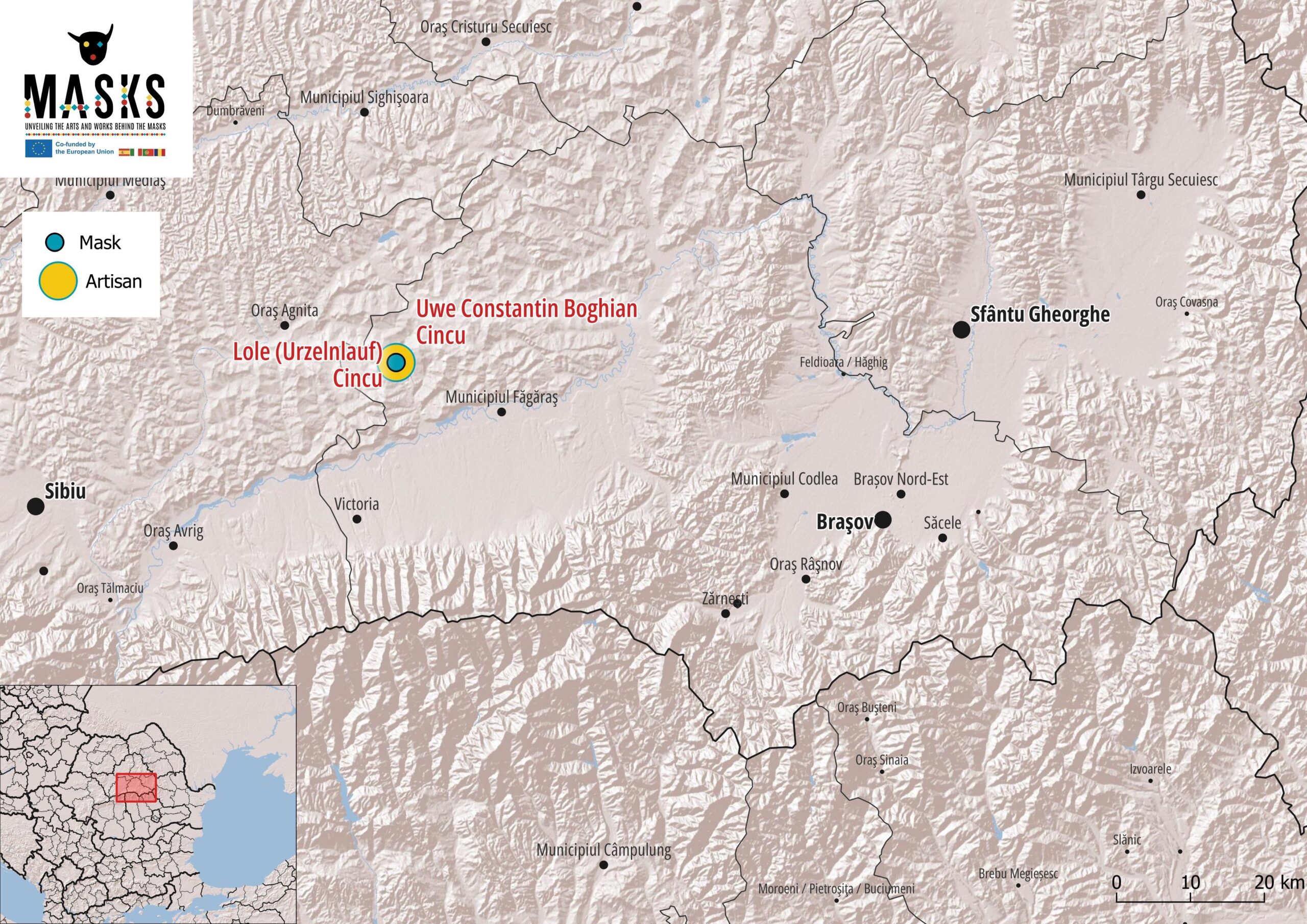
Uwe Constantin Boghian
Uwe Constantin Boghian (1974). He is an artisan from Cincu Village, Transylvania, specialising in traditional mask-making for the “Run of the Lole” ritual. He grew up with this tradition and developed a deep passion for the craftsmanship and cultural symbolism of the masks. For years, he has been creating and maintaining the masks used during the celebration. He does not commercialise them; he makes them for use in the ritual and parades, ensuring they are always available for the community. In addition to his work with masks, he is an expert leatherworker and his workshop is filled with hand-crafted items such as belts and accessories. His commitment helps keep the Transylvanian Saxon heritage alive and passes it on to new generations.
MASKS project