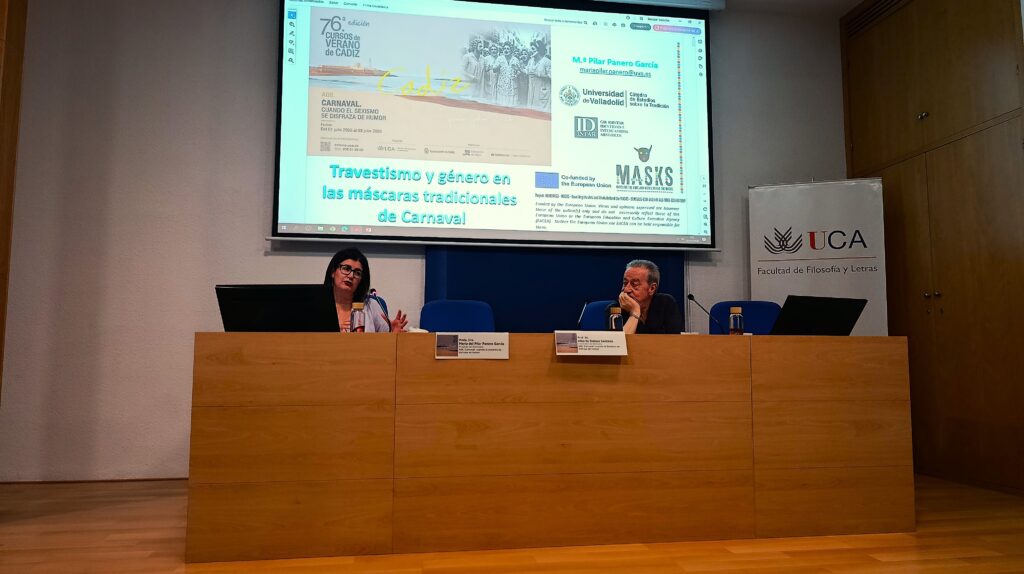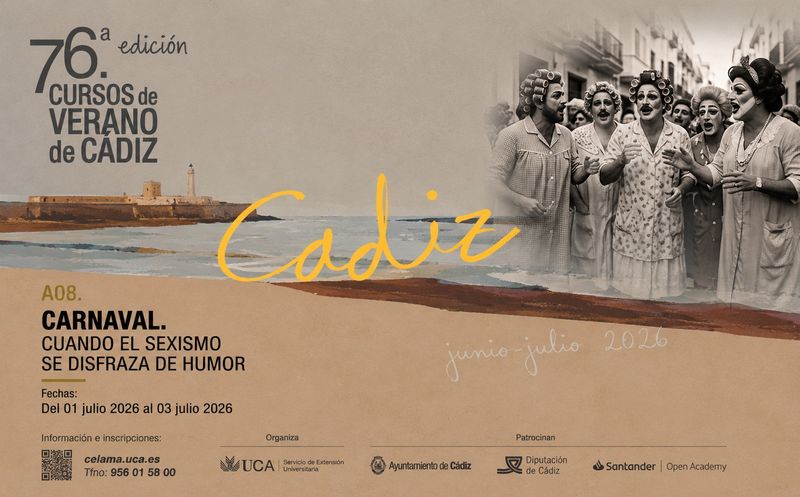
The course was organised and directed by Professor Alberto Ramos Santana, Emeritus Professor of Contemporary History and Director of the Chair of Carnival Studies at the University of Cádiz, whose distinguished academic career has made him one of the leading scholars of Carnival studies. The MASKS project was represented by its Principal Investigator, Professor Pilar Panero García of the University of Valladolid.
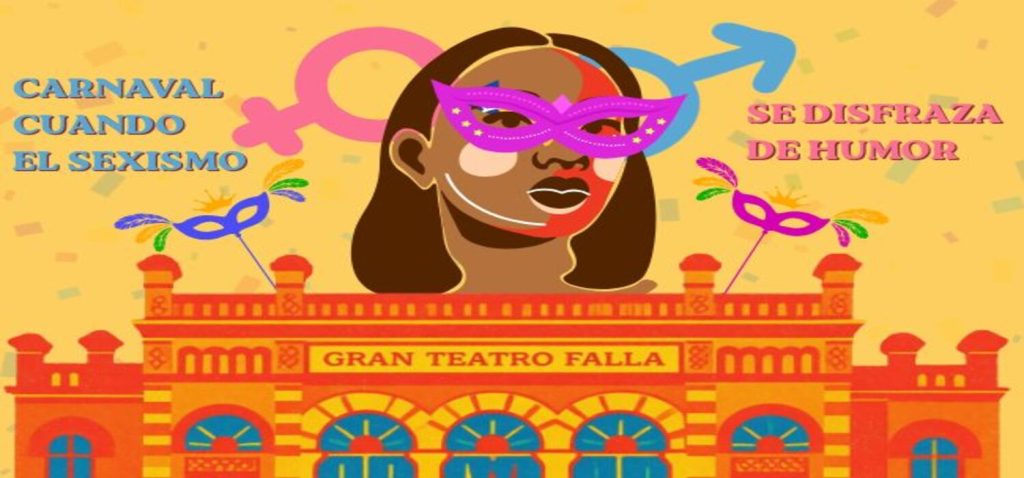
The course taught by eight professors has addressed a critical reflection on carnival manifestations from a gender perspective. Historically and socially, Carnival has been understood as a brief period of individual and collective liberation. Within this framework, cross-dressing has long been a recurring feature of masks and costumes, even as such practices were repeatedly prohibited and regarded as socially deviant. At the same time, male hegemony has contributed to the objectification of women, both as objects of eroticisation and as targets of biting and often hurtful criticism, typically justified by the satirical nature and humorous conventions traditionally associated with Carnival.
Against this background, the course examined the extent to which the use of humour may itself constitute a form of sexism. Its objectives included identifying and analysing manifestations of cross-dressing in traditional masks and contemporary Carnival costumes; reassessing representations of the female body within Carnival imagery; examining expressions of sexism in Carnival traditions; and exposing forms of sexism that are concealed and legitimised under the guise of humour.
Within this framework, Professor Panero delivered the lecture “Cross-Dressing and Gender in Traditional Carnival Masks” focusing on Carnival traditions in the north-western Iberian Peninsula. Her presentation explored the relationship between masks, the body, and gender in the rural masquerade traditions of western Iberia, paying particular attention to participation, the maintenance of ritual practices, and the redistribution of social roles.
Although women have traditionally been relegated to secondary positions, they have played a fundamental role in both the material and symbolic dimensions of these festivities through the making of costumes, the transmission of traditional knowledge, and the preparation of the celebrations. At the same time, femininity has occupied a central place in Carnival imagery, frequently embodied and performed by male participants.
The lecture also highlighted how, since the second half of the twentieth century, socioeconomic transformations have placed many women at the centre of the continuity and preservation of these ritual traditions, within a context of increasing touristification. In this setting, some women have begun to assume roles that were traditionally reserved for men, raising important questions as to whether these changes represent a genuine redistribution of the often invisible labour that sustains these festivities or, conversely, reproduce pre-existing inequalities.
The participation of the MASKS project in this course further reinforces its commitment to the critical analysis of cultural practices and to the dissemination of its research within both academic and wider contemporary social contexts.