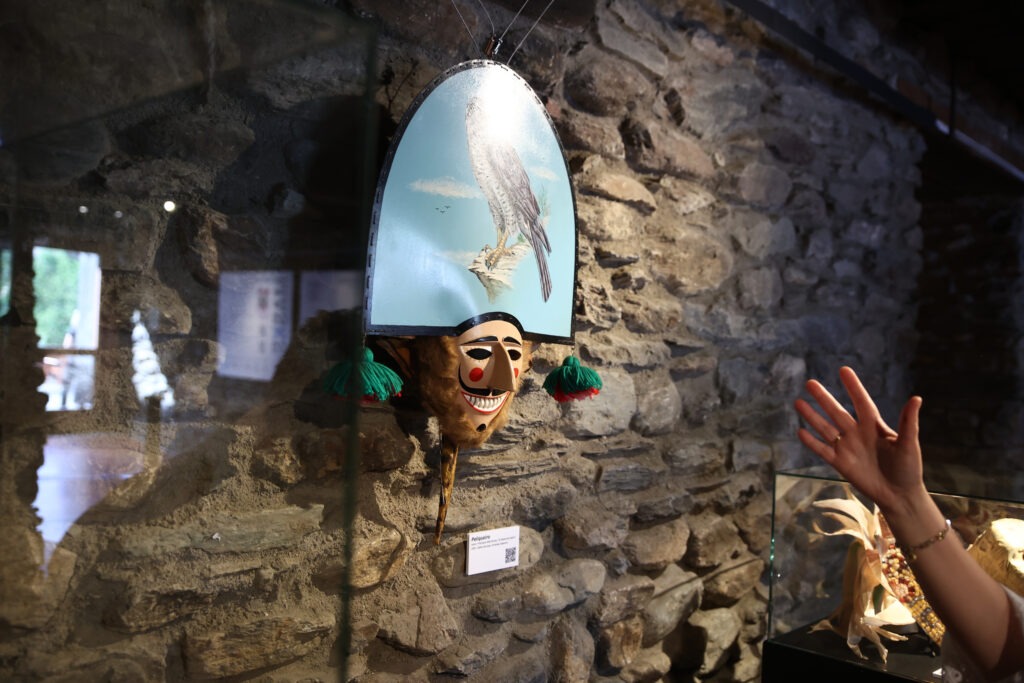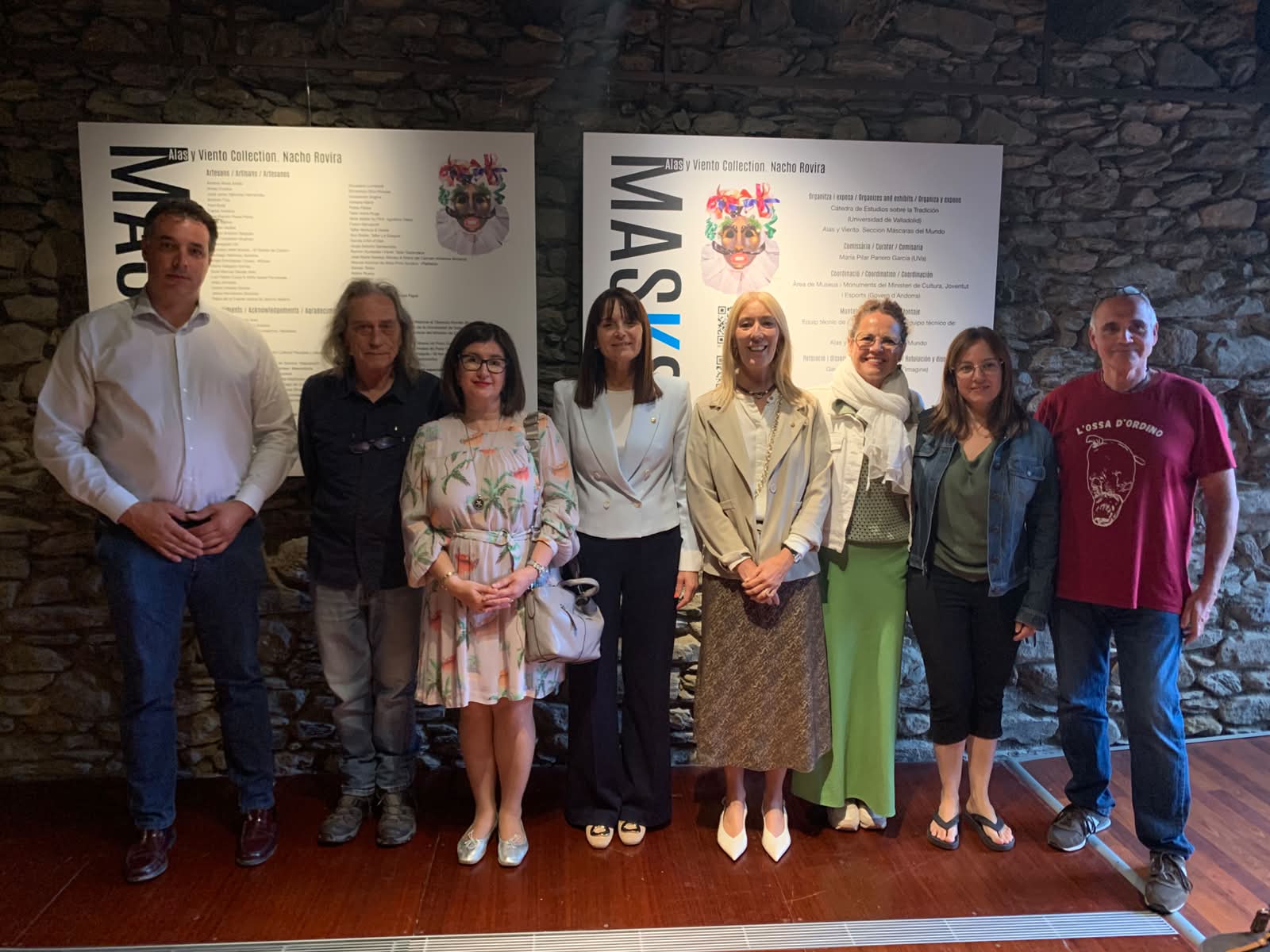
The exhibition Alas y Viento Collection. Nacho Rovira. Ordino (Andorra) brings together pieces from Romania, Portugal, Italy, and Spain, alongside local examples. The opening ceremony took place on 10 June at 7:00 p.m. at the Era del Rasser in Ordino, attended by the Minister of Culture, Youth and Sports, Mònica Bonell, and the Vice President of the Parliament of Andorra, Sandra Codina, a native of Ordino. The exhibition will remain open until 23 August 2026.
This exhibition invites visitors to explore the universe of masks as a cultural expression shared by numerous societies, present in rituals, festivities, religious ceremonies, and theatrical performances across different periods and cultures.
The initiative, promoted by the University of Valladolid through the Chair of Traditional Studies, is coordinated and curated by Professor Pilar Panero, principal investigator of the European project Unveiling the Arts and Works behind the Masks, an Erasmus+ initiative supported by the European Education and Culture Executive Agency. As with previous editions held at the University of Valladolid Museum and the Museo do Pobo Galego, this exhibition contributes to the dissemination of the project in collaboration with the Area of Museums and Monuments of the Ministry of Culture, Youth and Sports of the Government of Andorra.
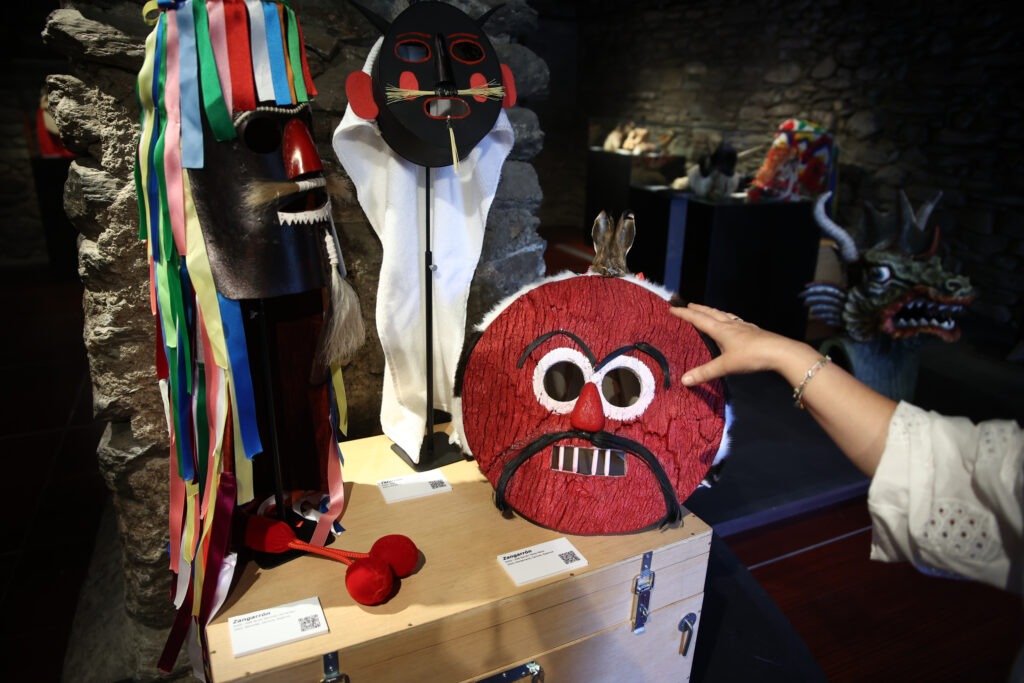
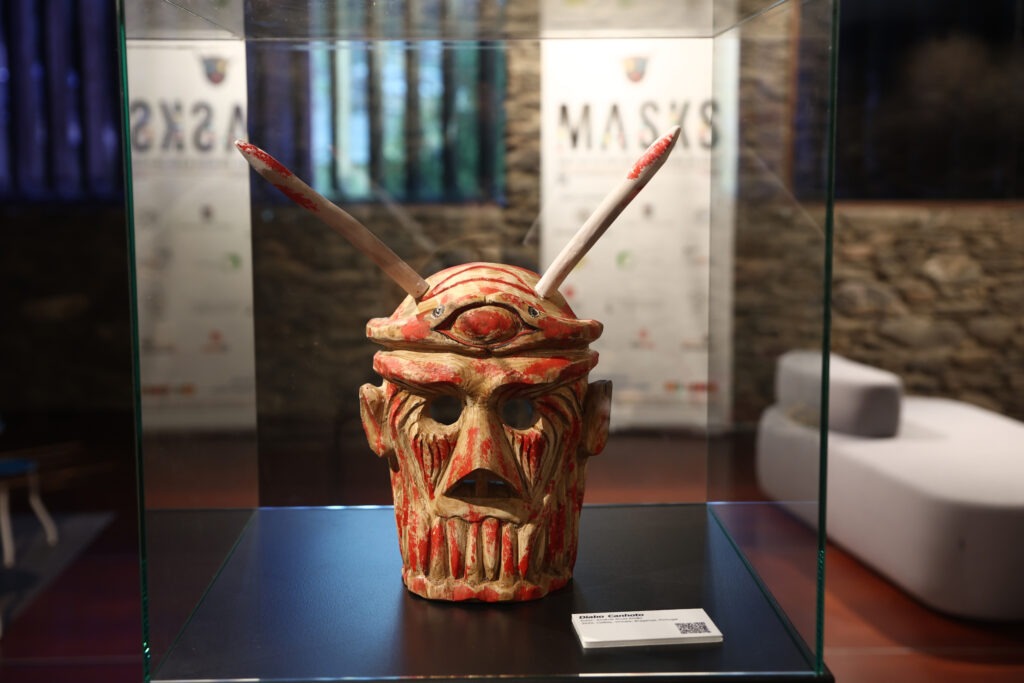
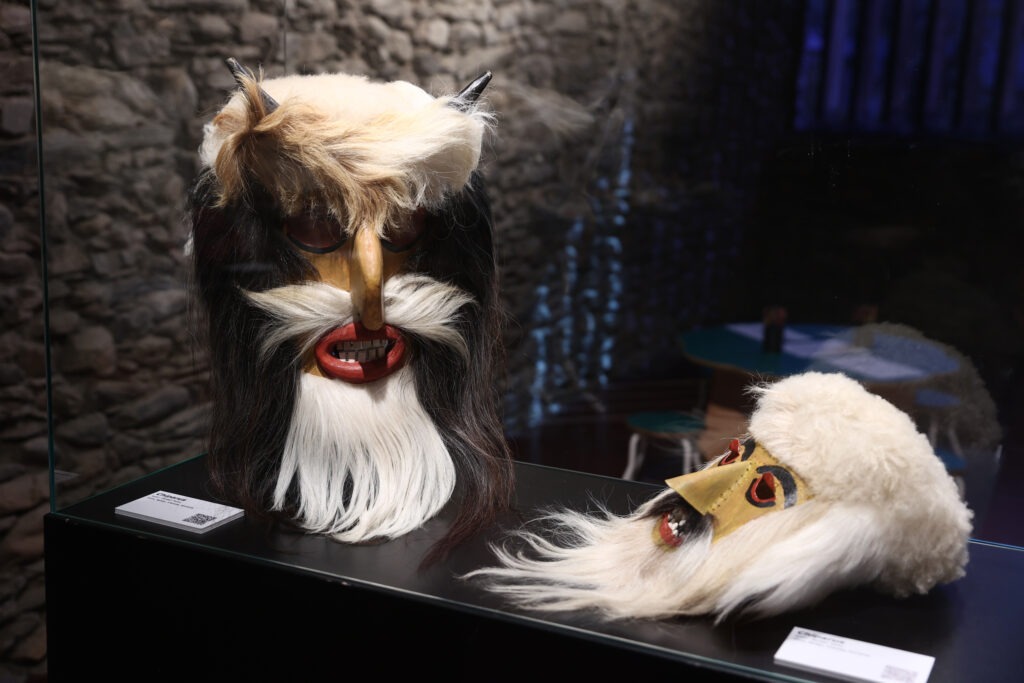
The exhibition features a carefully selected group of 55 masks from Romania, Italy, Portugal, Spain, and Andorra, all belonging to the private Alas y Viento collection of collector and traveler Nacho Rovira, who has spent more than forty years gathering pieces of this ancestral art from different countries. The display is complemented by local masks such as the Ossa and the Osseta, as well as two popular capgrossos, la Consellera Berna and Percanela.
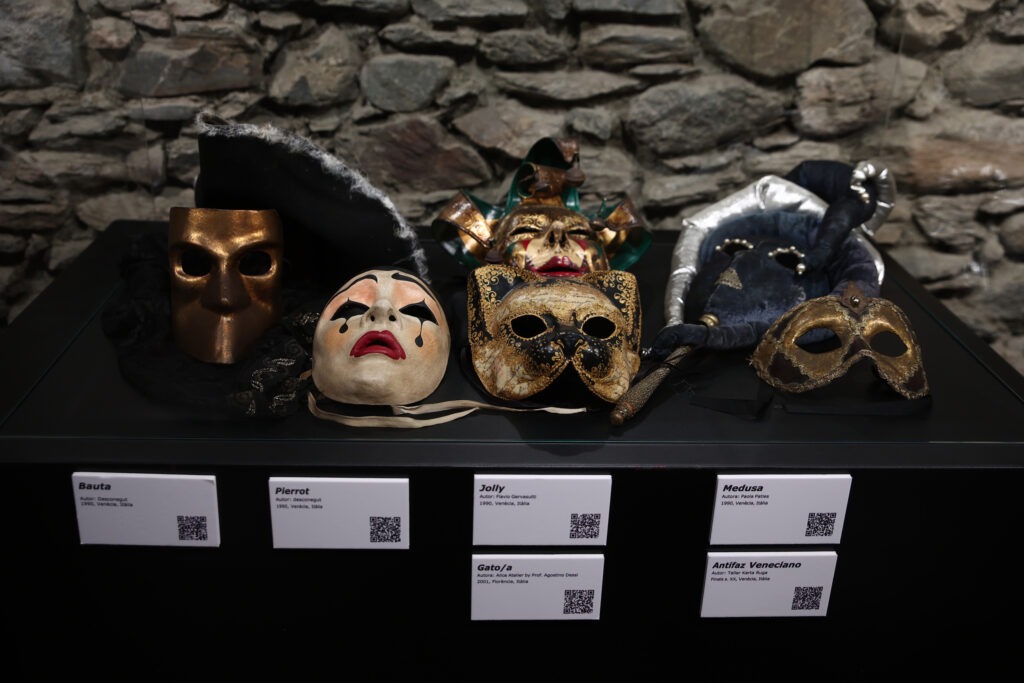
As in previous editions, the exhibition begins with the materiality of the mask, focusing on artisans and craftsmanship as a gateway to intangible culture. In total, 59 pieces are presented, offering insight into the diverse uses, historical contexts, and meanings of masks, and reflecting the universal character of this cultural expression. These include masks associated with popular carnival and winter celebrations such as the Antruejo; pieces used in religious festivities such as Christmas, Holy Week, and Corpus Christi; examples from Baroque courtly carnival and the Commedia dell’Arte, linked to theatre and the performing arts of early modern Europe; funerary masks connected to rituals of farewell, memory, and the life cycle; as well as contemporary and artistic creations that demonstrate the ongoing relevance and reinterpretation of these traditions.
The opening event featured several short performances by Andorran cultural associations, in which masks played a central role. The programme began with a performance by the “Joves dallaires” of the Associació de Cultura Popular d’Ordino, followed by El testament del llop by Esbart Laurèdia, the Ball de capgrossos by Esbart Valls del Nord, and the joint choreography Les osses ordinenques. During the performances, traditional masks and characters were used—such as l’Osseta, the Faun, and several capgrossos—which would later become part of the exhibition. The event concluded with the opening of the exhibition in a symbolic moment, as performers removed their masks and placed them within the exhibition space, marking the transition from character to person. Participating in the inauguration were the Associació de Cultura Popular d’Ordino, dedicated to preserving Andorran folk traditions, Esbart Valls del Nord, and the historic Esbart Laurèdia, all institutions committed to the promotion of dance, legends, and cultural heritage in Andorra.
Photographs courtesy of Facundo Santana