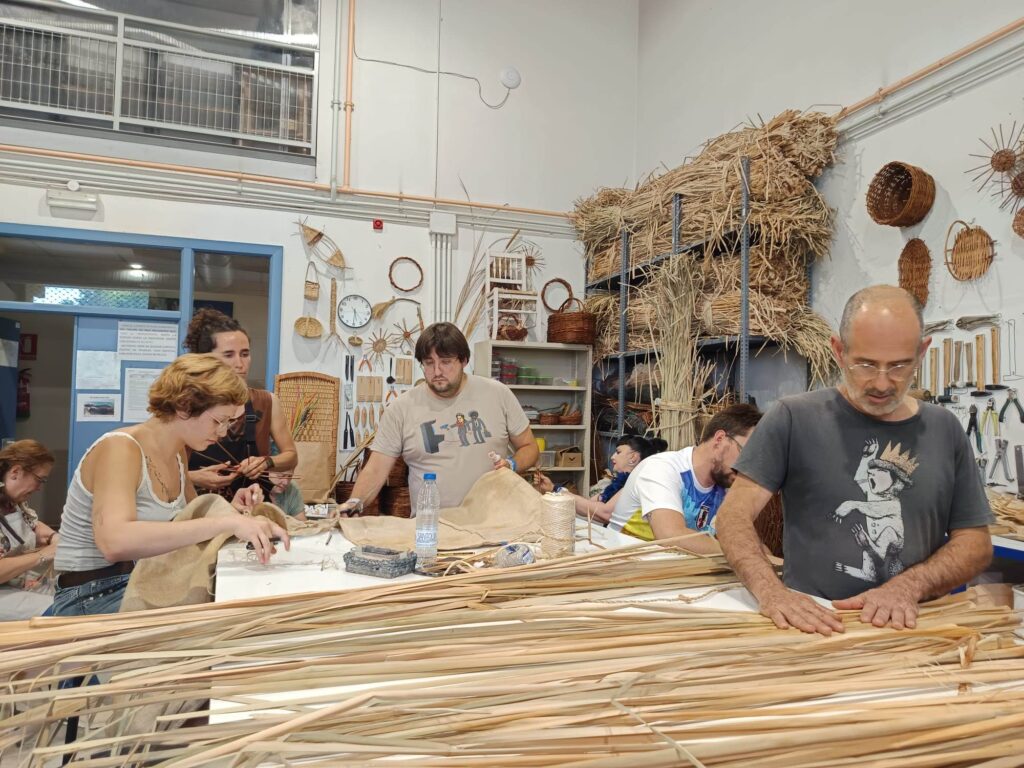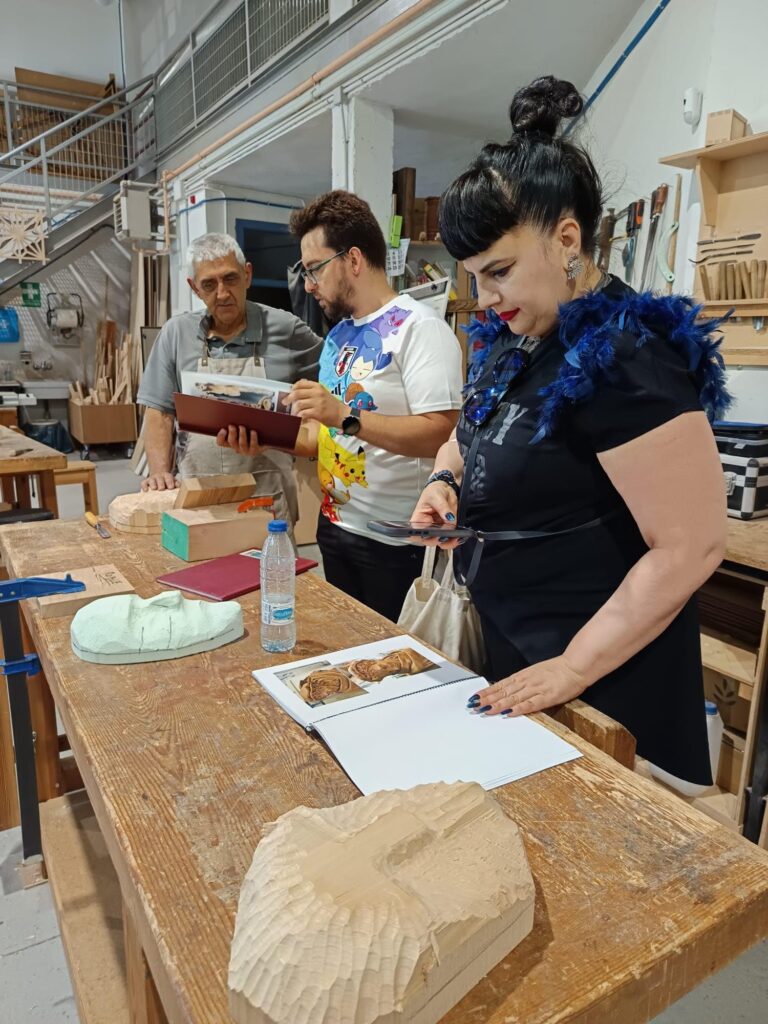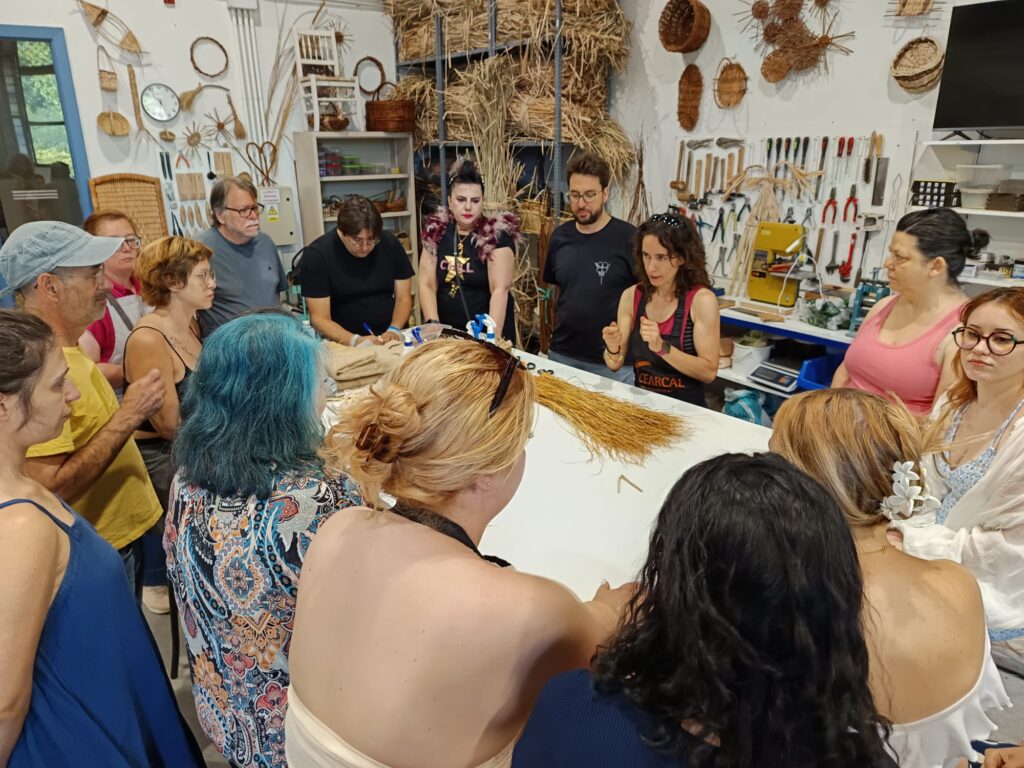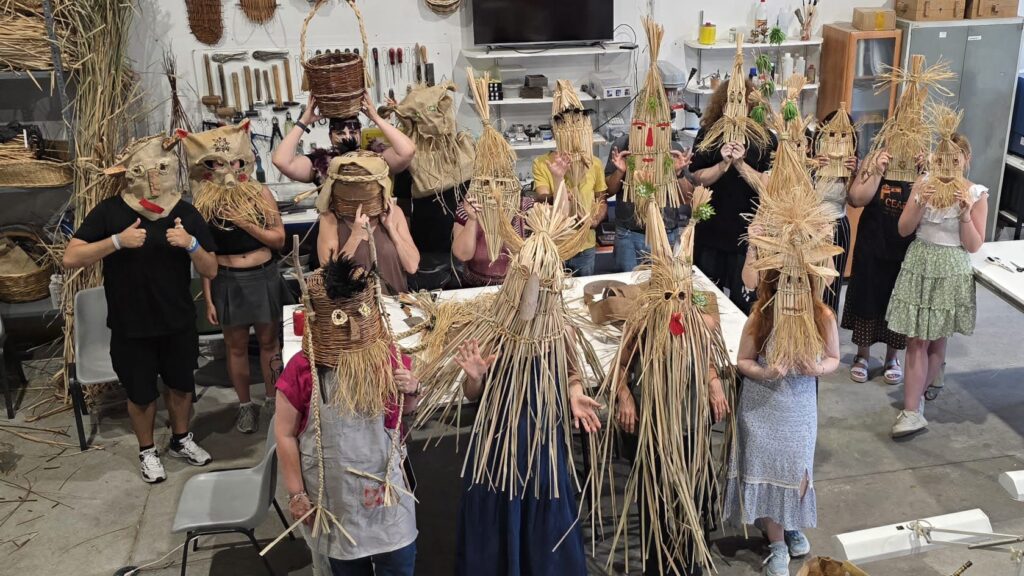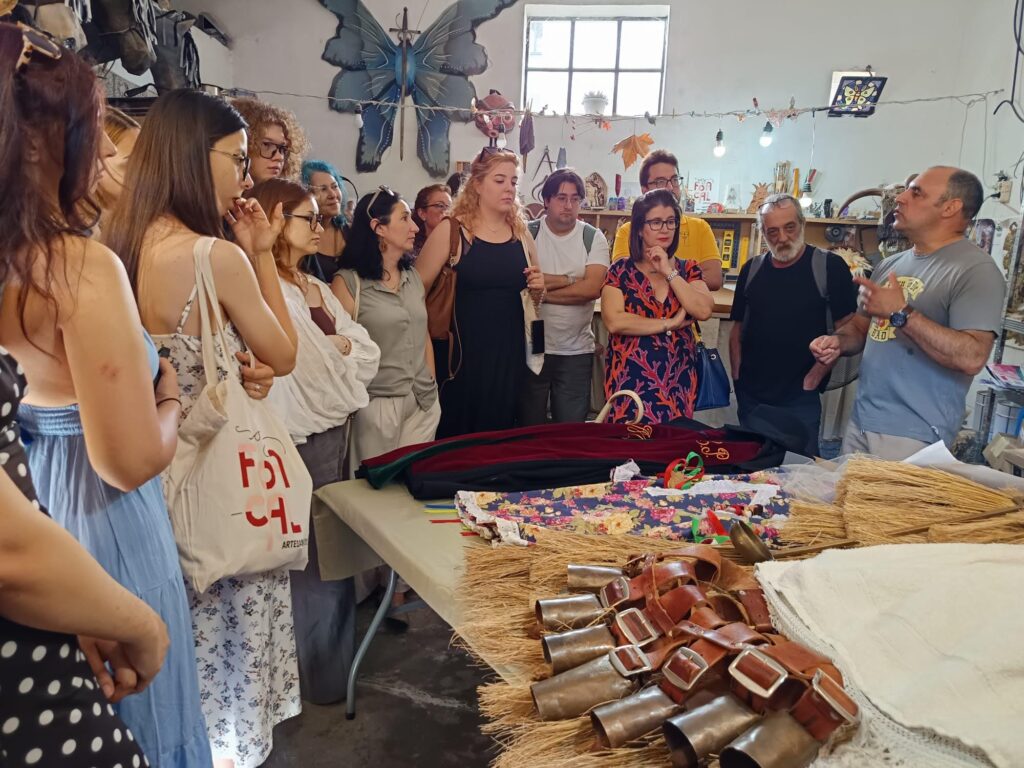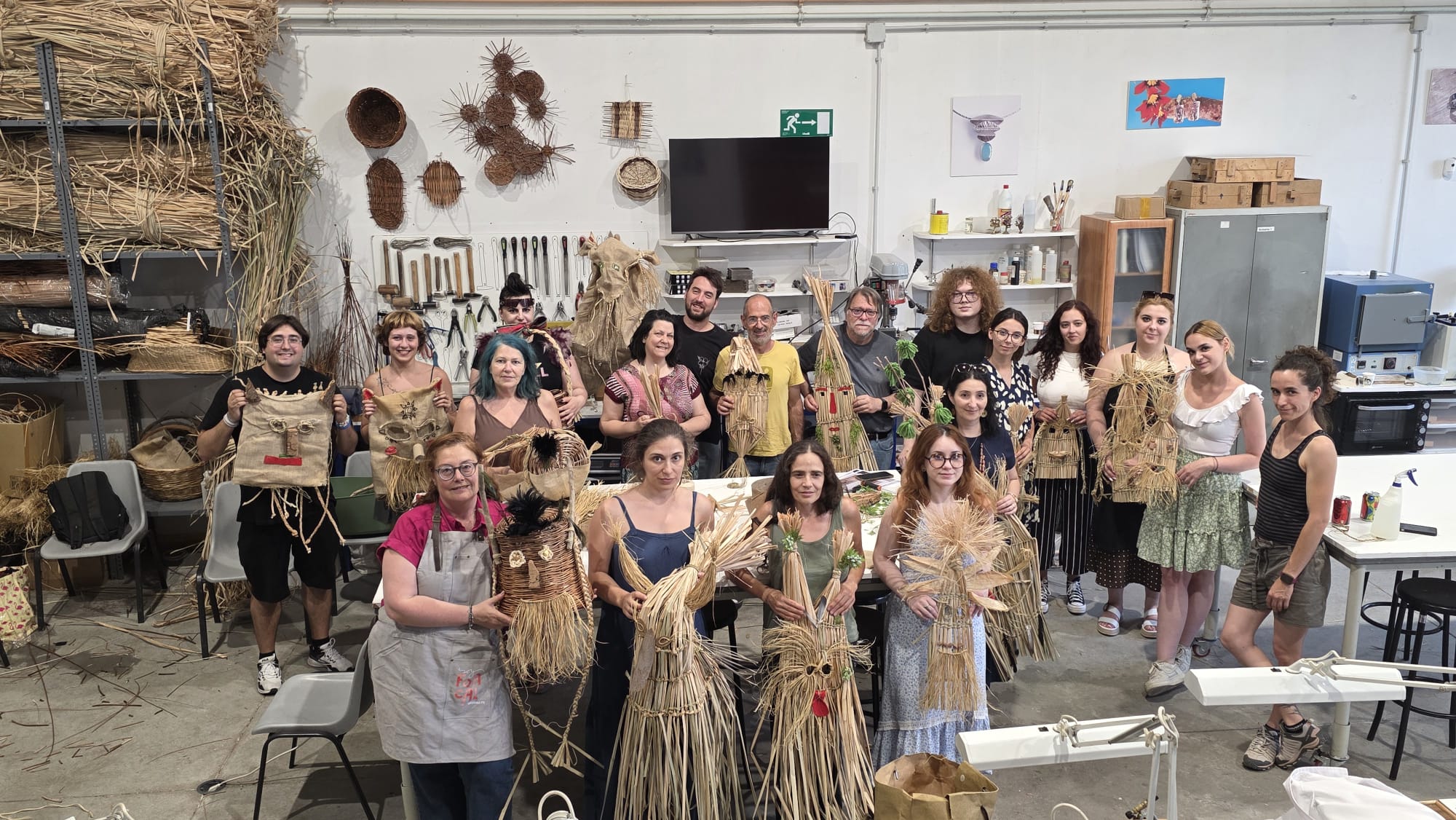
The training activity, organised within the framework of MASKS, brought together participants from the University of Bucharest, the University of Valladolid, CEARCAL, and CEARTE, alongside academic staff and leading specialists in traditional crafts.
From 6 to 10 July 2026, Valladolid hosted an international hands-on training programme dedicated to the creation of masks and material elements associated with traditional masquerade customs. Organised by CEARCAL–FOACAL as part of the European project MASKS – Unveiling the Arts and Works Behind the Masks, the initiative brought together 19 university students and craftspeople from the University of Bucharest, the University of Valladolid, CEARCAL, and CEARTE, together with project staff, in an educational experience focused on the transmission of technical, heritage-related, and creative knowledge.
Craft Training and Applied Learning
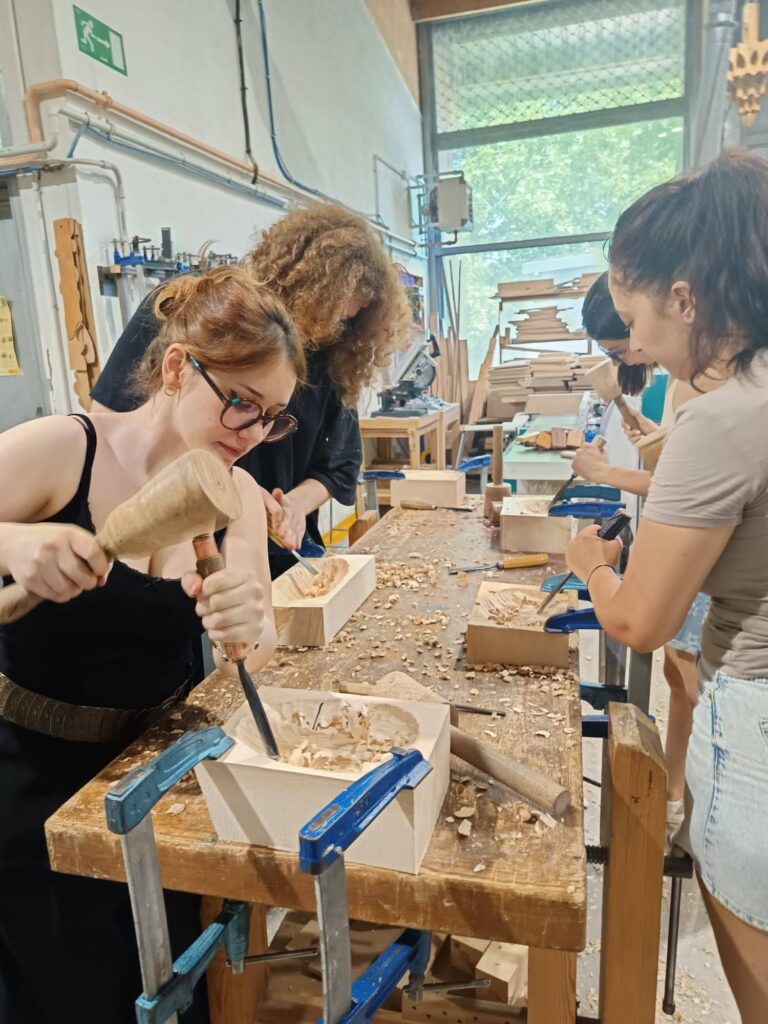
The programme aimed to familiarise participants with a range of traditional craft processes involved in the production of masks and the creation of material objects associated with masquerade rituals. Throughout the week, the training combined practical workshops, knowledge exchange, and specialised study visits, with particular emphasis on two principal areas of craftsmanship: woodworking and plant-fibre weaving.
Among the instructors were Jana Úbeda, from the workshop Cesteando, and Miguel Ángel Tapia, sculptor and religious image-maker from Aquí se hacen santos. Both shared their professional expertise in traditional craftsmanship, wooden sculpture, and the expressive potential of plant fibres such as willow and esparto grass. Their participation enriched the programme by providing expert perspectives grounded in professional practice, reinforcing the value of experiential learning and the transmission of artisanal knowledge.
Engagement with Craft Professionals
The final day of the programme included a study visit to Zamora, where participants visited the workshop of Miguel Elisardo Bueno, founder of Arte Feudo Escultura. He presented his artistic practice, creative processes, and relationship with both traditional sculpture and craftsmanship, while also demonstrating the integration of contemporary digital technologies, including 3D printing, into his work. This session offered participants the opportunity to engage directly with an active professional workshop and to explore how technical expertise, creativity, traditional knowledge, and technological innovation can coexist within contemporary craft practice.
Tradition, Intangible Cultural Heritage, and Ethnographic Knowledge
The training programme also featured contributions from Ángel Haro, representing the Tafarrón de Pozuelo de Tábara, and Celedonio Pérez, representing the Zangarrón de Sanzoles, who introduced participants to their respective masquerade traditions. Their presentations provided an essential ethnographic and cultural perspective for understanding the significance of masquerade rituals within the intangible cultural heritage of Castile and León. Their contributions highlighted the symbolic, ritual, and communal dimensions of these traditions, as well as the importance of their preservation and intergenerational transmission.
As part of the programme, participants also visited the Ethnographic Museum of Castile and León, where they deepened their understanding of the region's cultural heritage and explored the historical and cultural context of masks and masquerade traditions. This visit complemented the practical training by introducing museological and heritage perspectives, fostering dialogue between traditional craftsmanship and cultural interpretation.
Cooperation, Knowledge Transmission, and Future Perspectives
The programme successfully combined practical learning, critical reflection on cultural heritage, and direct engagement with craftspeople, specialists, and leading heritage institutions, thereby consolidating an educational model that strengthens cooperation between universities, craft organisations, and cultural heritage stakeholders. Bringing together university students and experienced craftspeople within a shared learning environment created particularly valuable opportunities for the intergenerational transmission of knowledge and professional expertise.
Through this initiative, CEARCAL–FOACAL reaffirms its commitment to specialised training, the promotion of traditional crafts, and the dissemination of the cultural heritage associated with masquerade traditions, contributing to the safeguarding of knowledge and practices that constitute an essential part of the cultural memory, identity, and creative heritage of European communities.