The University of Valladolid project takes part in photographic research on twelve Wayang Topeng Malangan communities and establishes a dialogue between the masks of East Java and the traditions of Castile and León
The Unveiling the Arts and Works behind the MASKS (MASKS) project, led by the University of Valladolid, has collaborated with photographer Diego Zapatero on a research and documentation project focusing on the communities that keep the Wayang Topeng Malangan tradition alive in the Malang region of East Java, Indonesia.
The outcome of this work can be seen in the exhibition “Malangan: A Legacy That Refuses to Disappear,” presented at the Museum of Fine Arts and Ceramics of Jakarta. The exhibition brings together visual and anthropological research focusing on twelve active communities that safeguard this ancestral mask tradition, which is linked to the Panji cycle epic, recognised by UNESCO under its Memory of the World Programme.
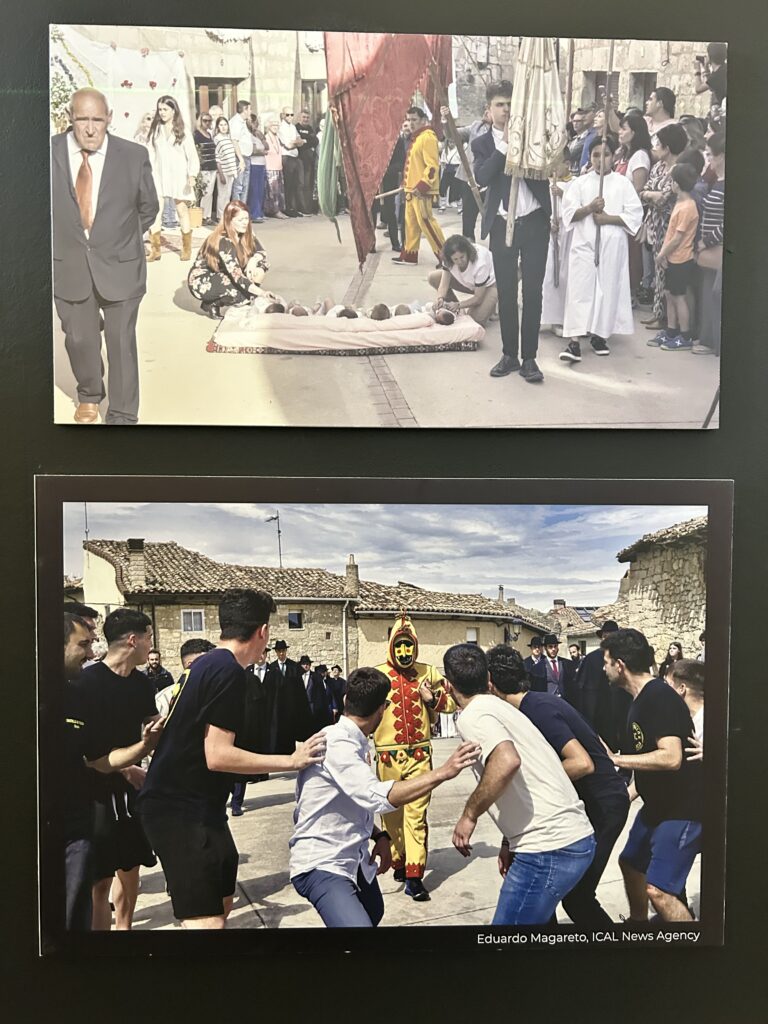
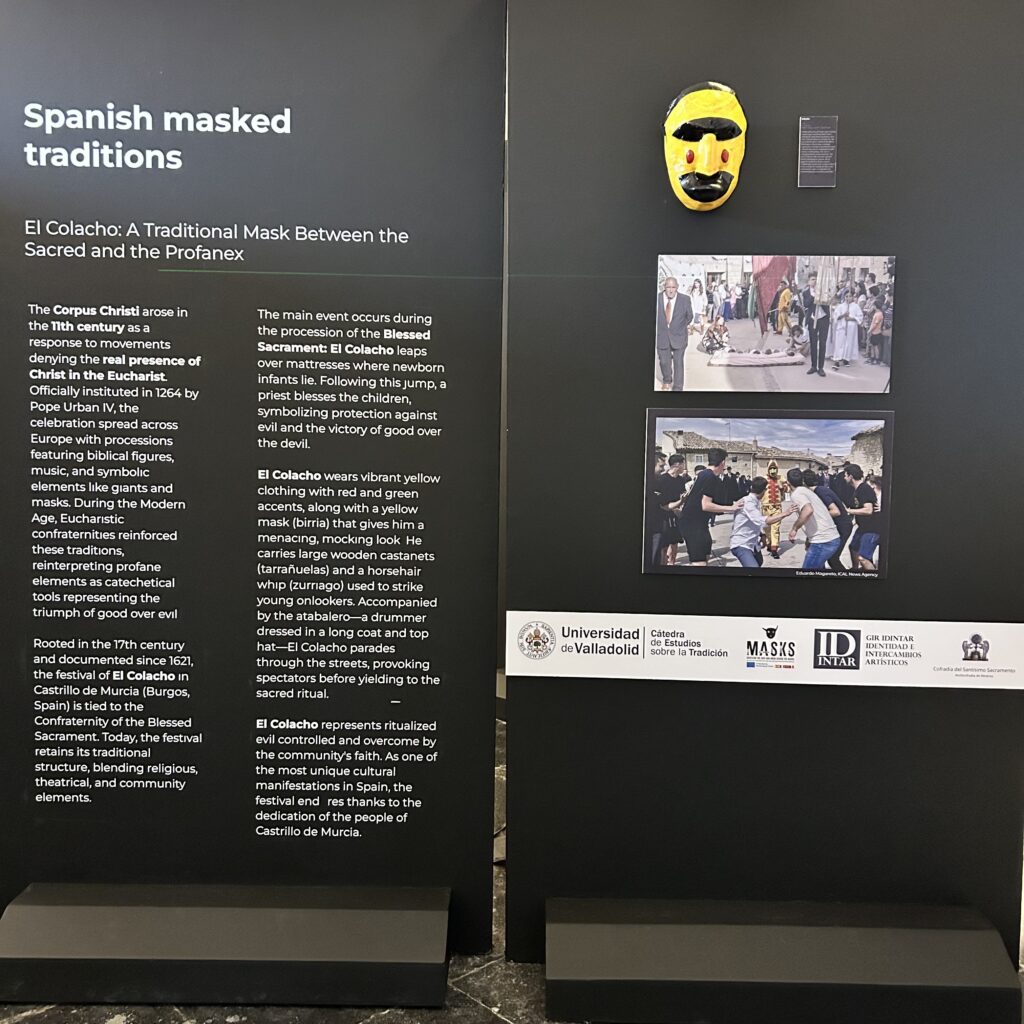
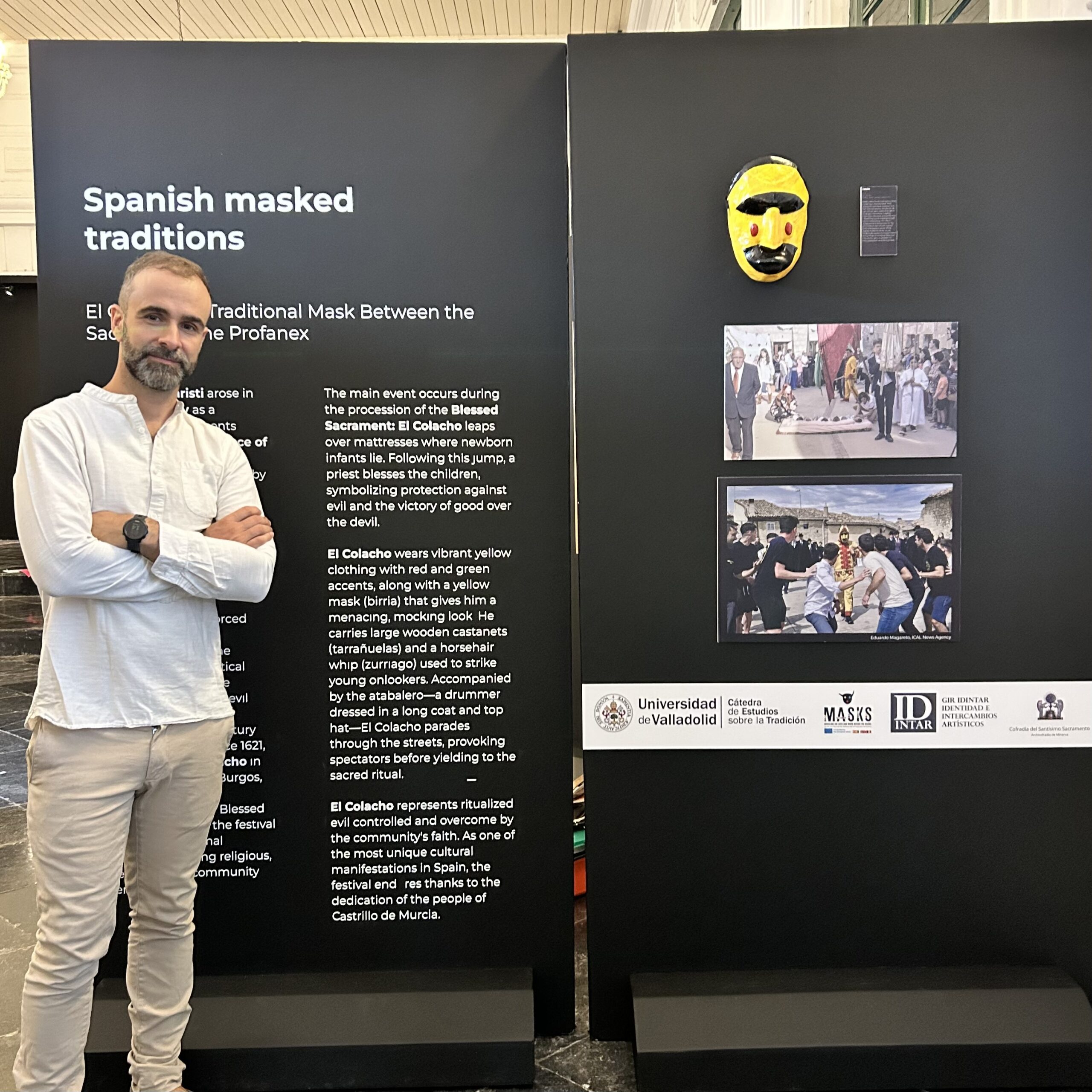
MASKS’ collaboration brings a comparative perspective to this international project, exploring mask traditions and their role in preserving collective memory. In this context, Diego Zapatero has also worked with one of the masks from Castile and León associated with the project: the Colacho of Castrillo de Murcia (Burgos).
From the Colacho of Castile and León to the masks of East Java
The inclusion of the Colacho of Castrillo de Murcia establishes a bridge between two geographically distant cultural contexts that are nevertheless connected by the importance that masks continue to hold within their respective communities.
Through MASKS, the mask traditions of Castile and León are brought into dialogue with other international manifestations, such as Wayang Topeng Malangan, in order to explore issues related to memory, identity, the transmission of knowledge, ritual, and the participation of heritage-bearing communities.
The work carried out in Indonesia places particular emphasis on the masters and groups who keep this tradition alive. Over several months of fieldwork, Zapatero has produced portraits and documentary photographs, while also collecting ethnographic materials in collaboration with the artistic communities.
Memory returns to its communities
One of the most significant aspects of the research has been the process of returning the work to the people and communities who are its protagonists. On 23 August, at Sanggar Asmorobangun in Pakisaji (Malang), the local community independently organised and coordinated the exhibition “Malangan: A Legacy That Refuses to Disappear” in its own surroundings.
On that occasion, the photographer personally presented a handmade book to each of the masters and leaders of the twelve communities, with each publication bringing together the history, rituals, and testimonies of its respective community.
This initiative reflects one of the fundamental principles underpinning the project: “Memory and remembrance never belong to us: they must always return to their origin.”
As Diego Zapatero explains, “photography in this project is an attempt to capture a moment of life while giving away a part of ourselves; a mission to bring to life stories that, if they were not told, would never exist.”
The experience connects with one of the central approaches of MASKS: understanding masks not merely as objects, but as bearers of stories, knowledge, social practices, and collective memories.
An international collaboration to protect living heritage
The collaboration between MASKS and Diego Zapatero forms part of an international network of academic and cultural institutions committed to the documentation and safeguarding of intangible cultural heritage.
The project has received the support and collaboration of the Embassy of Spain in Indonesia, AECID, the Provincial Government of DKI Jakarta (Jaya Raya), through the Directorate General of Culture of DKI Jakarta, the Art Museum Management Unit and the Museum of Fine Arts and Ceramics, as well as the Chair of Tradition Studies at the University of Valladolid, the GIR IDINTAR, and the Brotherhood of the Blessed Sacrament (Archconfraternity of Minerva). The photographs of the Colacho are by Eduardo Magareto.
This collaboration strengthens the international dimension of MASKS and its commitment to building connections between different cultural traditions associated with masks. The dialogue between the Colacho of Castile and León and the masks of Wayang Topeng Malangan demonstrates how research, photography, and collaboration with the communities themselves can contribute to making visible and preserving a heritage that remains alive.
MASKS thus continues to build bridges between territories and traditions, highlighting the diversity of mask cultures and, above all, the communities that make their transmission from one generation to the next possible.
Heartfelt thanks to everyone!