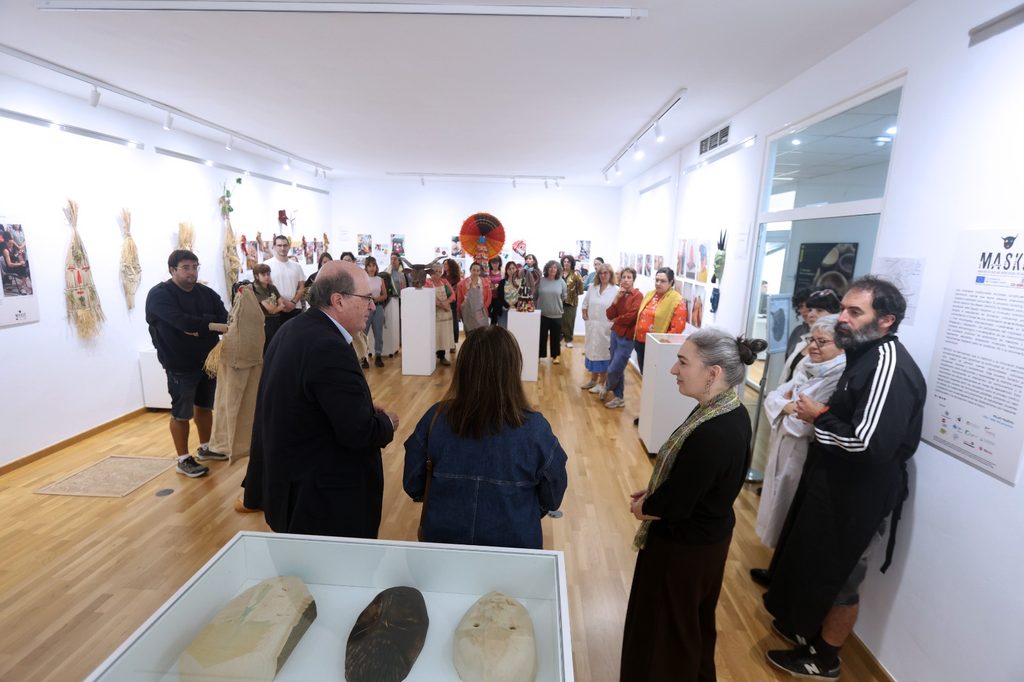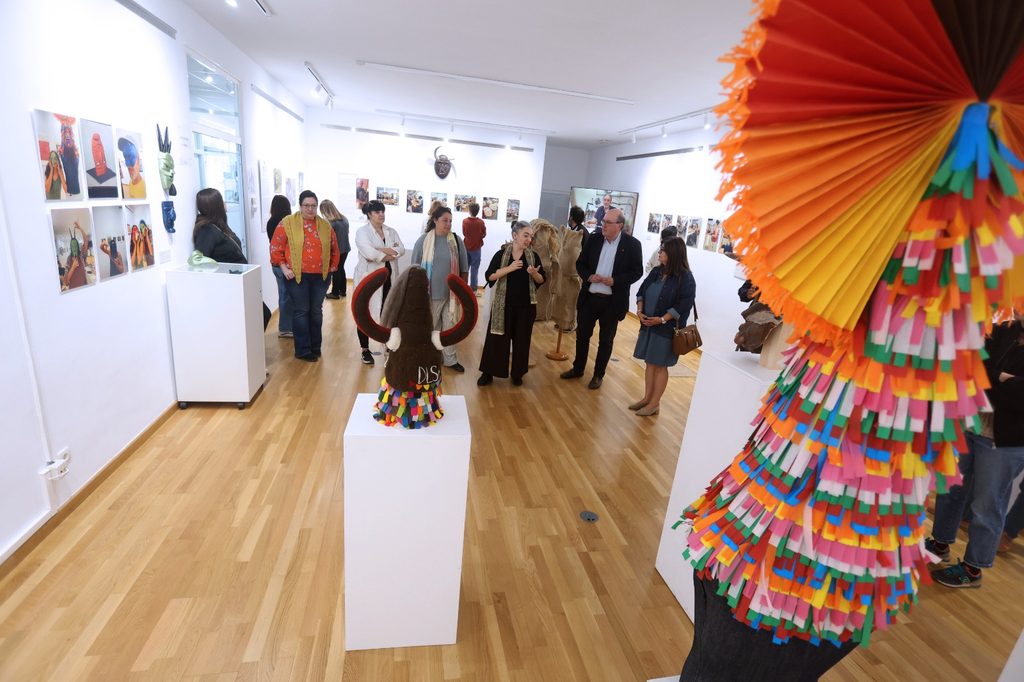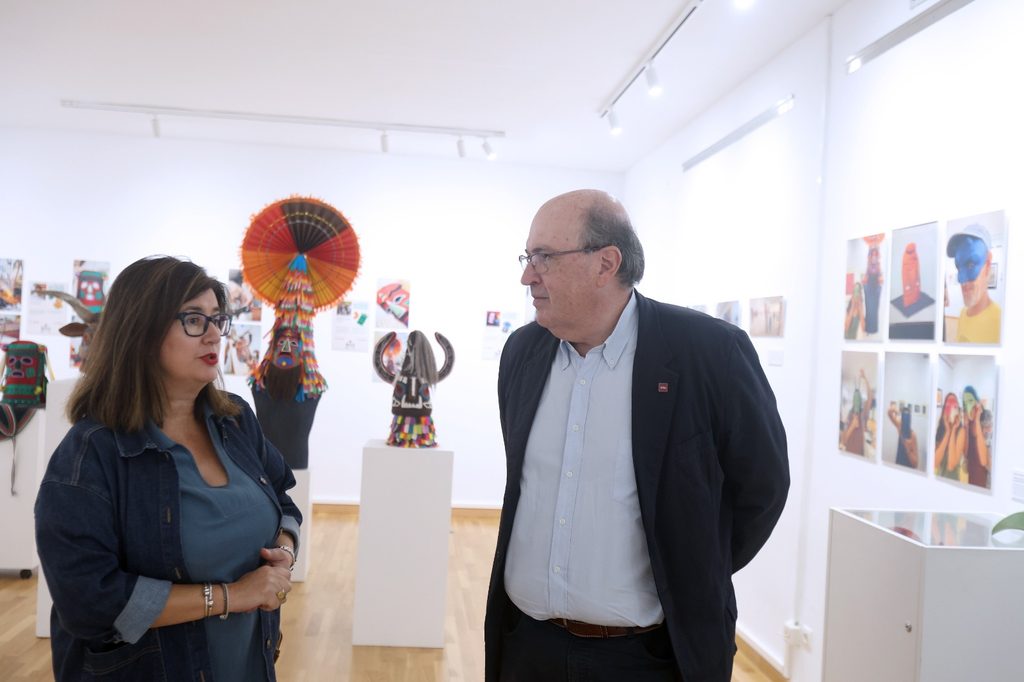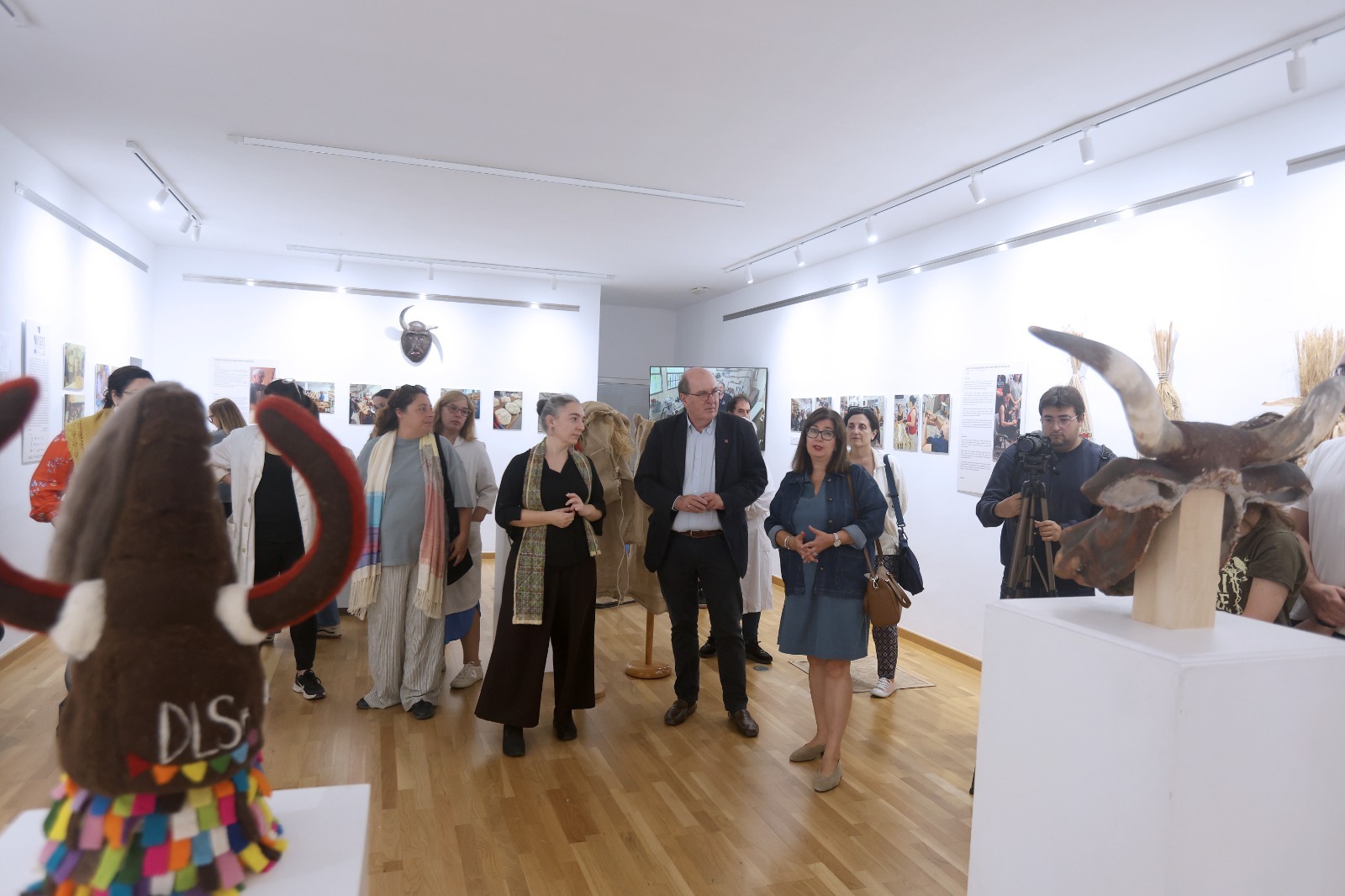
The Vice-Rector for University Extension and Institutional Communication of the University of Valladolid, José Ramón González García, and the Secretary of the CEARCAL-FOACAL Board of Directors, Luisa Guardo Cruz, paid an institutional visit to the exhibition of works created by the students who took part in the international mobilities of the European project Unveiling the Arts and Works Behind the Masks (MASKS).
During the visit, Verónica Coca Zancajo, from CEARCAL and responsible for setting up the exhibition, and Professor Pilar Panero, the project’s principal investigator (PI), explained the international mobilities and the work carried out by the students במסגרת the project.
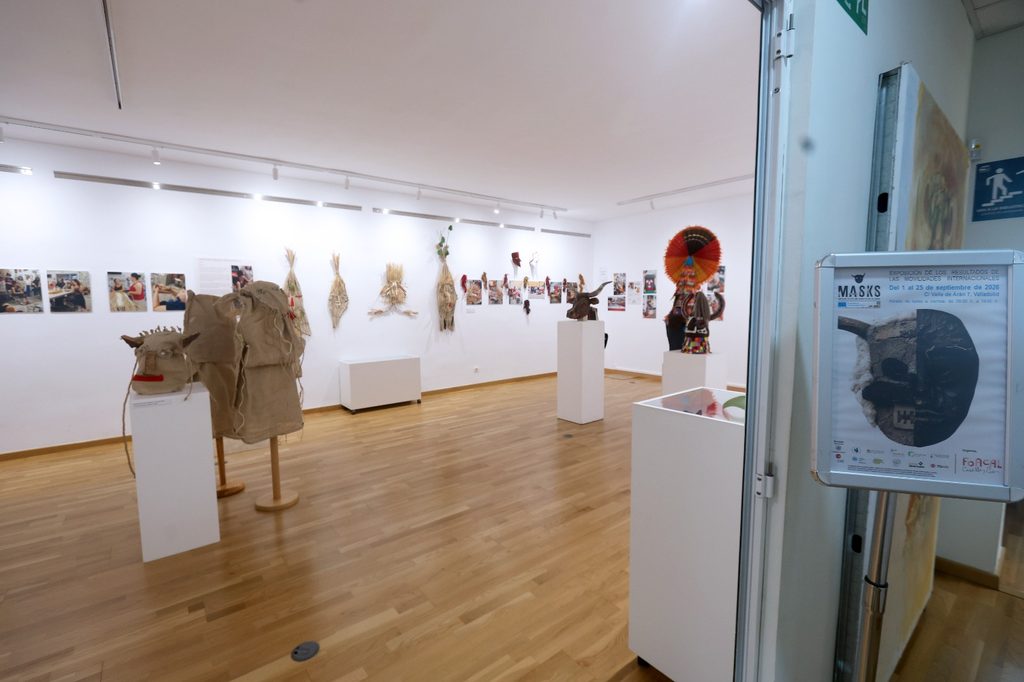
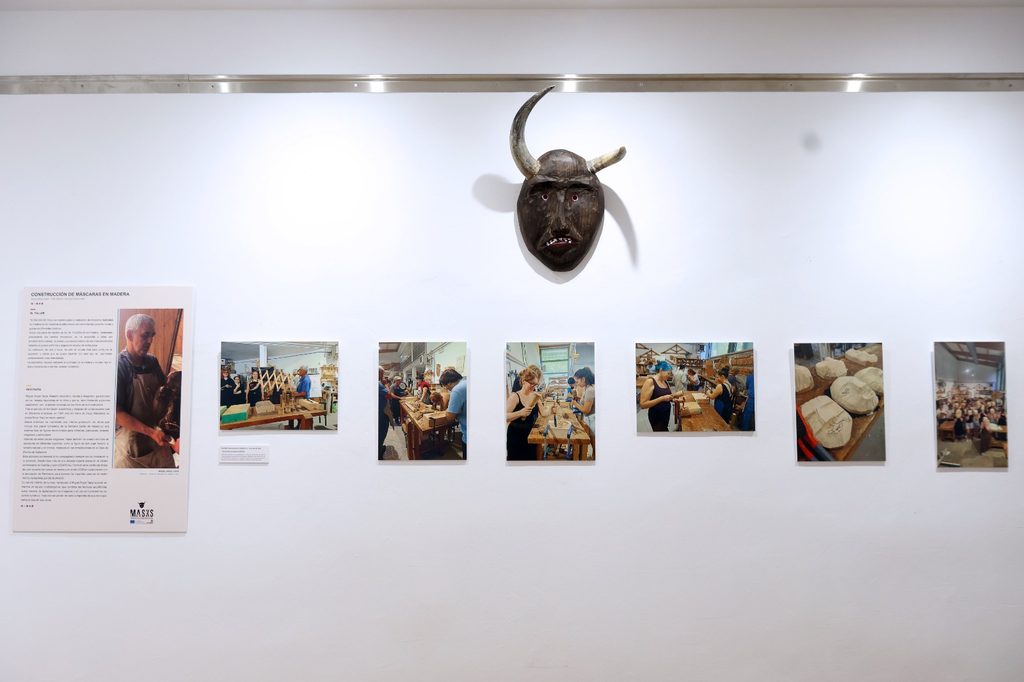
The exhibition features masks, accessories and other objects associated with traditional masquerades, produced during the practical training sessions held in Bragança and Valladolid from 6 to 10 July 2026. These activities gave participants the opportunity to engage directly with the materials, techniques and artisanal knowledge associated with different European ritual traditions.
The mobility held in Valladolid was organised by CEARCAL-FOACAL and focused on wood carving and the use of plant fibres. In Bragança, the training, organised by CEARTE, centred on the use of brass and textiles. The selection of these techniques highlighted the diversity of resources traditionally used to make masks and the objects associated with them.
During the visit, the institutional representatives were able to learn about both the works on display and the learning process followed by the students. The pieces reflect a combination of artisanal knowledge, creative experimentation and digital tools applied to the design, construction and documentation of ritual masks.
The exhibition is one of the visible outcomes of the MASKS project, a European cooperation initiative that brings together universities, vocational training centres and organisations specialising in crafts and cultural heritage. The project approaches traditional masks as living heritage, connected not only with festive celebrations but also with anthropology, education, design, contemporary creativity and the cultural and creative industries.
The international mobilities offered students a learning experience based on knowledge exchange and practical work with professionals and craftspeople. Previously, from 29 June to 4 July, participants attended training in museography, anthropology and ritual heritage at the National Museum of the Romanian Peasant in Bucharest.
The project maintains that innovation can contribute to the preservation and transmission of traditions without altering their distinctive character. Digital design, 3D modelling and printing, audiovisual documentation and digitisation expand the possibilities for studying, disseminating and safeguarding this heritage.
The institutional visit highlights the importance of collaboration between the University and vocational training centres in promoting education connected with crafts, research and culture. The exhibition thus showcases the students’ work and asserts the importance of masquerades as dynamic cultural expressions capable of connecting collective memory with the challenges of the present and the opportunities of the future.
Watch the video: https://www.youtube.com/watch?v=lQBca0D7yc4
The photographs were taken by Carlos Barrena for the University of Valladolid.